 |
|
http://commons.wikimedia.org/wiki/File:Daphne_genkwa_SZ73.png |
 |
| http://commons.wikimedia.org/wiki/User:KENPEI |
Translate this page:
Summary
Physical Characteristics

 Daphne_genkwa is a deciduous Shrub growing to 1.5 m (5ft) by 1.5 m (5ft).
See above for USDA hardiness. It is hardy to UK zone 5. It is in flower from April to May. The species is hermaphrodite (has both male and female organs) and is pollinated by Bees, flies, Lepidoptera (Moths & Butterflies).
Suitable for: medium (loamy) and heavy (clay) soils. Suitable pH: mildly acid and neutral soils. It can grow in semi-shade (light woodland) or no shade. It prefers moist soil.
UK Hardiness Map
US Hardiness Map
Synonyms
D. fortunei. Lindl.
Plant Habitats
Edible Uses
References More on Edible Uses
Medicinal Uses
Plants For A Future can not take any responsibility for any adverse effects from the use of plants. Always seek advice from a professional before using a plant medicinally.
This plant has a history of herbal use going back over 3,500 years[238]. It is commonly used in Chinese herbalism, where it is considered to be one of the 50 fundamental herbs[218]. The flower buds are a bitter acrid herb that is used to control coughs. The buds are anticoagulant, antiseptic, antitussive, antiviral, diuretic, purgative and stomachic[147, 174, 175, 176, 178, 218]. They are used internally in the treatment of bronchitis, constipation, oedema and skin diseases[238]. The buds are also used as an abortifacient[238]. They are applied externally in the treatment of frostbite[238]. The buds are harvested and dried in the spring[238] and are used after they have been stored for several years[174]. The root is abortifacient, anticoagulant, diuretic, purgative and vesicant[218].
References More on Medicinal Uses
Other Uses
References More on Other Uses
Cultivation details
There is some disagreement over whether this species needs an acid or alkaline soil. According to some reports it requires a lime-free porous soil and semi-shade[1, 200] whilst another report says that it is probably best in a deep rubbly well-drained soil in a warm corner and kept well watered in a dry growing season[11]. Yet another report says that it grows best in a neutral to alkaline soil in sun or semi-shade[238]. A good sandy loam suits most members of this genus[11]. Plants are hardy to about -20°c, but they are short-lived and difficult to grow in cultivation in Britain[11, 184]. This might be because our summers are not warm enough for the plants to develop properly[11, 184], they seem to be fully hardy after hot summers[188]. It is tricky to get this plant to flower because the buds are formed in the autumn on wood of that year's growth and they may not survive our variable winters[11, 182]. Produces suckers when growing in its native habitat. Plants are best grown on their own roots, grafted plants tend to be unsatisfactory. Plants are resentful of root disturbance and should be planted into their permanent positions as soon as possible[188].
References Carbon Farming Information and Carbon Sequestration Information
Temperature Converter
Type a value in the Celsius field to convert the value to Fahrenheit:
Fahrenheit:
Plant Propagation
Seed - best sown in a greenhouse as soon as it is ripe with the pot sealed in a polythene bag to hold in the moisture. Remove this bag as soon as germination takes place[164]. The seed usually germinates better if it is harvested 'green' (when it has fully developed but before it dries on the plant) and sown immediately. Germination should normally take place by spring, though it sometimes takes a further year. Stored seed is more problematic. It should be warm stratified for 8 - 12 weeks at 20°c followed by 12 - 14 weeks at 3°c. Germination may still take another 12 months or more at 15°c[164]. Prick out the seedlings into individual pots as soon as they are large enough to handle. Grow the plants on in the greenhouse for their first winter and then plant out in spring after the last expected frosts. Cuttings of half-ripe wood, July/August in a frame. Root cuttings, December in a greenhouse.
Other Names
If available other names are mentioned here
Native Range
TEMPERATE ASIA: China (Anhui Sheng, Fujian Sheng, Gansu Sheng, Guizhou Sheng, Hebei Sheng, Henan Sheng, Hubei Sheng, Hunan Sheng, Jiangsu Sheng, Jiangxi Sheng, Shaanxi Sheng, Shandong Sheng, Shanxi Sheng, Sichuan Sheng, Zhejiang Sheng), Korea, Taiwan
Weed Potential
Right plant wrong place. We are currently updating this section.
Please note that a plant may be invasive in one area but may not
in your area so it's worth checking.
Conservation Status
IUCN Red List of Threatened Plants Status :
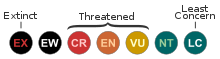
IUCN Red List
Growth: S = slow M = medium F = fast. Soil: L = light (sandy) M = medium H = heavy (clay). pH: A = acid N = neutral B = basic (alkaline). Shade: F = full shade S = semi-shade N = no shade. Moisture: D = dry M = Moist We = wet Wa = water.
Support Plants For A Future
Plants For A Future relies on regular donations to keep our free database and search facilities going, to pay for ongoing research, improvements and enhancements, and to develop and publish new books.
Read more
Choose Currency
Donate in £ GBP
Donate in $ USD
Donate in € EUR
Securely pay via PayPal or Credit/Debit Card without an account.
Expert comment
Author
Siebold.&Zucc.
Botanical References
11200
Links / References
For a list of references used on this page please go here
Readers comment