Translate this page:
Summary
This name is a synonym of Cyperus squarrosus var. squarrosus. Bearded nutsedge is a useful wild food in the nutsedge group, providing small starchy tubers that can be roasted, boiled, or ground. While not as large or reliable as cultivated chufa, it remains a valuable survival food, particularly in wet habitats where other starchy roots are scarce.
Physical Characteristics

 Cyperus aristatus is a PERENNIAL growing to 0.5 m (1ft 8in).
See above for USDA hardiness. It is hardy to UK zone 6. The seeds ripen from July to August. The species is hermaphrodite (has both male and female organs) and is pollinated by Wind.
Suitable for: light (sandy) and medium (loamy) soils. Suitable pH: mildly acid, neutral and basic (mildly alkaline) soils. It cannot grow in the shade. It prefers moist or wet soil.
UK Hardiness Map
US Hardiness Map
Synonyms
C. inflexus. Muhl. C. squarrosus. L.
Plant Habitats
Bog Garden;
Edible Uses
Edible Parts: Root
Edible Uses:
Bearded nutsedge is a smaller species valued for edible roots and occasionally seeds. It occupies sandy or disturbed soils [2-3]. Edibility Summary: Roots are edible; seeds occasionally used [2-3]. Edible Uses & Rating: Moderate but situational. Taste, Processing & Kitchen Notes: Roots are starchy with mild grassy undertones. Cooking improves texture [2-3]. Seasonality (Phenology): Roots accessible most of the growing season. Safety & Cautions (Food Use): Cook to eliminate possible pathogens. Harvest & Processing Workflow: Loosen soil gently to retrieve tubers intact [2-3]. Cultivar/Selection Notes: No cultivated forms. Look-Alikes & Confusion Risks: Requires familiarity with sedge morphology for confident identification. Traditional/Indigenous Use Summary: Part of the broader nutsedge tradition as a root food [2-3]. Tuber - raw or cooked[46, 161, 177]. A starchy flavour[61]. Bearded nutsedge is one of several Cyperus species with edible roots. Like other nutsedges (also called flatsedges), the plant produces small underground tubers that can be eaten. These tubers are starchy, firm, and nut-like, often compared to “earth almonds” (best known in Cyperus esculentus, or chufa). They can be eaten raw, but are improved by cooking: Roasting develops a nutty flavor. Boiling softens the texture and reduces any muddy or bitter undertones. The seeds (achenes) of related species are also edible, though less substantial than the tubers. They can be eaten raw or boiled into mush, providing additional calories. Nutritional & Cultural Notes: Nutsedge roots and seeds were historically an important food source for Native Americans, sometimes even cultivated. They provided carbohydrates that could be stored, dried, or ground into meal. Cautions: Because nutsedges often grow in wet or aquatic habitats, they may harbor parasites. Cooking is essential to ensure safety. Textures can be fibrous and somewhat irritating in some species, but tubers and seeds are the most worthwhile parts [2-3].
References More on Edible Uses
Medicinal Uses
Plants For A Future can not take any responsibility for any adverse effects from the use of plants. Always seek advice from a professional before using a plant medicinally.
None known
References More on Medicinal Uses
The Bookshop: Edible Plant Books
Our Latest books on Perennial Plants For Food Forests and Permaculture Gardens in paperback or digital formats.

Edible Tropical Plants
Food Forest Plants for Hotter Conditions: 250+ Plants For Tropical Food Forests & Permaculture Gardens.
More

Edible Temperate Plants
Plants for Your Food Forest: 500 Plants for Temperate Food Forests & Permaculture Gardens.
More

More Books
PFAF have eight books available in paperback and digital formats. Browse the shop for more information.
Shop Now
Other Uses
Weaving
The leaves are used for weaving hats, matting etc[178]. Seeds support birds; roots stabilize soil.
Special Uses
References More on Other Uses
Cultivation details
A dependable minor root crop for experienced foragers. Growing Conditions: Adapts to sandy or seasonally moist soils. Habitat & Range: Widespread across warmer regions of North America. Size & Landscape Performance: Compact and unobtrusive. Cultivation (Horticulture): Rarely grown intentionally. Pests & Problems: Generally resilient. Identification & Habit: Triangular stems with bearded-looking spikelets. Pollinators: Wind-pollinated. Propagation: Seeds and rhizomes. Plant Name: Bearded Nutsedge. Family: Cyperaceae. Genus: Cyperus. Common Names: Bearded flatsedge. USDA Hardiness Zones: Approximately 6–10. Height/Spread: 10–50 cm tall. Prefers a moist sandy loam[95, 117]. The dried plant is fragrant[235]. The plant has a strong aroma of Aloe tincture[328]. Bearded nutsedge grows in wet meadows, stream banks, and moist soils in the Southwest and across much of North America. It thrives in disturbed, damp sites. USDA Hardiness Zone: 5–10. Weed Potential: High. Several Cyperus species (especially C. rotundus and C. esculentus) are considered aggressive weeds in fields and gardens. Bearded nutsedge can also spread readily and is difficult to eradicate once established.
References Carbon Farming Information and Carbon Sequestration Information
Temperature Converter
Type a value in the Celsius field to convert the value to Fahrenheit:
Fahrenheit:
The PFAF Bookshop
Plants For A Future have a number of books available in paperback and digital form. Book titles include Edible Plants, Edible Perennials, Edible Trees,Edible Shrubs, Woodland Gardening, and Temperate Food Forest Plants. Our new book is Food Forest Plants For Hotter Conditions (Tropical and Sub-Tropical).
Shop Now
Plant Propagation
Seed - surface sow in the spring and keep the compost moist[164]. The seed usually germinates in 2 - 6 weeks at 18°c[164]. Prick out the seedlings into individual pots as soon as they are large enough to handle. Grow on for their first winter in a greenhouse and plant them out in late spring after the last expected frosts. Division in spring or autumn. This is more a matter of harvesting the tubers and replanting them. If this is done in the autumn, then it is best to store the tubers in a cool frost-free place overwinter and plant them out in the spring.
Other Names
If available other names are mentioned here
Bearded Nutsedge (Cyperus squarrosus L. = C. aristatus Rottb. = C. inflexus Muhl.)
Native Range
TEMPERATE ASIA: Oman, Saudi Arabia, Yemen, Afghanistan, China (Sichuan Sheng, Yunnan Sheng) TROPICAL ASIA: Bangladesh, Bhutan, India, Sri Lanka, Nepal, Pakistan, Myanmar, Thailand, Vietnam, Indonesia (Lesser Sunda Islands) NORTHERN AMERICA: Canada (Québec, Ontario, New Brunswick, Alberta, Manitoba, British Columbia), United States (Connecticut, Indiana, Maine, Massachusetts, Michigan, New Hampshire, New Jersey, New York, Ohio, Pennsylvania, Rhode Island, Vermont, West Virginia, Iowa, Kansas, Minnesota, Missouri, Nebraska, North Dakota, South Dakota, Illinois, Oklahoma, Wisconsin, Colorado, Idaho, Montana, Oregon, Washington, Wyoming, Alabama, Arkansas, Delaware, District of Columbia, Florida, Georgia, Kentucky, Louisiana, Maryland, Mississippi, North Carolina, South Carolina, Tennessee, Virginia, New Mexico, Texas, Arizona, California, Nevada, Utah), Mexico (Baja California (Norte), Baja California Sur, Chihuahua, Coahuila de Zaragoza, Nuevo León, San Luis Potosí, Sonora, Campeche, Oaxaca, Yucatán) SOUTHERN AMERICA: Aruba, Anguilla, Netherlands Antilles, Bermuda, Cuba, Guatemala, Brazil (north), Bolivia, Colombia, Ecuador (incl. Galapagos), Peru, Argentina, Chile, Paraguay, Uruguay AUSTRALASIA: Australia (New South Wales, Queensland, South Australia, Victoria, Western Australia, Northern Territory) AFRICA: Cabo Verde, Eritrea, Ethiopia, Somalia, Chad, Yemen (Arkhabil Suqutrá), Kenya, Tanzania, Uganda, Burundi, Central African Republic, Democratic Republic of the Congo, Rwanda, Benin, Burkina Faso, Côte D‘Ivoire, Ghana, Guinea, Gambia, Mali, Mauritania, Niger, Nigeria, Senegal, Togo, Angola, Mozambique, Malawi, Botswana, Namibia, Eswatini, South Africa, Madagascar
Weed Potential
Right plant wrong place. We are currently updating this section.
Please note that a plant may be invasive in one area but may not in your area so it's worth checking.
High. Several Cyperus species (especially C. rotundus and C. esculentus) are considered aggressive weeds in fields and gardens. Bearded nutsedge can also spread readily and is difficult to eradicate once established.
Conservation Status
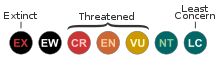
IUCN Red List of Threatened Plants Status :
| Related Plants
|
| Latin Name | Common Name | Habit | Height | Hardiness | Growth | Soil | Shade | Moisture | Edible | Medicinal | Other |
| Cyperus articulatus | Jointed flatsedge, Priprioca, Piripiri | Perennial | 1.8 |
10-12
| F | LMH | N | MWeWa | 1 | 4 | 2 |
| Cyperus cephalotes | Bhada, Flat Sedges, Nut Sedges or Umbrella Sedge. | Perennial | 0.3 |
10-12
| F | LMH | N | WeWa | 0 | 1 | 2 |
| Cyperus distans | Slender Cyperus, Piedmont flatsedge | Perennial | 0.5 |
0-0
| | LM | N | MWe | 1 | 1 | 2 |
| Cyperus erythrorhizos | Redroot Flatsedge | Annual | 0.8 |
4-10
| F | LMH | SN | MWe | 2 | 0 | 2 |
| Cyperus esculentus | Tiger Nut, Yellow nutsedge, Nut Grass | Perennial | 0.9 |
5-10
| F | LMH | N | MWe | 4 | 2 | 3 |
| Cyperus fendlerianus | Fendler's Flatsedge | Perennial | 0.7 |
5-9
| F | LM | N | MWe | 2 | 0 | 2 |
| Cyperus giganteus | Piripiri, Mexican Papyrus | Perennial | 1.5 |
9-11
| F | LMH | N | WeWa | 0 | 2 | 3 |
| Cyperus longus | Galingale | Perennial | 1.2 |
6-9
| F | LMH | N | MWeWa | 2 | 1 | 3 |
| Cyperus odoratus | Fragrant or rusty flatsedge | Annual/Perennial | 0.8 |
6-10
| F | LMH | N | MWe | 3 | 3 | 2 |
| Cyperus papyrus | Papyrus. Papyrus sedge | Perennial | 5.0 |
9-12
| F | LMH | N | WeWa | 2 | 2 | 2 |
| Cyperus rotundus | Purple Nutsedge | Perennial | 0.6 |
7-11
| | LM | N | MWe | 3 | 3 | 2 |
| Cyperus schweinitzii | Flatsedge, Schweinitz's flatsedge | Perennial | 0.8 |
0-0
| | LM | N | MWe | 2 | 0 | 2 |
| Cyperus setigerus | Lean flatsedge | Perennial | 1.0 |
0-0
| | LM | N | MWe | 2 | 0 | 2 |
| Cyperus tegetiformis | | Perennial | 0.0 |
-
| | LM | N | MWe | 0 | 0 | 2 |
| Cyperus textilis | Flat sedge, Basket grass, | Perennial | 1.5 |
9-12
| F | LMH | FSN | MWeWa | 0 | 0 | 4 |
| Cyperus ustulatus | | Perennial | 1.2 |
-
| | LM | N | MWe | 0 | 0 | 2 |
|
Growth: S = slow M = medium F = fast. Soil: L = light (sandy) M = medium H = heavy (clay). pH: A = acid N = neutral B = basic (alkaline). Shade: F = full shade S = semi-shade N = no shade. Moisture: D = dry M = Moist We = wet Wa = water.
Now available:
Food Forest Plants for Mediterranean Conditions
350+ Perennial Plants For Mediterranean and Drier Food Forests and Permaculture Gardens.
[Paperback and eBook]
This is the third in Plants For A Future's series of plant guides for food forests tailored to
specific climate zones. Following volumes on temperate and tropical ecosystems, this book focuses
on species suited to Mediterranean conditions—regions with hot, dry summers and cool, wet winters,
often facing the added challenge of climate change.
Read More
Expert comment
Author
Rottb.
Botanical References
60235270
Links / References
For a list of references used on this page please go here
Readers comment
| Add a comment |
|
If you have important information about this plant that may help other users please add a comment or link below. Only comments or links that are felt to be directly relevant to a plant will be included. If you think a comment/link or information contained on this page is inaccurate or misleading we would welcome your feedback at [email protected]. If you have questions about a plant please use the Forum on this website as we do not have the resources to answer questions ourselves.
* Please note: the comments by website users are not necessarily those held by PFAF and may give misleading or inaccurate information.
|
Subject : Cyperus aristatus
|
|
|
|