 |
|
http://www.flickr.com/photos/dinesh_valke/ |
 |
| http://flickr.com/photos/dinesh_valke/ |
Translate this page:
Summary
Physical Characteristics
![]()
![]() Cuscuta_chinensis is a PERENNIAL. The species is hermaphrodite (has both male and female organs).
Suitable for: light (sandy), medium (loamy) and heavy (clay) soils. Suitable pH: mildly acid, neutral and basic (mildly alkaline) soils. It can grow in semi-shade (light woodland) or no shade. It prefers moist soil.
UK Hardiness Map
US Hardiness Map
Synonyms
Plant Habitats
Edible Uses
References More on Edible Uses
Medicinal Uses
Plants For A Future can not take any responsibility for any adverse effects from the use of plants. Always seek advice from a professional before using a plant medicinally.
A lotion made from the stems is used in the treatment of sore heads and inflamed eyes[218]. The seed is aphrodisiac, demulcent, diaphoretic, hepatic and tonic[176, 178, 218, 240]. It is decocted and used with other herbs to treat a variety of ailments[218]. In particular, it is used in the treatment of impotence, nocturnal emissions, vertigo, lumbago, leucorrhoea, frequent micturation, decreased eyesight, threatened abortion and chronic diarrhoea[176].
References More on Medicinal Uses
Other Uses
References More on Other Uses
Cultivation details
We have very little information on this species and do not know if it will be hardy in Britain, though judging by its native range it could succeed outdoors at least in the milder parts of this country. This is a parasitic species that is devoid of leaves, roots or chlorophyll and so is totally dependant upon its host[238]. It is most commonly found growing on plants in the families Leguminosae, Compositae and Zygophyllaceae and must be grown next to the host plant, which it penetrates with suckers in order to obtain nutriment[238, 266].
References Carbon Farming Information and Carbon Sequestration Information
Temperature Converter
Type a value in the Celsius field to convert the value to Fahrenheit:
Fahrenheit:
The PFAF Bookshop
Plants For A Future have a number of books available in paperback and digital form. Book titles include Edible Plants, Edible Perennials, Edible Trees,Edible Shrubs, Woodland Gardening, and Temperate Food Forest Plants. Our new book is Food Forest Plants For Hotter Conditions (Tropical and Sub-Tropical).
Shop Now
Plant Propagation
Seed - best sown as soon as it is ripe in the autumn, by lodging it among the stems of a host plant[238].
Other Names
If available other names are mentioned here
Native Range
TEMPERATE ASIA: Afghanistan, Iran, Iraq, Kazakhstan, Kyrgyzstan, Tajikistan, Turkmenistan, Uzbekistan, Mongolia, Russian Federation (Primorye, Amur), China (throughout), Korea, Japan (Honshu, Kyushu, Ryukyu Islands, Shikoku), Taiwan TROPICAL ASIA: India, Sri Lanka, Thailand, Indonesia NORTHERN AMERICA: United States (New Mexico, Texas, Arizona, Utah), Mexico (Chihuahua, Coahuila de Zaragoza, Durango, San Luis Potosí, Zacatecas, Aguascalientes, Hidalgo, Oaxaca, Puebla, Querétaro) AUSTRALASIA: Australia (Queensland) AFRICA: Ethiopia
Weed Potential
Right plant wrong place. We are currently updating this section.
Please note that a plant may be invasive in one area but may not
in your area so it's worth checking.
Conservation Status
IUCN Red List of Threatened Plants Status :
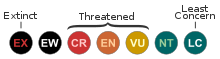
IUCN Red List
Growth: S = slow M = medium F = fast. Soil: L = light (sandy) M = medium H = heavy (clay). pH: A = acid N = neutral B = basic (alkaline). Shade: F = full shade S = semi-shade N = no shade. Moisture: D = dry M = Moist We = wet Wa = water.
Now available:
Food Forest Plants for Mediterranean Conditions
350+ Perennial Plants For Mediterranean and Drier Food Forests and Permaculture Gardens.
[Paperback and eBook]
This is the third in Plants For A Future's series of plant guides for food forests tailored to
specific climate zones. Following volumes on temperate and tropical ecosystems, this book focuses
on species suited to Mediterranean conditions—regions with hot, dry summers and cool, wet winters,
often facing the added challenge of climate change.
Read More
Expert comment
Author
Lam.
Botanical References
58266
Links / References
For a list of references used on this page please go here
Readers comment
© 2010, Plants For A Future. Plants For A Future is a charitable company limited by guarantee, registered in England and Wales. Charity No. 1057719, Company No. 3204567.