Translate this page:
Summary
Bigfruit dodder is a pale yellow, thread-stemmed parasitic twiner notable for relatively larger capsules (and thus a more obvious “seed-focused” use profile than many dodders). Even so, the genus-level caution still dominates: seeds are the reported edible part, while stems are not recommended for routine is a synonym of Cuscuta gronovii var. curta
Physical Characteristics

 Cuscuta megalocarpa is a PERENNIAL growing to 1 m (3ft 3in) by 1 m (3ft 3in).
See above for USDA hardiness. It is hardy to UK zone 5. The species is hermaphrodite (has both male and female organs).
Suitable for: light (sandy), medium (loamy) and heavy (clay) soils. Suitable pH: mildly acid, neutral and basic (mildly alkaline) soils. It can grow in semi-shade (light woodland) or no shade. It prefers moist soil.
UK Hardiness Map
US Hardiness Map
Synonyms
C. curta. Engelm. Cuscuta gronovii var. curta
Plant Habitats
Woodland Garden Dappled Shade;
Edible Uses
Edible Parts: Seed
Edible Uses:
Seeds are the only consistently reported edible part across the three dodders you listed, and even that use is sparse in the literature you summarized. Everything else should be treated as inedible or of questionable safety [2-3]. Edible Uses & Rating. Seeds would be rated “low-confidence emergency edible” because documentation is thin and host-mediated risks remain. Stems are “not recommended.” [2-3] Taste, Processing & Kitchen Notes. Because dodder chemistry can vary with host, any “universal flavor description” would be unreliable. If seeds are collected, the practical kitchen approach would mirror tiny grain/seed handling: dry, thresh, winnow, and roast lightly; reject any batch with unexpected bitterness [2-3]. Seasonality (Phenology). Flowering in mid-summer (July–August) on shrubs such as willows, with capsules maturing afterward. In colder parts of its range, the usable seed window is typically late summer into early autumn. Safety & Cautions (Food Use). Treat the host as part of the identification: never collect dodder from a poisonous host. Assume potential digestive upset from stem material. Consider also that riparian hosts can accumulate minerals or pollutants in some settings, adding another layer of caution for any seed collection. Harvest & Processing Workflow. If collecting seeds, wait for papery capsules to mature and begin to split irregularly; collect clusters into a bag; dry fully; rub to release seeds; winnow away capsule fragments; and roast-test a tiny sample, discarding any bitter lots. Cultivar/Selection Notes. None applicable for food; the plant is not cultivated as an edible. Look-Alikes & Confusion Risks. Species-level confusion within Cuscuta is common. Bigfruit dodder is separated by its flower structures (including fringed inner scales) and larger, papery capsules, but in practice many foragers will only be confident at “dodder” level. Host confusion remains the highest-risk mistake. Traditional/Indigenous Use Summary. Dodder seeds (species not always specified) were eaten in parts of Arizona and New Mexico in limited fashion, but dodders overall were minor food plants compared with better seed resources. Seed - parched and ground into a meal[161].
References More on Edible Uses
Medicinal Uses
Plants For A Future can not take any responsibility for any adverse effects from the use of plants. Always seek advice from a professional before using a plant medicinally.
None knowBased on available botanical databases, Cuscuta megalocarpa is recognized primarily as a parasitic plant native to North America. While it has not been as extensively studied for medical applications as its counterparts, Cuscuta chinensis or Cuscuta reflexa, the genus Cuscuta as a whole is frequently utilized in traditional medicine. General Genus Properties: It is important to note that many Cuscuta species share similar phytochemical profiles (flavonoids, alkaloids, tannins). The genus is generally associated with properties like being anti-inflammatory, antioxidant, hepatoprotective (liver-protecting), and sometimes used in treating rheumatic pain. Similar Species Usage: Other Dodder species (e.g., C. chinensis, C. epithymum) are used in traditional medicine for kidney/liver health, sexual vitality, and treating skin issues. However, these uses cannot be directly attributed to C. megalocarpa without specific research. Safety Precautions: Dodder species can be poisonous, with symptoms of poisoning including diarrhea, abdominal pain, and in severe cases, liver or brain damage. It is advised to avoid using this plant without professional consultation, especially during pregnancy. In summary, while Cuscuta species are widely used in traditional herbalism, there is no widely recognized or specific medical use for Cuscuta megalocarpa in current literature.n
References More on Medicinal Uses
The Bookshop: Edible Plant Books
Our Latest books on Perennial Plants For Food Forests and Permaculture Gardens in paperback or digital formats.
Edible Tropical Plants
Food Forest Plants for Hotter Conditions: 250+ Plants For Tropical Food Forests & Permaculture Gardens.
More
Edible Temperate Plants
Plants for Your Food Forest: 500 Plants for Temperate Food Forests & Permaculture Gardens.
More
More Books
PFAF have eight books available in paperback and digital formats. Browse the shop for more information.
Shop Now
Other Uses
Parasitism can reshape shrub vigor and community composition; tangles also create microhabitat structure for small insects. Cultivation (Horticulture). Not recommended; parasitic habit makes it incompatible with most horticultural goals.
Special Uses
References More on Other Uses
Cultivation details
Bigfruit dodder reinforces the rule for this group: if there is a food angle at all, it is the seed, and even then it is a cautious, documentation-driven use rather than a dependable edible. Growing Conditions. Requires living hosts in riparian or shrub settings and enough seasonal moisture to support host growth; seed germination and successful host contact are the bottlenecks. Habitat & Range. Widespread in New Mexico and northward to Montana, often on willows and other shrubs, flowering in July and August. Size & Landscape Performance. Forms dense tangles on shrubs that can be conspicuous and can reduce host vigor; not desirable in managed landscapes. Cultivation (Horticulture). Not recommended; parasitic habit makes it incompatible with most horticultural goals. Pests & Problems. The principal “problem” is parasitism of valued shrubs and trees in riparian plantings. Identification & Habit. Nongreen, rootless twiner; light yellow stems; dense flower clusters with an inner ring of fringed scales; papery capsules 3–6 mm long with 2–4 seeds; commonly on willows. Pollinators. As with other dodders, flowers are typically serviced by small generalist insects (small bees, flies) visiting dense clusters; seed set may also occur with limited insect activity depending on the plant’s reproductive biology. Morning glory family (Convolvulaceae); Cuscuta genus; common names include bigfruit dodder and mega dodder. Approximate USDA Hardiness Zones: 4–8 (often behaving as a warm-season annual parasite, persisting by seed). Size is a host-draping tangle typically 20–100+ cm across depending on host density, with runners extending along connected shrubs. Morning glory family (Convolvulaceae); Cuscuta genus; common names include bigfruit dodder and mega dodder. Approximate USDA Hardiness Zones: 4–8 (often behaving as a warm-season annual parasite, persisting by seed). Size is a host-draping tangle typically 20–100+ cm across depending on host density, with runners extending along connected shrubs.
References Carbon Farming Information and Carbon Sequestration Information
Temperature Converter
Type a value in the Celsius field to convert the value to Fahrenheit:
Fahrenheit:
The PFAF Bookshop
Plants For A Future have a number of books available in paperback and digital form. Book titles include Edible Plants, Edible Perennials, Edible Trees,Edible Shrubs, Woodland Gardening, and Temperate Food Forest Plants. Our new book is Food Forest Plants For Hotter Conditions (Tropical and Sub-Tropical).
Shop Now
Plant Propagation
Seed - best sown as soon as it is ripe in the autumn, by lodging it among the stems of a host plant[238].
Other Names
If available other names are mentioned here
Bigfruit dodder and mega dodder.
Native Range
NORTHERN AMERICA: Canada (Saskatchewan, Alberta, Manitoba), United States (Indiana, Michigan, New Jersey, New York, Iowa, Maryland, Virginia, Texas)
Weed Potential
Right plant wrong place. We are currently updating this section.
Please note that a plant may be invasive in one area but may not in your area so it's worth checking.
Moderate to high in suitable riparian shrublands where hosts form connected canopies.
Conservation Status
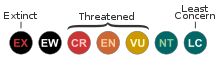
IUCN Red List of Threatened Plants Status : Not available.
Growth: S = slow M = medium F = fast. Soil: L = light (sandy) M = medium H = heavy (clay). pH: A = acid N = neutral B = basic (alkaline). Shade: F = full shade S = semi-shade N = no shade. Moisture: D = dry M = Moist We = wet Wa = water.
Now available:
Food Forest Plants for Mediterranean Conditions
350+ Perennial Plants For Mediterranean and Drier Food Forests and Permaculture Gardens.
[Paperback and eBook]
This is the third in Plants For A Future's series of plant guides for food forests tailored to
specific climate zones. Following volumes on temperate and tropical ecosystems, this book focuses
on species suited to Mediterranean conditions—regions with hot, dry summers and cool, wet winters,
often facing the added challenge of climate change.
Read More
Expert comment
Author
Rydb.
Botanical References
143
Links / References
For a list of references used on this page please go here
Readers comment
| Add a comment |
|
If you have important information about this plant that may help other users please add a comment or link below. Only comments or links that are felt to be directly relevant to a plant will be included. If you think a comment/link or information contained on this page is inaccurate or misleading we would welcome your feedback at [email protected]. If you have questions about a plant please use the Forum on this website as we do not have the resources to answer questions ourselves.
* Please note: the comments by website users are not necessarily those held by PFAF and may give misleading or inaccurate information.
|
Subject : Cuscuta megalocarpa
|
|
|
|