 |
|
Roger Culos. Creative Commons Attribution-Share Alike 3.0 |
 |
| Stan Shebs. Creative Commons Attribution-Share Alike 3.1 |
Translate this page:
Summary
Coyote gourd or melon is a desert and desert-margin wild gourd most valuable for its mature seeds, while the flesh and pulp remain a safety concern due to cucurbitacins. Its leaves are rounded in outline and palmately lobed to about the middle—less dramatically “fingered” than fingerleaf gourd—and it produces the same distinctive hard, round pepos that mature from green-patterned to yellow.
Physical Characteristics

 Cucurbita palmata is a PERENNIAL CLIMBER growing to 3 m (9ft) by 0.4 m (1ft 4in) at a medium rate.
See above for USDA hardiness. It is hardy to UK zone 9. The flowers are pollinated by Bees.
It is noted for attracting wildlife.
Suitable for: light (sandy) and medium (loamy) soils, prefers well-drained soil and can grow in nutritionally poor soil. Suitable pH: mildly acid, neutral and basic (mildly alkaline) soils. It cannot grow in the shade. It prefers dry or moist soil and can tolerate drought.
UK Hardiness Map
US Hardiness Map
Synonyms
Cucurbita californica Torr. ex S.Watson
Plant Habitats
Edible Uses
Mature, non-bitter seeds are the primary safe food target. The flesh and pulp are the portions most associated with dangerous bitterness in wild gourds, and cucurbitacins are not reliably neutralized by cooking [2-3]. Edible Uses & Rating. The seeds are rated good when fully mature and free of bitterness, with a high calorie value and strong storage potential once dried. The flesh and pulp rate is unsafe for general foraging because the downside risk is high and the benefit is low compared to the seed yield. Taste, Processing & Kitchen Notes. Properly mature seeds can roast into a pepita-like product, often surprisingly close to pumpkin seeds when bitterness is absent. Seed quality is strongly maturity-dependent; harvest timing in autumn matters more than clever cooking [2-3]. Seasonality (Phenology). Growth and flowering peak in summer; seed harvest is best in mid to late autumn when fruits have yellowed and are drying, extending the effective harvest window because the rind protects the seeds [2-3]. Safety & Cautions (Food Use). Do not treat the bitter chemistry of wild gourds casually. Cucurbitacins are intensely bitter and are associated with poisoning, and heat does not make them reliably safe. If seeds taste unusually bitter, do not eat them [2-3]. Harvest & Processing Workflow. Harvest fully mature fruits, crack open, remove seeds, wash clean of pulp, dry thoroughly, and roast. Because bitterness is the key hazard signal, taste-testing should be limited to a cautious check of a tiny portion of cleaned seed only, and only to confirm absence of extreme bitterness—not as an invitation to eat the flesh. Cultivar/Selection Notes. Like the other wild gourds, named selections are uncommon. If you are managing a site for reliable harvest, favor patches that set fruits consistently and that yield mature seeds that are consistently non-bitter. Look-Alikes & Confusion Risks. Confusion with fingerleaf and buffalo gourd is common. Leaf shape and habitat context help, but from a food-safety standpoint the same rule applies across the group: focus on mature, non-bitter seeds and avoid the flesh/pulp. Traditional/Indigenous Use Summary. The strongest traditional food signal for wild desert gourds is seed use as a nutritious, calorie-rich food, with harvesting timed to maturity when seeds are easiest to extract and safest to evaluate for bitterness.
References More on Edible Uses
Medicinal Uses
Plants For A Future can not take any responsibility for any adverse effects from the use of plants. Always seek advice from a professional before using a plant medicinally.
Cucurbita palmata has a history of traditional, primarily external, medicinal and practical uses, particularly among Native American groups. Documented Medicinal and Practical Uses: Topical/External Use: The plant has been used traditionally for skin-related issues. Soap Substitute: Due to the saponins (foaming agents) in the fruit, it has been used as a cleanser or soap. Insect Repellent: The juice of the plant has been used as an insect repellent. Traditional Medicine (General): While C. palmata itself is not as extensively studied as C. pepo or C. maxima for internal medicine, it is noted for medicinal uses. Some sources suggest it has been used for gastrointestinal ailments, although high consumption is risky. Food (Seeds): While the fruit is inedible, the seeds have been used as a food source (e.g., ground into flour). Important Considerations Toxicity: The fruit of Cucurbita palmata is very bitter and, like many wild gourds, can be toxic if ingested in quantity. Caution: Information regarding the specific safety and efficacy of medicinal uses for C. palmata is limited, and it should not be consumed without expert knowledge. Related Species: Many medicinal studies focus on Cucurbita pepo (pumpkin) rather than Cucurbita palmata, and these species should not be confused. Note: For any specific, severe condition, traditional use should not replace professional medical advice.
References More on Medicinal Uses
The Bookshop: Edible Plant Books
Our Latest books on Perennial Plants For Food Forests and Permaculture Gardens in paperback or digital formats.

Edible Tropical Plants
Food Forest Plants for Hotter Conditions: 250+ Plants For Tropical Food Forests & Permaculture Gardens.
More

Edible Temperate Plants
Plants for Your Food Forest: 500 Plants for Temperate Food Forests & Permaculture Gardens.
More

More Books
PFAF have eight books available in paperback and digital formats. Browse the shop for more information.
Shop Now
Other Uses
As a landscape plant it is a sprawling seasonal vine with big leaves and conspicuous flowers and fruits, best used where naturalistic spread is acceptable and where you want to support native pollinators adapted to cucurbits. The plant supports Cucurbita-specialist pollinators and can hold seeds in hard fruits for an extended period, creating a long window of seed availability on the landscape while the bitter fruit chemistry discourages many would-be consumers. It is a tertiary wild relative of, and potential gene donor to cushaw, fig leaf gourd, maxima pumpkin/squash, moschata pumkin/squash and pepo pumpkin/squash (USDA, ARS, GRIN 2017). Along with the other species of the phylogenetic Group Digitata (Cucurbita cordata and C. digitata), it has proved to be resistant to viruses affecting the cultivated taxa, such as cucumber mosaic virus (CMV) and tobacco ringspot virus (TRSV) (OECD 2012). Moreover, seeds of the species in this group have high content of oil and protein, qualities that can be of interest in future genetic improvement of the related crops (Bemis et al. 1967, Provvidenti 1978, Lira et al. 2009) [2-6].
Special Uses
References More on Other Uses
Cultivation details
Coyote gourd is a classic example of a wild plant that “looks like food” but rewards the disciplined forager: harvest the mature seeds, leave the bitter flesh alone, and you gain a storable, high-energy product that can rival familiar pepitas. Growing Conditions. It favors hot sun, open ground, and well-drained soils, especially where seasonal moisture pulses occur. It is most robust in desert and semi-desert settings where competition is low, and summer warmth is reliable. Habitat & Range. It is strongly associated with desert landscapes and disturbed open ground in its core range, with your notes pointing particularly to southern California as a key area of occurrence. Size & Landscape Performance. As a landscape plant, it is a sprawling seasonal vine with big leaves and conspicuous flowers and fruits, best used where naturalistic spread is acceptable and where you want to support native pollinators adapted to cucurbits. Cultivation (Horticulture). If cultivated, treat it like a wild squash relative: warm soil, full sun, space to run, minimal overhead watering in humid periods, and patience for a big seasonal sprawl rather than tidy structure. Pests & Problems. It can experience typical cucurbit pressures (chewing insects, sap-feeders, occasional fungal issues), but in arid sites, the major “problem” is human: misusing the flesh as food despite the risk of bitterness. Identification & Habit. It is a low vine with tendrils, rough-haired leaves that are palmately lobed, showy yellow unisexual flowers, and hard, round pepos that mature to yellow and then dry. Pollinators. Like other Cucurbita, coyote gourd is primarily pollinated by bees that work squash-type flowers, including specialist squash bees that specialize on Cucurbita (gourds and squashes), with additional bee visitors depending on local conditions. Coyote gourd (Cucurbita palmata) is in the gourd family (Cucurbitaceae), genus Cucurbita, and is commonly called coyote gourd or coyote melon. Like the other wild gourds here, it is a warm-season sprawler with aboveground frost sensitivity; a practical working estimate is USDA Zones 8–11 for perennial behavior of the crown/rootstock in mild-winter sites, with annual top growth elsewhere. It commonly sprawls 1–4 m across, sometimes more with moisture, and stays low unless it climbs.
References Carbon Farming Information and Carbon Sequestration Information
Temperature Converter
Type a value in the Celsius field to convert the value to Fahrenheit:
Fahrenheit:
The PFAF Bookshop
Plants For A Future have a number of books available in paperback and digital form. Book titles include Edible Plants, Edible Perennials, Edible Trees,Edible Shrubs, Woodland Gardening, and Temperate Food Forest Plants. Our new book is Food Forest Plants For Hotter Conditions (Tropical and Sub-Tropical).
Shop Now
Plant Propagation
Propagation is by seed, with best establishment when sown into warm soil after frost. In suitable climates, persistence from the rootstock can occur; in colder climates, reseeding is the more reliable long-term strategy.
Other Names
If available other names are mentioned here
Coyote Melon
Native Range
US. USA. Arizona, California, Mexico Northwest, Nevada, Utah.
Weed Potential
Right plant wrong place. We are currently updating this section.
Please note that a plant may be invasive in one area but may not in your area so it's worth checking.
It can be locally weedy on disturbed ground where space and seasonal moisture allow, but it is best viewed as an opportunistic native-range sprawler rather than a high-risk invasive.
Conservation Status
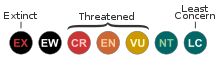
IUCN Red List of Threatened Plants Status : Cucurbita palmata is listed as Data Deficient.
| Related Plants
|
| Latin Name | Common Name | Habit | Height | Hardiness | Growth | Soil | Shade | Moisture | Edible | Medicinal | Other |
| Abobra tenuifolia | Cranberry Gourd | Perennial Climber | 3.5 |
8-11
| | LM | N | DM | 1 | 0 | |
| Acanthosicyos horridus | Naras. Butterpips | Perennial | 1.0 |
9-11
| F | LM | N | DM | 3 | 2 | 2 |
| Apodanthera undulata | Loco Melon | Perennial Climber | 2.0 |
8-10
| M | LM | N | DM | 1 | 0 | 2 |
| Benincasa hispida | Wax Gourd | Annual | 6.0 |
9-11
| | LMH | N | M | 3 | 3 | 1 |
| Bryonia alba | White Bryony | Perennial Climber | 4.0 |
5-9
| F | LMH | SN | M | 1 | 2 | 0 |
| Bryonia dioica | Red Bryony, Cretan bryony | Perennial Climber | 3.5 |
5-9
| F | LMH | SN | M | 1 | 2 | |
| Citrullus colocynthis | Perennial egusi, Bitter-apple | Perennial | 3.0 |
10-12
| F | LM | N | DM | 3 | 2 | 3 |
| Citrullus lanatus | Water Melon | Annual | 0.5 |
8-11
| | LM | N | DM | 4 | 3 | 1 |
| Coccinia grandis | Ivy Gourd | Perennial | 3.0 |
8-11
| | LMH | N | M | 2 | 2 | 0 |
| Cucumis anguria | Gherkin, West Indian gherkin | Annual Climber | 2.4 |
9-11
| | LMH | N | M | 3 | 1 | 0 |
| Cucumis melo | Melon, Cantaloupe | Annual Climber | 1.5 |
9-11
| | LMH | N | M | 4 | 2 | 0 |
| Cucumis melo agrestis | Wild Melon | Annual Climber | 1.5 |
9-11
| | LMH | N | M | 3 | 2 | |
| Cucumis melo cantalupensis | Cantaloupe Melon | Annual Climber | 1.5 |
9-11
| | LMH | N | M | 4 | 2 | |
| Cucumis melo chito | Orange Melon | Annual Climber | 1.5 |
9-11
| | LMH | N | M | 3 | 2 | |
| Cucumis melo conomon | Pickling Melon | Annual Climber | 1.5 |
9-11
| | LMH | N | M | 4 | 2 | |
| Cucumis melo flexuosus | Serpent Melon | Annual Climber | 1.5 |
9-11
| | LMH | N | M | 4 | 2 | |
| Cucumis melo inodorus | Honeydew Melon | Annual Climber | 1.5 |
9-11
| | LMH | N | M | 4 | 2 | |
| Cucumis melo momordica | Snap Melon | Annual Climber | 1.5 |
9-11
| | LMH | N | M | 4 | 2 | |
| Cucumis metuliferus | Horned Cucumber, African horned cucumber | Annual Climber | 1.5 |
9-11
| | LMH | N | M | 2 | 2 | 1 |
| Cucumis sativus | Cucumber, Garden cucumber | Annual Climber | 2.0 |
9-11
| | LMH | N | M | 4 | 2 | 2 |
| Cucurbita argyrosperma | Cushaw Pumpkin | Annual Climber | 0.5 |
2-11
| | LMH | SN | M | 4 | 2 | 1 |
| Cucurbita digitata | Fingerleaf Gourd. Coyote Gourd | Perennial | 3.0 |
8-12
| M | LMH | N | DM | 3 | 2 | 3 |
| Cucurbita ficifolia | Malabar Gourd, Figleaf gourd | Perennial Climber | 0.0 |
9-11
| F | LMH | SN | MWe | 3 | 2 | 1 |
| Cucurbita foetidissima | Buffalo Gourd, Missouri gourd | Perennial Climber | 6.0 |
6-11
| F | LMH | SN | DM | 3 | 2 | 3 |
| Cucurbita maxima | Winter Squash | Annual Climber | 0.6 |
2-11
| F | LMH | SN | M | 5 | 3 | 2 |
| Cucurbita moschata | Squash, Crookneck squash | Annual Climber | 0.6 |
2-11
| F | LMH | SN | M | 5 | 3 | 1 |
| Cucurbita pepo | Pumpkin, Field pumpkin, Ozark melon, Texas gourd | Annual Climber | 0.6 |
2-11
| F | LMH | SN | M | 4 | 3 | 2 |
| Cyclanthera brachystachya | Cuchinito | Annual | 3.0 |
9-11
| | LMH | S | M | 1 | 0 | |
| Cyclanthera pedata | Achocha, Caihua, Caygua, Cayua, Korila, Wild Cucumber | Annual | 4.5 |
9-11
| F | LMH | SN | M | 3 | 4 | 1 |
|
|
Growth: S = slow M = medium F = fast. Soil: L = light (sandy) M = medium H = heavy (clay). pH: A = acid N = neutral B = basic (alkaline). Shade: F = full shade S = semi-shade N = no shade. Moisture: D = dry M = Moist We = wet Wa = water.
Now available:
Food Forest Plants for Mediterranean Conditions
350+ Perennial Plants For Mediterranean and Drier Food Forests and Permaculture Gardens.
[Paperback and eBook]
This is the third in Plants For A Future's series of plant guides for food forests tailored to
specific climate zones. Following volumes on temperate and tropical ecosystems, this book focuses
on species suited to Mediterranean conditions—regions with hot, dry summers and cool, wet winters,
often facing the added challenge of climate change.
Read More
Expert comment
Author
S.Watson
Botanical References
Links / References
For a list of references used on this page please go here
Readers comment
| Add a comment |
|
If you have important information about this plant that may help other users please add a comment or link below. Only comments or links that are felt to be directly relevant to a plant will be included. If you think a comment/link or information contained on this page is inaccurate or misleading we would welcome your feedback at [email protected]. If you have questions about a plant please use the Forum on this website as we do not have the resources to answer questions ourselves.
* Please note: the comments by website users are not necessarily those held by PFAF and may give misleading or inaccurate information.
|
Subject : Cucurbita palmata
|
|
|
|