Translate this page:
Summary
Physical Characteristics

 Crepis zacintha is a ANNUAL growing to 0.3 m (1ft) by 0.1 m (0ft 4in) at a fast rate.
See above for USDA hardiness. It is hardy to UK zone 7. The flowers are pollinated by Insects.
Suitable for: light (sandy), medium (loamy) and heavy (clay) soils, prefers well-drained soil and can grow in nutritionally poor soil. Suitable pH: mildly acid, neutral and basic (mildly alkaline) soils. It cannot grow in the shade. It prefers dry or moist soil and can tolerate drought.
UK Hardiness Map
US Hardiness Map
Synonyms
Homotypic Synonyms: Hedypnois zacintha (L.) Dum.Cours. Lampsana verrucosa (Gaertn.) Oken. Lapsana zacintha L. Rhagadiolus zacintha (L.) All. Zacintha verrucosa Gaertn. Zacintha zacintha (L.) H.Karst. Because of its unique morphology it is sometimes has been assigned to a separate, monotypic genus (Zacintha Miller) [287].
Plant Habitats
Edible Uses
Leaves. Wild edible greens [2-4] .
References More on Edible Uses
Medicinal Uses
Plants For A Future can not take any responsibility for any adverse effects from the use of plants. Always seek advice from a professional before using a plant medicinally.
None known
References More on Medicinal Uses
Other Uses
References More on Other Uses
Cultivation details
A weed with shallow tap roots found on grassy slopes, fields, gravelly waste areas, roadsides, and disturbed areas at 200–300m elevations. Flowering in Jun–Jul (Northern Hemisphere). Yellow flowers with a reddish tinge on the back [287].
References Carbon Farming Information and Carbon Sequestration Information
Temperature Converter
Type a value in the Celsius field to convert the value to Fahrenheit:
Fahrenheit:
Plant Propagation
Seed.
Other Names
If available other names are mentioned here
Striped Hawksbeard, Zante Hawkweed, Striped hawk's-beard
Native Range
Native to: Albania, Bulgaria, Corse, Cyprus, East Aegean Is., France, Greece, Italy, Kriti, Krym, Lebanon-Syria, Palestine, Sardegna, Spain, Switzerland, Turkey, Turkey-in-Europe, Ukraine, Croatia, Montenegro, Serbia, Slovenia, Bosnia and Herzegovina, and Macedonia. Extinct in: Algeria.
Weed Potential
Right plant wrong place. We are currently updating this section.
Please note that a plant may be invasive in one area but may not
in your area so it's worth checking.
None Known
Conservation Status
IUCN Red List of Threatened Plants Status : This species has not yet been assessed for the IUCN Red List.
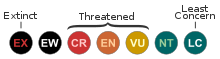
IUCN Red List
Growth: S = slow M = medium F = fast. Soil: L = light (sandy) M = medium H = heavy (clay). pH: A = acid N = neutral B = basic (alkaline). Shade: F = full shade S = semi-shade N = no shade. Moisture: D = dry M = Moist We = wet Wa = water.
Support Plants For A Future
Plants For A Future relies on regular donations to keep our free database and search facilities going, to pay for ongoing research, improvements and enhancements, and to develop and publish new books.
Read more
Choose Currency
Donate in £ GBP
Donate in $ USD
Donate in € EUR
Securely pay via PayPal or Credit/Debit Card without an account.
Expert comment
Author
(L.) Babc.
Botanical References
Links / References
For a list of references used on this page please go here
Readers comment
| Add a comment |
|
If you have important information about this plant that may help other users please add a comment or link below. Only comments or links that are felt to be directly relevant to a plant will be included. If you think a comment/link or information contained on this page is inaccurate or misleading we would welcome your feedback at [email protected]. If you have questions about a plant please use the Forum on this website as we do not have the resources to answer questions ourselves.
* Please note: the comments by website users are not necessarily those held by PFAF and may give misleading or inaccurate information.
|
Subject : Crepis zacintha
|
|
|
|