 |
|
http://commons.wikimedia.org/wiki/User:Cillas |
 |
| http://commons.wikimedia.org/wiki/User:IKAl |
Translate this page:
Summary
Bloom Color: Pink.
Main Bloom Time: Early fall. Form: Upright or erect.
Physical Characteristics

 Clerodendrum bungei is a deciduous Shrub growing to 2 m (6ft) by 2 m (6ft) at a medium rate.
See above for USDA hardiness. It is hardy to UK zone 7. It is in flower from August to September, and the seeds ripen from September to November. The species is hermaphrodite (has both male and female organs) and is pollinated by Insects.
Suitable for: light (sandy), medium (loamy) and heavy (clay) soils and prefers well-drained soil. Suitable pH: mildly acid, neutral and basic (mildly alkaline) soils. It cannot grow in the shade. It prefers moist soil.
UK Hardiness Map
US Hardiness Map
Synonyms
Clerodendrum yatschuense H.J.P.Winkl. Pavetta esquirolii H.Lév. Volkameria bungei (Steud.) L
Plant Habitats
Woodland Garden Sunny Edge; Dappled Shade;
Edible Uses
References More on Edible Uses
Medicinal Uses
Plants For A Future can not take any responsibility for any adverse effects from the use of plants. Always seek advice from a professional before using a plant medicinally.
Anodyne Anthelmintic Antiinflammatory Carminative
A decoction of the leaves is applied externally as an anodyne, anthelmintic, anti-inflammatory, carminative[147, 218].
References More on Medicinal Uses
Other Uses
References More on Other Uses
Cultivation details
Landscape Uses:Arbor, Container, Specimen. Succeeds in a sunny position in ordinary garden soil[1, 200] but prefers a fertile humus-rich well-drained soil[164, 200]. The soil must not be allowed to dry out in the growing season[1]. Requires a position sheltered from cold drying winds[1, 200]. Plants are hardy to about -10°c[184], they can be cut to the ground in severe winters but usually resprout from the base, especially if they have been well mulched, they will then flower in late summer[11, 182, 200]. Plants succeed in an open position at Wisley in Surrey[11]. Spreads rapidly by suckers[11]. Flowers are produced on the current seasons growth[200]. They have a delicious scent[245]. The leaves are foetid when crushed[182]. Special Features:Attractive foliage, Fragrant foliage, Not North American native, Fragrant flowers.
References Carbon Farming Information and Carbon Sequestration Information
Temperature Converter
Type a value in the Celsius field to convert the value to Fahrenheit:
Fahrenheit:
Plant Propagation
Seed - best sown as soon as possible in a greenhouse. Germination can be erratic but usually takes place within 20 - 60 days at 20°c[164]. When large enough to handle, prick the seedlings out into individual pots and grow them on in the greenhouse for at least their first winter. Plant them out in late spring or early summer after the last expected frosts. Root cuttings, 6 - 8cm long, December in a greenhouse. High percentage[78]. Division of suckers in the dormant season. Very easy, they can be planted out direct into their permanent positions if required.
Other Names
If available other names are mentioned here
Rose glorybower, cashmere bouquet; glory bower; glory flower; Mexican hydrangea. Chinese: chou mu dan; xiu mu dan. Germany: herrlicher Losstrauch. Japan: beni-bana-kusagi.
Native Range
TEMPERATE ASIA: China (Anhui Sheng, Fujian Sheng, Gansu Sheng, Guangdong Sheng, Guangxi Zhuangzu Zizhiqu, Guizhou Sheng, Hainan Sheng, Hebei Sheng, Henan Sheng, Hubei Sheng, Hunan Sheng, Jiangsu Sheng, Jiangxi Sheng, Ningxia Huizi Zizhiqu, Qinghai Sheng, Shaanxi Sheng, Shandong Sheng, Shanxi Sheng, Sichuan Sheng, Yunnan Sheng, Zhejiang Sheng), Taiwan TROPICAL ASIA: Vietnam
Weed Potential
Right plant wrong place. We are currently updating this section.
Please note that a plant may be invasive in one area but may not
in your area so it's worth checking.
This plant can be weedy or invasive- rose glorybower,
strong-scented glorybower. Reproduces by both seeds and root suckers, which allow it to spread quickly and widely and form colonies, and is dispersed by humans and birds. Included in the European invasive plants database and the Global Compendium of Weeds.
Conservation Status
IUCN Red List of Threatened Plants Status : This taxon has not yet been assessed.
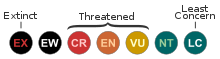
IUCN Red List
Growth: S = slow M = medium F = fast. Soil: L = light (sandy) M = medium H = heavy (clay). pH: A = acid N = neutral B = basic (alkaline). Shade: F = full shade S = semi-shade N = no shade. Moisture: D = dry M = Moist We = wet Wa = water.
Support Plants For A Future
Plants For A Future relies on regular donations to keep our free database and search facilities going, to pay for ongoing research, improvements and enhancements, and to develop and publish new books.
Read more
Choose Currency
Donate in £ GBP
Donate in $ USD
Donate in € EUR
Securely pay via PayPal or Credit/Debit Card without an account.
Expert comment
Author
Steud.
Botanical References
11200266
Links / References
For a list of references used on this page please go here
Readers comment