 |
|
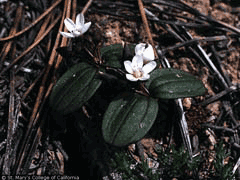
Brother Alfred Brousseau @ USDA-NRCS PLANTS Database |
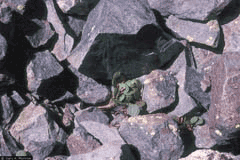 |
| Gary A. Monroe @ USDA-NRCS PLANTS Database |
Translate this page:
Summary
Great Basin springbeauty is a tuber-bearing perennial of rocky slopes in interior western evergreen communities. It can provide edible leaves and edible tubers, and mature plants may become rhizomatous. However, it is often associated with limited or sensitive habitats, and it has been noted as a plant of conservation concern in parts of its range. For foragers, that conservation context is central: even when edible, it is often better approached as a plant to recognize and protect, while focusing harvest on more common tuber-bearing or leafy Claytonia species.
Physical Characteristics

 Claytonia umbellata is a PERENNIAL growing to 0.2 m (0ft 8in).
See above for USDA hardiness. It is hardy to UK zone 4. It is in flower from April to July, and the seeds ripen in May. The species is hermaphrodite (has both male and female organs) and is pollinated by Insects.
Suitable for: light (sandy) and medium (loamy) soils and prefers well-drained soil. Suitable pH: mildly acid soils. It cannot grow in the shade. It prefers moist soil.
UK Hardiness Map
US Hardiness Map
Synonyms
Plant Habitats
Cultivated Beds;
Edible Uses
Edible Parts: Flowers Leaves Root
Edible Uses:
Edible leaves and tubers, but harvest is frequently discouraged due to scarcity or conservation concern; prioritize identification and stewardship unless abundance and legality are clear. Edible Uses & Rating: Leaves are edible and tubers are edible. Practical food rating is moderated by two factors: patchiness and conservation ethics. Where it is rare or protected, it should be treated as non-harvestable. Where abundant and harvest is lawful and ethical, the tuber-bearing habit suggests meaningful food potential [2-3]. Taste, Processing & Kitchen Notes: Leaves are expected to be mild and tender in the springbeauty pattern. Tubers are expected to be starchy and broadly potato-like in culinary use. Boiling and roasting are the simplest preparations. Because plants may be rhizomatous, underground structures can be more complex than in strictly tuber-only species, which makes careful cleaning and preparation important [2-3]. Seasonality (Phenology): Typically blooms from late spring into summer in many Great Basin and interior settings, often from May to August. Edible leaves are best early in the active season, while tubers can be harvested during the active window if and only if harvest is appropriate. Safety & Cautions (Food Use): The key caution is conservation and legality. If the species is locally rare or protected, it should not be harvested. From an identification standpoint, as with other tuber plants, avoid digging unknown underground organs without intact above-ground confirmation [2-3]. Harvest & Processing Workflow: Where harvest is ethically and legally appropriate, locate plants during bloom, excavate carefully with minimal disturbance, and prioritize small, limited sampling rather than bulk collection. Clean tubers thoroughly, then boil or roast. If conservation status is uncertain, treat the plant as “observe only” and harvest common alternatives instead. Cultivar/Selection Notes: No common cultivars; natural variation occurs by site. Look-Alikes & Confusion Risks: Flowering plants are fairly recognizable as Claytonia, but an underground confusion risk exists if digging outside bloom or without intact plant confirmation. The larger risk is harvesting a conservation-sensitive species rather than confusing it with a toxic look-alike. Traditional / Indigenous Use Summary: Tuber-bearing springbeauties fit a broader western pattern of valued underground foods, but use documentation can be uneven and strongly shaped by local abundance and access. In Great Basin contexts, ethical use today must also account for modern conservation concerns. Leaves - raw or cooked[172]. Flowers - raw[172]. Roots - cooked[257]. The globose tubers are up to 5cm in diameter[270]. The native North Americans roasted them in sand before eating them[257].
References More on Edible Uses
Medicinal Uses
Plants For A Future can not take any responsibility for any adverse effects from the use of plants. Always seek advice from a professional before using a plant medicinally.
None known
References More on Medicinal Uses
The Bookshop: Edible Plant Books
Our Latest books on Perennial Plants For Food Forests and Permaculture Gardens in paperback or digital formats.
Edible Tropical Plants
Food Forest Plants for Hotter Conditions: 250+ Plants For Tropical Food Forests & Permaculture Gardens.
More
Edible Temperate Plants
Plants for Your Food Forest: 500 Plants for Temperate Food Forests & Permaculture Gardens.
More
More Books
PFAF have eight books available in paperback and digital formats. Browse the shop for more information.
Shop Now
Other Uses
Provides nectar and pollen for pollinators in rocky-slope ecosystems and contributes to spring floral diversity in evergreen communities. Underground storage organs represent a seasonal energy strategy that may also feed wildlife.
Special Uses
References More on Other Uses
Cultivation details
Great Basin springbeauty is a potentially valuable edible tuber plant, but it is often best treated as a conservation-aware species to be recognized rather than harvested. Where abundant and permitted, it may provide edible leaves and tubers comparable to those of other spring beauties. Growing Conditions: This species favors open, rocky slopes in evergreen communities, generally with well-drained soils and a pronounced seasonal moisture pulse. It persists in areas with moderate competition and microclimates that preserve spring moisture long enough for growth and flowering. Habitat & Range: Primarily associated with Nevada and Oregon in the interior West, often on open rocky slopes within evergreen vegetation zones. Size & Landscape Performance: A small spring perennial that can persist for years, but is not a massing groundcover in most settings. Where it becomes rhizomatous, it can occupy small patches in suitable microsites. Cultivation (Horticulture): Cultivation is possible for native plant enthusiasts, but should be approached with conservation awareness. It would require well-drained soil, seasonal moisture, and a period of dormancy. It is generally better cultivated as an ornamental native than as a food plant. Pests & Problems: Scarcity and habitat sensitivity are the main practical issues. Rocky sites can also make excavation difficult and destructive if attempted. Identification & Habit: This springbeauty arises from a globe-shaped tuber and may develop rhizomes as it matures. It typically bears two free, stalked cauline leaves with elliptic to ovate blades. Flowers are showy, pinkish-purple with darker striping, arranged in racemes, and notably may lack bracts beneath the flower cluster. Its open, rocky-slope setting is also a helpful field cue, along with evergreen community association. FAMILY: Montia family (Montiaceae) – Claytonia genus. COMMON NAMES: Great Basin springbeauty. USDA Hardiness Zones: Approx. Zones 3–8. Typical Size: About 2–25 cm tall; perennial with a tuber and, in mature plants, rhizomatous spread.
References Carbon Farming Information and Carbon Sequestration Information
Temperature Converter
Type a value in the Celsius field to convert the value to Fahrenheit:
Fahrenheit:
The PFAF Bookshop
Plants For A Future have a number of books available in paperback and digital form. Book titles include Edible Plants, Edible Perennials, Edible Trees,Edible Shrubs, Woodland Gardening, and Temperate Food Forest Plants. Our new book is Food Forest Plants For Hotter Conditions (Tropical and Sub-Tropical).
Shop Now
Plant Propagation
Seed - surface sow on a peat based compost in spring in a cold frame. Germination usually takes place within 2 - 4 weeks at 10°c[164]. When large enough to handle, prick the seedlings out into individual pots and grow them on in the cold frame for at least their first winter. Plant them out in late spring or early summer after the last expected frosts. Division of offsets in spring or autumn.
Other Names
If available other names are mentioned here
Great Basin Springbeauty (Claytonia umbellata.
Native Range
US. USA. California, Nevada, Oregon.
Weed Potential
Right plant wrong place. We are currently updating this section.
Please note that a plant may be invasive in one area but may not in your area so it's worth checking.
Low; it is habitat-specific and not aggressive in typical garden environments.
Conservation Status
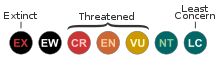
IUCN Red List of Threatened Plants Status : Claytonia umbellata (Great Basin Spring Beauty) is considered of conservation concern, listed as Rare/Threatened in California (Rank 2B.1) but generally common elsewhere, with NatureServe giving it a G5? global status (likely secure) but noting state-leve
| Related Plants
|
| Latin Name | Common Name | Habit | Height | Hardiness | Growth | Soil | Shade | Moisture | Edible | Medicinal | Other |
| Claytonia acutifolia | Bering Sea Spring Beauty | Perennial | 0.2 |
-
| | LM | N | M | 3 | 0 | |
| Claytonia caroliniana | Broad-Leaved Spring Beauty, Carolina springbeauty | Perennial | 0.1 |
5-9
| | LM | N | M | 3 | 0 | 1 |
| Claytonia exigua | Pale Spring Beauty, Serpentine springbeauty | Annual | 0.1 |
0-0
| | LMH | FSN | DM | 2 | 0 | |
| Claytonia lanceolata | Lanceleaf Spring Beauty, Idaho springbeauty, Pacific springbeauty, Peirson's springbeauty | Perennial | 0.2 |
3-8
| | LM | N | M | 3 | 0 | 1 |
| Claytonia megarhiza | Alpine Spring Beauty | Perennial | 0.3 |
2-8
| | LM | N | M | 3 | 0 | 1 |
| Claytonia parviflora ssp. parviflora | Indian Lettuce | Annual | 0.3 |
4-9
| F | LMH | S | M | 4 | 0 | 1 |
| Claytonia perfoliata | Miner's Lettuce | Annual | 0.2 |
6-10
| | LMH | FSN | DM | 4 | 1 | 2 |
| Claytonia perfoliata ssp. perfoliata | Miner’s lettuce | Annual | 0.3 |
4-9
| F | LMH | FS | M | 4 | 2 | 2 |
| Claytonia rosea | Rosy Springbeauty | Perennial | 0.2 |
3-8
| F | LMH | SN | M | 3 | 0 | 1 |
| Claytonia rubra | Redstem Springbeauty | Annual | 0.1 |
4-9
| F | LMH | N | DM | 3 | 0 | 1 |
| Claytonia scammaniana | Scamman's Claytonia, Scamman's springbeauty | Perennial | 0.2 |
0-0
| | LM | N | M | 2 | 0 | |
| Claytonia sibirica | Pink Purslane, Siberian springbeauty | Annual/Perennial | 0.2 |
3-7
| | LMH | FSN | DM | 4 | 1 | 3 |
| Claytonia tuberosa | Tuberous Spring Beauty | Perennial | 0.2 |
4-8
| | LM | N | M | 3 | 0 | |
| Claytonia virginica | Spring Beauty, Virginia springbeauty, Hammond's claytonia, Yellow Virginia springbeauty | Perennial | 0.2 |
5-7
| M | LM | S | M | 3 | 1 | |
| Osmunda claytoniana | Interrupted Fern | Fern | 0.5 |
3-7
| | LMH | SN | MWe | 2 | 1 | |
|
Growth: S = slow M = medium F = fast. Soil: L = light (sandy) M = medium H = heavy (clay). pH: A = acid N = neutral B = basic (alkaline). Shade: F = full shade S = semi-shade N = no shade. Moisture: D = dry M = Moist We = wet Wa = water.
Now available:
Food Forest Plants for Mediterranean Conditions
350+ Perennial Plants For Mediterranean and Drier Food Forests and Permaculture Gardens.
[Paperback and eBook]
This is the third in Plants For A Future's series of plant guides for food forests tailored to
specific climate zones. Following volumes on temperate and tropical ecosystems, this book focuses
on species suited to Mediterranean conditions—regions with hot, dry summers and cool, wet winters,
often facing the added challenge of climate change.
Read More
Expert comment
Author
Watson.
Botanical References
71270
Links / References
For a list of references used on this page please go here
Readers comment
| Add a comment |
|
If you have important information about this plant that may help other users please add a comment or link below. Only comments or links that are felt to be directly relevant to a plant will be included. If you think a comment/link or information contained on this page is inaccurate or misleading we would welcome your feedback at [email protected]. If you have questions about a plant please use the Forum on this website as we do not have the resources to answer questions ourselves.
* Please note: the comments by website users are not necessarily those held by PFAF and may give misleading or inaccurate information.
|
Subject : Claytonia umbellata
|
|
|
|