Follow Us:


Cirsium_oligophyllum - (Franch.&Sav.)Matsum.

Common Name
Family Asteraceae
USDA hardiness Coming soon
Known Hazards None known
Habitats In sunny grasslands and along temperate forest margins at elevations of 20 - 1200 metres[275].
Range E. Asia - central Japan.
Edibility Rating    (2 of 5)
Other Uses    (2 of 5)
Weed Potential No
Medicinal Rating    (0 of 5)
Care (info)
Moist Soil Full sun
Cirsium_oligophyllum


http://commons.wikimedia.org/wiki/User:E-190
Cirsium_oligophyllum


Translate this page:

Summary


Physical Characteristics

 icon of manicon of flower
Cirsium_oligophyllum is a PERENNIAL growing to 1 m (3ft 3in). It is in flower from August to October, and the seeds ripen from August to October. The species is hermaphrodite (has both male and female organs) and is pollinated by Insects.
Suitable for: light (sandy), medium (loamy) and heavy (clay) soils. Suitable pH: mildly acid, neutral and basic (mildly alkaline) soils. It cannot grow in the shade. It prefers moist soil.

UK Hardiness Map US Hardiness Map

Synonyms

Plant Habitats

Edible Uses

Young leaves - cooked[177]. Added to soups or fried[183]. Root - cooked[177]. The roots are slender with scarcely developed rhizomes[275]. They are scraped into pieces, steeped in water and preserved in miso[183]. The root is likely to be rich in inulin, a starch that cannot be digested by humans. This starch thus passes straight through the digestive system and, in some people, ferments to produce flatulence[K]. The flower heads are fried or used in salads[183].

References   More on Edible Uses

Medicinal Uses

Plants For A Future can not take any responsibility for any adverse effects from the use of plants. Always seek advice from a professional before using a plant medicinally.


None known

References   More on Medicinal Uses

Other Uses

The seed of all species of thistles yields a good oil by expression[4]. No details of potential yields etc are given[K].

Special Uses

References   More on Other Uses

Cultivation details

We have very little information on this species and do not know if it will be hardy in Britain, though judging by its native range it should succeed outdoors in many parts of this country. The following notes are based on the general needs of the genus. An easily grown plant, succeeding in any ordinary garden soil in a sunny position[200].

References   Carbon Farming Information and Carbon Sequestration Information

Temperature Converter

Type a value in the Celsius field to convert the value to Fahrenheit:

Fahrenheit:

image

The PFAF Bookshop

Plants For A Future have a number of books available in paperback and digital form. Book titles include Edible Plants, Edible Perennials, Edible Trees,Edible Shrubs, Woodland Gardening, and Temperate Food Forest Plants. Our new book is Food Forest Plants For Hotter Conditions (Tropical and Sub-Tropical).

Shop Now

Plant Propagation

Seed - sow early spring or autumn in situ. Germination usually takes place within 2 - 8 weeks at 20°c[164]. Division in spring or autumn.

Other Names

If available other names are mentioned here

Native Range

Coming Soon

Weed Potential

Right plant wrong place. We are currently updating this section. Please note that a plant may be invasive in one area but may not in your area so it's worth checking.

Conservation Status

IUCN Red List of Threatened Plants Status :
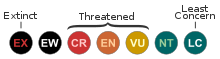
IUCN Red List

Related Plants
Latin NameCommon NameHabitHeightHardinessGrowthSoilShadeMoistureEdibleMedicinalOther
Cirsium oligophyllum Perennial1.0 -  LMHNM202

Growth: S = slow M = medium F = fast. Soil: L = light (sandy) M = medium H = heavy (clay). pH: A = acid N = neutral B = basic (alkaline). Shade: F = full shade S = semi-shade N = no shade. Moisture: D = dry M = Moist We = wet Wa = water.


Now available: Food Forest Plants for Mediterranean Conditions 350+ Perennial Plants For Mediterranean and Drier Food Forests and Permaculture Gardens. [Paperback and eBook]

This is the third in Plants For A Future's series of plant guides for food forests tailored to specific climate zones. Following volumes on temperate and tropical ecosystems, this book focuses on species suited to Mediterranean conditions—regions with hot, dry summers and cool, wet winters, often facing the added challenge of climate change.

Read More

Mediterranean Food Forest Book

Expert comment

Author

(Franch.&Sav.)Matsum.

Botanical References

58275

Links / References

For a list of references used on this page please go here

Readers comment

beanangel   Sun May 31 2009

Cirsium oligophyllum is reported as a slimness drug orally as well as topically at a peer reviewed science journal I believe it is legal to reproduce entire pubmed listings Body fat mass reduction and up-regulation of uncoupling protein by novel lipolysis-promoting plant extract.Mori S, Satou M, Kanazawa S, Yoshizuka N, Hase T, Tokimitsu I, Takema Y, Nishizawa Y, Yada T. Biological Science Laboratories, Kao Corporation, 2606 Akabane, Ichikai-Machi, Haga-gun, Tochigi 321-3497, Japan. [email protected] We have found natural products exhibiting lipolysis-promoting activity in subcutaneous adipocytes, which are less sensitive to hormones than visceral adipocytes. The activities and a action mechanisms of a novel plant extract of Cirsium oligophyllum (CE) were investigated in isolated adipocytes from rat subcutaneous fat, and its fat-reducing effects by peroral administration and topical application were evaluated in vivo. CE-induced lipolysis was synergistically enhanced by caffeine, a phosphodiesterase inhibitor, and was reduced by propranolol, a beta adrenergic antagonist. The peroral administration of 10% CE solution to Wistar rats for 32 days reduced body weight gain, subcutaneous, and visceral fat weights by 6.6, 26.2, and 3.0%, respectively, as compared to the control group. By the topical application of 2% of this extract to rats for 7 days, weight of subcutaneous fat in the treated skin was reduced by 23.2%. This fat mass reduction was accompanied by the up-regulation of uncoupling protein 1 (UCP), a principal thermogenic mitochondrial molecule related to energy dissipating, in subcutaneous fat and UCP3 in skin except for the fat layer. These results indicate that CE promotes lipolysis via a mechanism involving the beta adrenergic receptor, and affects the body fat mass. This fat reduction may be partially due to UCP up-regulation in the skin including subcutaneous fat. This is the first report showing that repeated lipolysis promotion through CE administration may be beneficial for the systematic suppression of body fat accumulation or the control of fat distribution in obesity.

pubmed medical database of peer reviewed literature

Jp Rosali   Wed Jan 13 2010

hallo,I am an italian medical Herbalist ,I would like to know to whom I can Refer to order some Cirsium Oligophyllum . Thanks a lot Gian Paolo Rosali

Add a comment

If you have important information about this plant that may help other users please add a comment or link below. Only comments or links that are felt to be directly relevant to a plant will be included. If you think a comment/link or information contained on this page is inaccurate or misleading we would welcome your feedback at [email protected]. If you have questions about a plant please use the Forum on this website as we do not have the resources to answer questions ourselves.

* Please note: the comments by website users are not necessarily those held by PFAF and may give misleading or inaccurate information.

Subject : Cirsium_oligophyllum  
© 2010, Plants For A Future. Plants For A Future is a charitable company limited by guarantee, registered in England and Wales. Charity No. 1057719, Company No. 3204567.