Translate this page:
Summary
Taxonomic Note: This genus was formerly classified in the family Cannabidaceae. Modern classifications include it within the Cannabaceae.
Desert hackberry is a tough, spiny desert shrub producing small but excellent, mango-like orange drupes that were historically important seasonal sweets for people in arid parts of the Southwest. The fruits combine high palatability with reliable crops and relatively low insect damage, though each fruit is mostly a single crunchy stone with a thin layer of pulp. The plant itself forms dense, very thorny thickets used by wildlife for cover and nesting. For modern foragers, desert hackberry is a high-quality, high-effort fruit: wonderful flavor but slow, often painful harvesting.
Physical Characteristics

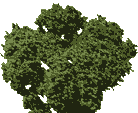 Celtis iguanaea is a SHRUB growing to 3 m (9ft) by 2 m (6ft) at a medium rate.
See above for USDA hardiness. It is hardy to UK zone 8. The flowers are pollinated by Bees, Insects.
It is noted for attracting wildlife.
Suitable for: light (sandy) and medium (loamy) soils, prefers well-drained soil and can grow in nutritionally poor soil. Suitable pH: neutral and basic (mildly alkaline) soils and can grow in very alkaline and saline soils.
It cannot grow in the shade. It prefers dry or moist soil and can tolerate drought.
UK Hardiness Map
US Hardiness Map
Synonyms
Homotypic Synonyms: C. rhamnoides Willd. Mertensia iguanea (Jacq.) Schult. Mertensia rhamnoides Schult. Momisia iguanaea (Jacq.) Rose & Standl. Rhamnus iguanaea Jacq. Ziziphus iguanea (Jacq.) Lam. Heterotypic Synonyms: Celtidopsis citrifolia (Kunth) Priemer. C. aculeata Sw. C. aculeata var. laevigata Planch. C. aculeata var. pubescens Griseb. C. aculeata var. serrata Griseb. C. anfractuosa Liebm. C. biflora Ruiz ex Miq. C. ehrenbergiana (Klotzsch) Liebm. C. epiphylladena Ortega C. glabrata Spreng. C. laevigata Spreng. C. platycaulis Greenm. C. spinosa Ruiz ex Miq. C. zizyphoides (Kunth) Spreng. Mertensia citrifolia Kunth. Mertensia goudotii Planch. Mertensia laevigata Kunth. Mertensia zizyphoides Kunth. Momisia aculeata (Sw.) Klotzsch. Momisia anfractuosa (Liebm.) Rose & Standl. Momisia ehrenbergiana Klotzsch. Momisia laevigata F.Dietr. Momisia platycaulis (Greenm.) Rose & Standl. Momisia spinifera Rojas. Momisia tala Planch. Momisia zizyphoides (Kunth) F.Dietr. Plagioceltis dichotoma Mildbr. ex Baehni. Saurobroma iguanense Raf. Colletia iguanaea Scop. Rhamnus grangenos Sessé & Moc. Ziziphus commutata Schult.
Plant Habitats
Edible Uses
Desert hackberry offers very good-tasting, sweet, orange drupes with a crunchy, chewable stone and minimal insect damage. The fruits are genuinely high-quality wild foods, but slow and prickly to gather in bulk. As long as the shrub is correctly identified and the plant's spiny nature is respected, the fruits are safe and rewarding for human consumption and were historically important in Indigenous diets. Edible Uses & Rating: Edible parts include the ripe drupes (fruit plus seed). The fruits are sweet and flavorful, and both pulp and stone can be chewed, making the whole drupe essentially edible. As a forager’s fruit in drylands, desert hackberry ranks very highly for flavor and reliability but moderately for practicality due to slow, thorny harvesting. As a food forest or restoration candidate, it offers a modest fruit yield but excellent wildlife and habitat value [2-3]. Taste, Processing & Kitchen Notes: Ripe fruits taste unexpectedly tropical, with a flavor reminiscent of mango combined with a mild, generic “desert fruit” sweetness. The small orange drupes are solid and juicy, with a single pale stone inside that is crunchy but no harder than a corn chip, so the entire fruit can be eaten whole in the mouth. Texture is pleasantly chewy-crunchy: a thin layer of sweet pulp around a crisp inner seed coat. The fruits dry to a brownish-orange and retain good flavor, making them suitable for natural fruit “candy” or pressed bars. They can be eaten fresh, dried, added to trail mixes, or gently simmered and strained to make a sweet sauce or drink. Because the fruits are relatively clean and minimally bug-ridden, processing effort focuses mainly on volume and thorn avoidance, not on quality control. Seasonality (Phenology): Leaves flush in spring while conditions are still mild and persist through the warm season unless drought stress is severe. Flowers appear in spring (roughly April to June in much of the Southwest), followed by the development of drupes that ripen in summer. In good seasons, ripe orange fruits can persist on shrubs into late summer. In particularly hot, dry years, the fruiting window may be shorter as animals quickly remove the crop. The plant is fully deciduous, dropping leaves in winter [2-3]. Safety & Cautions (Food Use): The fruits of desert hackberry are widely regarded as edible and were important to Native Americans; there is no firm evidence of toxicity when eaten in normal foraging quantities. As with any wild fruit, it is wise to avoid moldy or damaged fruits and to introduce them gradually to the diet. The spiny branches pose a mechanical hazard to eyes and skin during harvesting. Because the fruits are often eaten whole, including the stone, they may be a choking risk for small children; supervision and moderation are recommended. Harvest & Processing Workflow: Harvesting is typically done by hand, picking individual ripe orange fruits from the spiny twigs. Using tongs or gloved hands helps prevent punctures. Ripe drupes detach readily; those that resist are usually unripe. The small pedicels can be removed during or after picking, though they are relatively harmless if a few remain attached. Fruits may be eaten fresh in the field, or spread on trays to dry in a shaded, airy place until leathery. For fruit bars, dried fruits can be mashed or lightly warmed and pressed into sheets. To make drinks or sauces, fruits can be simmered in water, mashed, and strained to separate skins and stones if desired. Because the stones are chewable, many people eat the entire fruit and skip removing the seeds [2-3]. Look-Alikes & Confusion Risks: Within the desert shrub flora, desert hackberry might be confused at a distance with other small, spiny shrubs such as Condalia, Ziziphus, or some thorny legumes. However, the combination of small, rough-textured, asymmetrical leaves and round orange drupes is fairly distinctive. Ceanothus species have somewhat similar foliage and fruits but lack the firm, orange hackberry drupes and, in the case of many Ceanothus, have clusters of small capsules rather than single larger berries. As always, confirmation should be based on leaf texture, fruit structure, and overall shrub architecture before eating. Traditional/Indigenous Use Summary: For Indigenous peoples of the Southwest US, desert hackberries provided a reliable, energy-rich fruit during hot, dry seasons when other plant foods were scarce. Fruits were eaten fresh, dried for winter, and, in some groups, likely incorporated into mixed-food cakes or trail rations. Their candy-like sweetness made them a valued treat, especially for children. The thorny shrubs may also have had uses as living fences or protective thickets near camps or fields. However, specific ethnographic details vary by tribe and are not always well documented.
References More on Edible Uses
Medicinal Uses
Plants For A Future can not take any responsibility for any adverse effects from the use of plants. Always seek advice from a professional before using a plant medicinally.
None Known
References More on Medicinal Uses
The Bookshop: Edible Plant Books
Our Latest books on Perennial Plants For Food Forests and Permaculture Gardens in paperback or digital formats.
Edible Tropical Plants
Food Forest Plants for Hotter Conditions: 250+ Plants For Tropical Food Forests & Permaculture Gardens.
More
Edible Temperate Plants
Plants for Your Food Forest: 500 Plants for Temperate Food Forests & Permaculture Gardens.
More
More Books
PFAF have eight books available in paperback and digital formats. Browse the shop for more information.
Shop Now
Other Uses
It is more valuable to wildlife and traditional foragers than to industrial agriculture, which is precisely what makes it interesting for regenerative and wild-food landscapes. In a food-forest context for hot, arid climates, it can contribute seasonal sweets, wildlife support, and structural protection, provided its thorniness and small individual fruit size are acceptable. Ecology & Wildlife: Desert hackberry is ecologically valuable. The thorny structure provides excellent nesting and refuge sites for small birds and small mammals. The fruits are an important food for birds, rodents, and other wildlife, particularly during the hot, dry summer period when other fleshy fruits are scarce. The leaves provide browse for some herbivores, though spines offer some protection. Insects use the shrub for shelter and as a host plant; hackberries in general support specialist butterfly larvae in some regions, although the degree to which C. ehrenbergiana does so in the Southwest is less well documented. It can be used as part of arid hedgerows, wildlife corridors, or as a living barrier around more delicate plantings. Pruning is possible but must be done carefully due to spines; heavy pruning may reduce fruiting for a season. Mulch can help establishment, but is not essential long-term. Because the fruits attract wildlife, it is a good choice for habitat planting and restoration of desert riparian margins.
Special Uses
References More on Other Uses
Cultivation details
Celtis iguanaea (Celtis ehrenbergiana) is a classic desert-survival shrub: drought-hardy, spiny, modest in size, and capable of producing dependable, highly palatable fruit with very little water. It is more valuable to wildlife and traditional foragers than to industrial agriculture, which is precisely what makes it interesting for regenerative and wild-food landscapes. In a food-forest context for hot, arid climates, it can contribute seasonal sweets, support wildlife, and provide structural protection, provided its thorniness and small individual fruit size are acceptable. Growing Conditions: Desert hackberry is strongly adapted to arid and semi-arid conditions. It tolerates high heat, intense sun, wind, poor calcareous soils, and limited water. In the wild,, it is often associated with desert washes, shallow rocky soils, and coarse alluvium where episodic moisture is available but long dry intervals are the norm. It is drought-tolerant once established but will fruit better with occasional deep watering in cultivation. It tolerates alkaline soils and moderate salinity but will perform poorly in persistently waterlogged or very heavy clay conditions. Habitat & Range: This species is native to the deserts of the southern half of the Southwest, commonly in desert scrub and thorny shrublands, often on rocky slopes, bajadas, and along ephemeral washes. It is especially characteristic of hot, low-elevation sites in southern Arizona, New Mexico, west Texas and adjoining Mexico. Within these habitats, it often forms scattered shrubs or small thickets, frequently near rock outcrops, desert arroyo edges, or other microsites where deep roots can access stored moisture. Size & Landscape Performance: Typical size is 1–3 m tall with a similar or slightly greater spread, forming a dense, irregular crown. In landscape use, it is best treated as a wildlife shrub or thorny barrier rather than an ornamental specimen. Once established, it is very low-maintenance, evergreen to semi-evergreen in frost-free microsites and fully deciduous in colder pockets, with excellent resilience to drought, heat, and browsing. USDA hardiness is approximately Zones 7–10 (root-hardy into colder microclimates but aboveground damage likely in colder winters). Cultivation (Horticulture): Desert hackberry will grow from seed in well-drained, gritty mixes exposed to full sun. In gardens, it prefers full sun, infrequent but deep watering, and a free-draining mineral soil. It can be used as part of arid hedgerows, wildlife corridors, or as a living barrier around more delicate plantings. Pruning is possible but must be done carefully due to spines; heavy pruning may reduce fruiting for a season. Mulch can help establishment but is not essential long-term. Because the fruits attract wildlife, it is a good choice for habitat planting and restoration of desert riparian margins. Pests & Problems: In its native arid habitats, desert hackberry is generally hardy and not prone to major pest or disease issues. Occasional insect feeding, bird damage to fruits, or minor fungal spotting can occur but rarely threaten plant health. Over-irrigation or poorly drained soils can predispose plants to root issues. Browsing by livestock or deer on young plants can slow establishment, but spines are more effective at defending older shrubs. Cultivar/Selection Notes: No formal cultivars of desert hackberry are in everyday use. All fruit variation is effectively wild: shrub-to-shrub differences in fruit size, sweetness, and crop abundance certainly exist, and in principle, superior individuals could be selected in a food forest context. However, selection would be constrained by the plant’s value primarily as a wild or restoration shrub rather than as a domesticated orchard species. Pollination: Desert hackberry has small, inconspicuous, greenish flowers that are not showy to humans but are highly effective for reproduction. Pollination appears to be primarily by small insects such as flies and tiny bees attracted to the nectar and pollen, with some contribution from wind due to the simple, exposed flower structure. There is no reliance on large, showy pollinators; flowering is timed to coincide with warm spring conditions when small insects are active. Identification & Habit: Desert hackberry is a densely branching, spiny shrub, usually 1–3 m tall, often wider than it is high, with rigid, zigzag branchlets armed with sharp thorns. Leaves are simple, alternate, small, lance-ovate to elliptic, typically less than 2 cm wide, and uneven at the base with a slightly sandpapery, rough surface. Margins may be entire or faintly toothed. The overall habit is of a compact, intricate, tangle-branched shrub that is immediately recognizable when in fruit by its bright orange berries set among stiff, spiny twigs.
References Carbon Farming Information and Carbon Sequestration Information
Temperature Converter
Type a value in the Celsius field to convert the value to Fahrenheit:
Fahrenheit:
The PFAF Bookshop
Plants For A Future have a number of books available in paperback and digital form. Book titles include Edible Plants, Edible Perennials, Edible Trees,Edible Shrubs, Woodland Gardening, and Temperate Food Forest Plants. Our new book is Food Forest Plants For Hotter Conditions (Tropical and Sub-Tropical).
Shop Now
Plant Propagation
Propagation is most straightforward from seed. Seeds are contained within the hard inner stones. They can be cleaned by soaking fruits and rubbing to remove the pulp, then sowing the stones. A period of cold stratification (e.g., several weeks at cool temperatures) may improve germination, imitating winter conditions. Vegetative propagation from cuttings is possible but more difficult and less documented; seed is the standard method. In restoration settings, direct seeding or natural recruitment under nurse shrubs is common.
Other Names
If available other names are mentioned here
Desert Hackberry, Spiny Hackberry (Celtis ehrenbergiana). Celtis ehrenbergiana (Klotzsch) Liebm. is a synonym of Celtis iguanaea (Jacq.) Sarg.
Native Range
US. USA. Aruba, Bahamas, Belize, Colombia, Costa Rica, Cuba, Dominican Republic, El Salvador, Florida, French Guiana, Guatemala, Guyana, Haiti, Honduras, Jamaica, Leeward Is., Mexico Central, Mexico Gulf, Mexico Northeast, Mexico Northwest, Mexico Southeast, Mexico Southwest, Netherlands Antilles, Nicaragua, Panamá, Puerto Rico, Suriname, Trinidad-Tobago, Venezuela, Venezuelan Antilles, Windward Is.
Weed Potential
Right plant wrong place. We are currently updating this section.
Please note that a plant may be invasive in one area but may not in your area so it's worth checking.
Within its native range desert hackberry is a natural component of desert scrub and not considered an invasive weed. It does not spread aggressively in cultivation and is unlikely to become problematic in dry gardens. Outside its native range, it is rarely planted, so invasion risk appears low. Spread is mostly through animal-dispersed seeds, particularly by birds and mammals.
Conservation Status
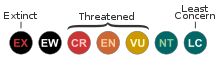
IUCN Red List of Threatened Plants Status : Least Concern
Growth: S = slow M = medium F = fast. Soil: L = light (sandy) M = medium H = heavy (clay). pH: A = acid N = neutral B = basic (alkaline). Shade: F = full shade S = semi-shade N = no shade. Moisture: D = dry M = Moist We = wet Wa = water.
Now available:
Food Forest Plants for Mediterranean Conditions
350+ Perennial Plants For Mediterranean and Drier Food Forests and Permaculture Gardens.
[Paperback and eBook]
This is the third in Plants For A Future's series of plant guides for food forests tailored to
specific climate zones. Following volumes on temperate and tropical ecosystems, this book focuses
on species suited to Mediterranean conditions—regions with hot, dry summers and cool, wet winters,
often facing the added challenge of climate change.
Read More
Expert comment
Author
(Jacq.) Sarg.
Botanical References
Links / References
For a list of references used on this page please go here
Readers comment
| Add a comment |
|
If you have important information about this plant that may help other users please add a comment or link below. Only comments or links that are felt to be directly relevant to a plant will be included. If you think a comment/link or information contained on this page is inaccurate or misleading we would welcome your feedback at [email protected]. If you have questions about a plant please use the Forum on this website as we do not have the resources to answer questions ourselves.
* Please note: the comments by website users are not necessarily those held by PFAF and may give misleading or inaccurate information.
|
Subject : Celtis iguanaea
|
|
|
|