Translate this page:
Summary
Fendler’s ceanothus is a small, thorny, evergreen shrub of dry montane woodlands in the southern Rocky Mountains. It carries dense clusters of fragrant white flowers and small, three-lobed capsules that were reportedly used as food in the immature stage, although its very high saponin content makes it a poor, marginal emergency food rather than a practical staple. Ecologically it is far more important than it is edible, providing browse for deer, cover for small mammals, nectar for pollinators, and a modest nitrogen input into often-lean mountain soils.
Physical Characteristics

 Ceanothus fendleri is a deciduous Shrub growing to 2 m (6ft 7in) at a fast rate.
See above for USDA hardiness. It is hardy to UK zone 5. It is in flower from June to August, and the seeds ripen from August to October. The species is hermaphrodite (has both male and female organs) and is pollinated by Bees.
It can fix Nitrogen.
Suitable for: light (sandy) and medium (loamy) soils and prefers well-drained soil. Suitable pH: mildly acid, neutral and basic (mildly alkaline) soils. It can grow in semi-shade (light woodland) or no shade. It prefers dry or moist soil.
UK Hardiness Map
US Hardiness Map
Synonyms
Heterotypic Synonyms: C. endlichii Loes. C. fendleri var. venosus Trel. C. fendleri var. viridis A.Gray ex Trel. C. subsericeus Rydb.
Plant Habitats
Woodland Garden Sunny Edge; Cultivated Beds;
Edible Uses
Edible Parts: Fruit Inner bark
Edible Uses: Tea
Fruit[105, 155, 161, 177]. Used for food in New Mexico[183]. The berries are sweetened with sugar and used as food[257].. The fruit is about 5mm wide[200]. Strips of the inner bark can be eaten in the summer[257]. The leaves are used as a substitute for tea[183]. Edible Uses & Rating: Only the immature fruits (capsules and seeds together) have been reported as food, prepared as a mush. Given their extremely bitter, acrid, soapy taste and high saponin content, they rate very low as a food: an emergency, “desperate-times” resource at best, not a regular edible. The leaves can be used to make a fragrant but strongly soapy tea, which is more a curiosity than a beverage. Overall edibility rating would be very poor to marginal [2-3]. Taste, Processing & Kitchen Notes: Immature capsules of Fendler’s ceanothus taste acrid, bitter, and unmistakably soapy – the flavour profile is closer to shampoo than fruit. Cooking does little to improve this; boiling may leach some saponins into the water, but the mush remains strongly medicinal and unpleasant. The capsules never pass through a sweet or palatable stage: green, semi-mature capsules are firm and fleshy; fully mature capsules are dry, hard, and useless as food. Leaves brewed as tea yield a strongly aromatic, resinous, soapy drink with hints of balsam and “hardware-store” solvents; very dilute infusions may be tolerable, but they are not realistically comparable to conventional teas. From a culinary perspective, this species is best regarded as non-food [2-3]. Seasonality (Phenology): In its montane range, leaves are effectively evergreen, though some may be shed during winter drought or cold. Flowering generally occurs from late May through July, depending on elevation and latitude, with peak bloom in early summer. Immature capsules develop soon after flowering and remain fleshy for a relatively short window; by late summer to early autumn, they are already hard and dry. Because ceanothus is evergreen, foliage for tea can technically be taken almost any time the shrub is in leaf, although new growth is most abundant from spring through early summer [2-3]. Harvest & Processing Workflow: If one were to attempt to replicate historical mush from immature fruits (not recommended), fruits would be gathered while still green and fleshy, then boiled and mashed into a pulp with multiple changes of water to reduce the saponin load. Even with this processing, the result would likely remain acrid and soapy. For tea, leaves and flowering sprigs could be lightly crushed and steeped briefly in hot water, then diluted to reduce bitterness and soapiness. In both cases, the primary “value” is more medicinal, cleansing, or symbolic than nutritive. Look-Alikes & Confusion Risks: Fendler’s ceanothus may be confused with other small ceanothus shrubs or with unrelated small-leaved shrubs such as some Rhamnus (buckthorn) species. However, the combination of small alternate leaves, three-lobed capsules, Ceanothus-style flower clusters, and the distinctive ceanothus “soap” scent when flowers are rubbed is usually diagnostic. From a food-safety perspective, precise separation from other Ceanothus species does not greatly improve edibility, since all share the high-saponin problem, but misidentification with true buckthorns (some of which are more toxic) would be undesirable. Traditional/Indigenous Use Summary: Ethnobotanical references report immature fruits of buckbrush/deerbrier being cooked as mush and leaves or flowering tops of small ceanothus shrubs used to make cleansing foams, shampoos or external washes. The plant also served as browse for game species, indirectly supporting subsistence hunting. However, Ceanothus was not a staple food; rather, it was a minor or experimental plant used for occasional mush or beverages, and more often for non-food uses such as soap, ritual cleansing, and possibly medicine. Overall Plant Summary: Fendler’s ceanothus is a tough, drought-tolerant, evergreen shrub of the southern Rockies, ecologically valuable in dry montane woodlands and post-fire landscapes. Its white, fragrant flowers and abundant wildlife value make it an important native component of these ecosystems. As food, however, it is poorly suited: its immature fruits and leaves are intensely soapy and saponin-rich, making them unpalatable and potentially unsafe. This is a plant to appreciate for habitat and restoration roles, not as a regular wild edible.
References More on Edible Uses
Medicinal Uses
Plants For A Future can not take any responsibility for any adverse effects from the use of plants. Always seek advice from a professional before using a plant medicinally.
Sedative
The plant is sedative[155]. An infusion has been used to treat nervousness and a poultice of the plants also used for this purpose[257]. The leaves have been chewed to treat a sore mouth[257].
References More on Medicinal Uses
The Bookshop: Edible Plant Books
Our Latest books on Perennial Plants For Food Forests and Permaculture Gardens in paperback or digital formats.
Edible Tropical Plants
Food Forest Plants for Hotter Conditions: 250+ Plants For Tropical Food Forests & Permaculture Gardens.
More
Edible Temperate Plants
Plants for Your Food Forest: 500 Plants for Temperate Food Forests & Permaculture Gardens.
More
More Books
PFAF have eight books available in paperback and digital formats. Browse the shop for more information.
Shop Now
Other Uses
Dye Soap
A green dye is obtained from the flowers[168]. All parts of the plant are rich in saponins - when crushed and mixed with water they produce a good lather which is an effective and gentle soap[155, 168, 169]. This soap is very good at removing dirt, though it does not remove oils very well. This means that when used on the skin it will not remove the natural body oils, but nor will it remove engine oil etc[K] The flowers are a very good source, when used as a body soap they leave behind a pleasant perfume on the skin[K]. The developing seed cases are also a very good source of saponins[K]. This species is rarely offered in the horticultural trade, but in principle it prefers conditions similar to other dryland ceanothus: full sun, lean, well-drained soil, and minimal summer water once established. Overwatering or heavy fertilisation can shorten lifespan and encourage root problems. It is best suited to naturalistic, xeric plantings or habitat restoration in its native range, rather than formal gardens. Ecology & Wildlife: Ecologically, Fendler’s ceanothus is far more valuable than it is edible. It provides important browse for deer and elk, particularly winter and early spring browse when other green vegetation is scarce. Shrubby structure offers cover and nesting sites for small birds and mammals. The abundant, nectar-rich flowers attract bees, butterflies and other insects, making it a good pollinator plant. Like many Ceanothus species, it can form symbioses with actinomycete bacteria (Frankia) in root nodules, enabling it to fix atmospheric nitrogen and enrich nutrient-poor soils, particularly important in post-fire or eroded sites.
Special Uses
Nitrogen Fixer
References More on Other Uses
Cultivation details
Prefers a warm sunny position but tolerates light shade[11, 200]. Tolerates some lime, but will not succeed on shallow chalk[200]. One of the hardiest members of this genus, it succeeds outdoors in many areas of the country[11]. Plants dislike root disturbance; they should be planted out into their permanent positions whilst still small[182]. Dislikes heavy pruning; it is best not to cut out any wood thicker than a pencil[182]. Any pruning is best carried out in the spring[219]. Fast growing, it flowers well when young, often in its second year from seed[11]. Hybridizes freely with other members of this genus[200]. Some members of this genus have a symbiotic relationship with certain soil micro-organisms, which form nodules on the roots of the plants and fix atmospheric nitrogen. The growing plant utilizes some of this nitrogen, but some can also be used by nearby plants [200, 212]. Identification & Habit: Fendler’s ceanothus is an evergreen shrub typically 0.5–1.5 m tall, sometimes to about 2 m in very favourable sites, often branching from near the base and forming a somewhat rounded, twiggy outline. Twigs are grey-green to brown and may end in short spine-like tips, giving the plant a subtly thorny feel. Leaves are small, simple, alternate, oval to obovate, usually 1–3 cm long, with entire or shallowly toothed margins and a firm, somewhat leathery texture; the upper surfaces may be glossy or slightly dull, and the undersides often paler. In late spring to early summer, the branch tips and upper stems carry dense clusters of small white, fragrant flowers, each about 3–4 mm across, with five reflexed petals and prominently exserted stamens, giving the clusters a frothy look. Fruits are small, three-lobed, three-celled capsules, usually about 3–4 mm in diameter; each lobe contains a single shiny nutlet. Pollination is primarily by insects, especially bees and small flies drawn to the abundant nectar and fragrance; wind plays virtually no role. Growing Conditions: Fendler’s ceanothus is adapted to dry, rocky, well-drained montane sites, often on slopes or benches with shallow, gravelly or sandy loams derived from granite or sandstone. It tolerates full sun to light shade, but flowers and fruits best in open sun. Soils are typically slightly acidic to neutral, occasionally slightly basic. The shrub is drought-tolerant once established and dislikes heavy, waterlogged clays. It is hardy to at least USDA zone 4 or 5 (surviving high-elevation winters in Colorado and New Mexico) and tolerates substantial snow cover and temperature extremes. Habitat & Range: Fendler’s ceanothus is native to the southern Rocky Mountains and adjacent regions, occurring primarily in New Mexico, Arizona, Colorado and Utah, with local populations into Wyoming. It is most frequent in open ponderosa pine and mixed conifer woodlands, oak-pine ecotones and rocky foothill slopes, often between about 1,500 and 2,800 m elevation. Size & Landscape Performance: In natural settings, shrubs usually reach 0.5–1.5 m tall and roughly 0.6–1.5 m wide, forming small, loose thickets or clumps scattered among rocks and trees. Growth is moderate rather than fast; plants may take several years to achieve full size from seed. In garden or restoration plantings that match its native conditions, it can be a durable, low-input shrub. Still, it is not widely used as an ornamental compared with coastal ceanothus species. Cultivation (Horticulture): This species is rarely offered in the horticultural trade, but in principle it prefers conditions similar to other dryland ceanothus: full sun, lean, well-drained soil, and minimal summer water once established. Overwatering or heavy fertilisation can shorten lifespan and encourage root problems. It is best suited to naturalistic, xeric plantings or habitat restoration in its native range, rather than formal gardens. Pruning is usually limited to light thinning of dead or crossing wood; heavy pruning into old wood may not be well tolerated. Pests & Problems: In the wild, the shrub is generally healthy and resilient, though it may suffer from occasional leaf-chewing insects or browsing damage. In cultivation, the main risks would be root rot and decline in heavy, poorly drained or over-irrigated soils. It is not typically prone to serious fungal diseases or pest outbreaks under natural conditions. Pests & Problems: In the wild, the shrub is generally healthy and resilient, though it may suffer from occasional leaf-chewing insects or browsing damage. In cultivation, the main risks would be root rot and decline in heavy, poorly drained or over-irrigated soils. It is not typically prone to serious fungal diseases or pest outbreaks under natural conditions.
References Carbon Farming Information and Carbon Sequestration Information
Temperature Converter
Type a value in the Celsius field to convert the value to Fahrenheit:
Fahrenheit:
The PFAF Bookshop
Plants For A Future have a number of books available in paperback and digital form. Book titles include Edible Plants, Edible Perennials, Edible Trees,Edible Shrubs, Woodland Gardening, and Temperate Food Forest Plants. Our new book is Food Forest Plants For Hotter Conditions (Tropical and Sub-Tropical).
Shop Now
Plant Propagation
Seed - best sown as soon as it is ripe in a cold frame. Stored seed should be pre-soaked for 12 hours in warm water and then given 1 - 3 months stratification at 1°c[138, 200]. Germination usually takes place in 1 - 2 months at 20°c[138]. One report says that the seed is best given boiling water treatment, or heated in 4 times its volume of sand at 90 - 120°c for 4 - 5 minutes and then soaked in warm water for 12 hours before sowing it[214]. The seed exhibits considerable longevity, when stored for 15 years in an air-tight dry container at 1 - 5°c it has shown little deterioration in viability[214]. The seed is ejected from its capsule with some force when fully ripe, timing the collection of seed can be difficult because unless collected just prior to dehiscence the seed is difficult to extract and rarely germinates satisfactorily[214]. Prick out the seedlings into individual pots as soon as they are large enough to handle. Grow them on in the greenhouse for at least their first winter and plant them out into their permanent positions in late spring or early summer. Cuttings of half-ripe wood, taken at a node[200], July/August in a frame[11]. Cuttings of mature wood of the current year's growth, 7 - 12 cm with a heel, October in a cold frame[78]. The roots are quite brittle and it is best to pot up the callused cuttings in spring, just before the roots break[78]. Good percentage.
Other Names
If available other names are mentioned here
Heterotypic Synonyms: Ceanothus endlichii Loes. Ceanothus fendleri var. venosus Trel. Ceanothus fendleri var. viridis A.Gray ex Trel. Ceanothus subsericeus Rydb. Fendler’s Ceanothus, Buckbrush, Deerbrier, Wild Lilac.
Native Range
NORTHERN AMERICA: United States (South Dakota (Custer & Lawrence Cos.), Colorado, Wyoming (east), New Mexico, Texas, Arizona, Utah), Mexico (Chihuahua, Coahuila de Zaragoza)
Weed Potential
Right plant wrong place. We are currently updating this section.
Please note that a plant may be invasive in one area but may not in your area so it's worth checking.
Fendler’s ceanothus is a native component of montane shrub and woodland communities and is not considered invasive within its natural range. It can, however, colonise disturbed soils, road cuts, and post-fire landscapes quite aggressively as part of natural succession. It has negligible weed potential outside western North America and is not a global invader.
Conservation Status
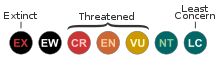
IUCN Red List of Threatened Plants Status : Not available.
Growth: S = slow M = medium F = fast. Soil: L = light (sandy) M = medium H = heavy (clay). pH: A = acid N = neutral B = basic (alkaline). Shade: F = full shade S = semi-shade N = no shade. Moisture: D = dry M = Moist We = wet Wa = water.
Now available:
Food Forest Plants for Mediterranean Conditions
350+ Perennial Plants For Mediterranean and Drier Food Forests and Permaculture Gardens.
[Paperback and eBook]
This is the third in Plants For A Future's series of plant guides for food forests tailored to
specific climate zones. Following volumes on temperate and tropical ecosystems, this book focuses
on species suited to Mediterranean conditions—regions with hot, dry summers and cool, wet winters,
often facing the added challenge of climate change.
Read More
Expert comment
Author
A.Gray.
Botanical References
11200
Links / References
For a list of references used on this page please go here
Readers comment
| Add a comment |
|
If you have important information about this plant that may help other users please add a comment or link below. Only comments or links that are felt to be directly relevant to a plant will be included. If you think a comment/link or information contained on this page is inaccurate or misleading we would welcome your feedback at [email protected]. If you have questions about a plant please use the Forum on this website as we do not have the resources to answer questions ourselves.
* Please note: the comments by website users are not necessarily those held by PFAF and may give misleading or inaccurate information.
|
Subject : Ceanothus fendleri
|
|
|
|