 |
|
https://edibleplants.org/ |
 |
| www.biolib.de |
Translate this page:
Summary
Ipecac, Carapichea ipecacuanha, is a small flowering shrub that only grows up about 50 cm tall. It is native to Costa Rica, Nicaragua, Panama, Colombia, and Brazil. Mainly a medicinal plant, its roots are used against many ailments such as coughs, fever, amoebic dysentery, and bronchitis. It is used to make a powerful emetic known as “syrup of ipecac”. However, when consumed in high amounts, severe vomiting and diarrhoea will be experienced.
Physical Characteristics

 Carapichea ipecacuanha is an evergreen Shrub growing to 0.5 m (1ft 8in) by 0.5 m (1ft 8in) at a medium rate.
See above for USDA hardiness. It is hardy to UK zone 10.
Suitable for: light (sandy), medium (loamy) and heavy (clay) soils and prefers well-drained soil. Suitable pH: mildly acid, neutral and basic (mildly alkaline) soils and can grow in very acid soils.
It can grow in full shade (deep woodland) or semi-shade (light woodland). It prefers moist soil.
UK Hardiness Map
US Hardiness Map
Synonyms
Callicocca ipecacuanha Brot. Cephaelis acuminata H.Karst. Cephaelis ipecacuanha (Brot.) A.Rich. Evea
Plant Habitats
Edible Uses
References More on Edible Uses
Medicinal Uses
Plants For A Future can not take any responsibility for any adverse effects from the use of plants. Always seek advice from a professional before using a plant medicinally.
Antitussive Dysentery Emetic Expectorant Febrifuge Homeopathy
The roots of ipecac contain a number of medically active constituents including isoquinoline alkaloids, tannins and glycosides[ 254 ]. They have a violently irritant action, stimulating the gastric and bronchial systems, lowering fevers and preventing cyst formation in amoebic dysentery[ 238 ]. The roots are used internally in the treatment of coughs, bronchitis, whooping cough and amoebic dysentery[ 238 , 254 ]. One of the surest of emetics, even moderate doses will induce vomiting until the contents of the stomach have been voided making it especially useful in the treatment of drug overdoses[ 254 ]. It is used in a syrup to induce vomiting in children who have ingested toxins[ 238 ]. Smaller doses are strongly expectorant and it is a common ingredient in patent cough medicines[ 254 ]. The plant needs to be used with caution since excess causes severe vomiting and diarrhoea[ 238 ]. The roots are harvested, usually when about 3 years old and the plants are in flower, and are dried for later use[ 238 , 254 ]. The plants are replanted after partial removal of the roots[ 238 ]. The plant is used in homeopathy in the treatment of nausea[ 238 ].
References More on Medicinal Uses
Other Uses
Other Uses: None known
Special Uses
References More on Other Uses
Cultivation details
Prefers a minimum temperature in the range of 15 - 18°c[ 238 ]. Prefers a well-drained humus-rich soil and a shady position[ 238 ]. Plants need ample moisture and humidity if they are to thrive[ 238 ].
References Carbon Farming Information and Carbon Sequestration Information
Temperature Converter
Type a value in the Celsius field to convert the value to Fahrenheit:
Fahrenheit:
Plant Propagation
Seed - Greenwood cuttings in a sandy compost[ 238 ]. Root cuttings.
Other Names
If available other names are mentioned here
Ipecac, Carapichea ipecacuanha.
Native Range
SOUTHERN AMERICA: Costa Rica, Nicaragua (southeast), Panama, Brazil (Bahia, Espírito Santo, Goiás, Mato Grosso, Paraná, Rio de Janeiro, Rondônia, São Paulo), Colombia (Antioquia, Bolívar, Chocó, Córdoba, Meta)
Weed Potential
Right plant wrong place. We are currently updating this section.
Please note that a plant may be invasive in one area but may not
in your area so it's worth checking.
None Known
Conservation Status
IUCN Red List of Threatened Plants Status : This taxon has not yet been assessed
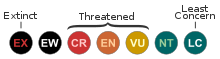
IUCN Red List
Growth: S = slow M = medium F = fast. Soil: L = light (sandy) M = medium H = heavy (clay). pH: A = acid N = neutral B = basic (alkaline). Shade: F = full shade S = semi-shade N = no shade. Moisture: D = dry M = Moist We = wet Wa = water.
Support Plants For A Future
Plants For A Future relies on regular donations to keep our free database and search facilities going, to pay for ongoing research, improvements and enhancements, and to develop and publish new books.
Read more
Choose Currency
Donate in £ GBP
Donate in $ USD
Donate in € EUR
Securely pay via PayPal or Credit/Debit Card without an account.
Expert comment
Author
(Brot.) L.Andersson
Botanical References
Links / References
For a list of references used on this page please go here
A special thanks to Ken Fern for some of the information used on this page.
Readers comment
| Add a comment |
|
If you have important information about this plant that may help other users please add a comment or link below. Only comments or links that are felt to be directly relevant to a plant will be included. If you think a comment/link or information contained on this page is inaccurate or misleading we would welcome your feedback at [email protected]. If you have questions about a plant please use the Forum on this website as we do not have the resources to answer questions ourselves.
* Please note: the comments by website users are not necessarily those held by PFAF and may give misleading or inaccurate information.
|
Subject : Carapichea ipecacuanha
|
|
|
|