Translate this page:
Summary
An outstanding edible bulrush with thick starchy corms and nutritious seeds; found worldwide in brackish or freshwater marshes. USDA Zones 4–10. Edibility Summary: Best: corms and seeds. Rating: 5/5, excellent starchy resource.
Physical Characteristics

 Bolboschoenus maritimus is an evergreen Perennial growing to 1 m (3ft 3in) by 0.5 m (1ft 8in) at a fast rate.
See above for USDA hardiness. It is hardy to UK zone 5 and is not frost tender. The flowers are pollinated by Wind.
It is noted for attracting wildlife.
Suitable for: light (sandy), medium (loamy) and heavy (clay) soils and can grow in nutritionally poor soil. Suitable pH: neutral and basic (mildly alkaline) soils and can grow in very alkaline and saline soils.
It cannot grow in the shade. It prefers wet soil and can grow in water.
UK Hardiness Map
US Hardiness Map
Synonyms
Homotypic Synonyms: Reigera maritima (L.) Opiz. Schoenoplectus maritimus (L.) Lye. Scirpus maritimus L. Scirpus maritimus var. genuinus Godr.
Plant Habitats
Edible Uses
Edible Uses & Rating: Corms, seeds, and pollen are all edible. Rating: 5/5—among the best sedges for human food. Taste & Kitchen Notes: Corms are mild, earthy, and potato-like; easily roasted or ground for flour. Seeds nutty when toasted. Seasonality: Corms harvestable in autumn–winter; seeds in late summer. The tubers are dried and powdered and used as baby feed in Kerala, India [2-6]. Traditional/Indigenous Use Summary: Corms and seeds were major prehistoric staples in Eurasia and North America. Used as a famine and staple food.
References More on Edible Uses
Medicinal Uses
Plants For A Future can not take any responsibility for any adverse effects from the use of plants. Always seek advice from a professional before using a plant medicinally.
The roots of Bolboschoenus maritimus have been used in China as an astringent and diuretic [2-6].
References More on Medicinal Uses
The Bookshop: Edible Plant Books
Our Latest books on Perennial Plants For Food Forests and Permaculture Gardens in paperback or digital formats.
Edible Tropical Plants
Food Forest Plants for Hotter Conditions: 250+ Plants For Tropical Food Forests & Permaculture Gardens.
More
Edible Temperate Plants
Plants for Your Food Forest: 500 Plants for Temperate Food Forests & Permaculture Gardens.
More
More Books
PFAF have eight books available in paperback and digital formats. Browse the shop for more information.
Shop Now
Other Uses
The leaves are used for making mats, and as the edging of woven mats and used to warp for sandals as well as warps and twining wefts for making clothing. The rhizomes form a habitat for beneficial bacteria that give these plants excellent water filtering properties [2-6].
Special Uses
References More on Other Uses
Cultivation details
Identification & Habit: Perennial with triangular stems and conspicuous underground corms resembling small tubers. Inflorescences are compact and reddish-brown. Thrives in moist, sunny wetlands; tolerates moderate salinity. Average height: 0.45 to 1.75 meters (1.5 to 5.8 feet). Saltmarsh Club-rush or Alkali Bulrush is a rhizomatous perennial. This species commonly grows on the margins of permanent or semi-permanent waters, brackish and salt water lagoons, back mangroves, and margins of salt marshes [2-6]. The grass-like leaves have reddish-purple bases. Small, brown, terminal spikes occur in a rounded, compact, terminal cluster. This cluster may be surpassed by additional clusters on short pecuncles. Leafy bracts extend beyond the clusters. Sedge/bulrush architecture: small, clustered florets; no showy traits. Mainly wind-pollinated, with possible limited insect transfer but not required.
References Carbon Farming Information and Carbon Sequestration Information
Temperature Converter
Type a value in the Celsius field to convert the value to Fahrenheit:
Fahrenheit:
The PFAF Bookshop
Plants For A Future have a number of books available in paperback and digital form. Book titles include Edible Plants, Edible Perennials, Edible Trees,Edible Shrubs, Woodland Gardening, and Temperate Food Forest Plants. Our new book is Food Forest Plants For Hotter Conditions (Tropical and Sub-Tropical).
Shop Now
Plant Propagation
Seed, Division
Other Names
If available other names are mentioned here
Bolboschoenus maritimus (Cosmopolitan Bulrush), Sea Club-Rush, Alkali Bulrush, Prairie Bulrush, Bayonet Grass
Native Range
US. USA. Afghanistan, Alaska, Albania, Alberta, Altay, Amur, Argentina Northeast, Argentina Northwest, Argentina South, Arizona, Assam, Austria, Azores, Baleares, Baltic States, Bangladesh, Belarus, Belgium, Brazil South, British Columbia, Bulgaria, California, Cambodia, Cape Provinces, Cape Verde, Central European Russia, Chad, Chile Central, China North-Central, Chita, Colombia, Colorado, Connecticut, Corse, Cuba, Cyprus, Czechia-Slovakia, Denmark, East Aegean Is., East European Russia, Finland, France, Germany, Great Britain, Greece, Gulf States, Hawaii, Hungary, Idaho, Illinois, India, Inner Mongolia, Iowa, Iran, Ireland, Italy, Kansas, Kazakhstan, Khabarovsk, Kirgizstan, Korea, Kriti, Krym, Kuwait, Laos, Louisiana, Madeira, Maine, Manitoba, Massachusetts, Mexico Central, Mexico Northwest, Mexico Southwest, Michigan, Minnesota, Missouri, Mongolia, Montana, Nansei-shoto, Nebraska, Netherlands, Nevada, New Brunswick, New Hampshire, New Jersey, New Mexico, New York, Newfoundland, North Caucasus, North Dakota, North European Russia, Northwest European Russia, Northwest Territories, Norway, Nova Scotia, NW. Balkan Pen., Ohio, Oklahoma, Oman, Ontario, Oregon, Pakistan, Peru, Poland, Portugal, Primorye, Prince Edward I., Qinghai, Québec, Rhode I., Romania, Sardegna, Saskatchewan, Saudi Arabia, Sicilia, South Dakota, South European Russia, Spain, Sudan-South Sudan, Suriname, Sweden, Switzerland, Tadzhikistan, Taiwan, Texas, Thailand, Tibet, Transcaucasus, Turkmenistan, Türkiye, Türkiye-in-Europe, Ukraine, Utah, Uzbekistan, Vietnam, Virginia, Washington, West Siberia, Wyoming, Xinjiang
Weed Potential
Right plant wrong place. We are currently updating this section.
Please note that a plant may be invasive in one area but may not
in your area so it's worth checking.
It is considered a weed in rice fields (Cook 1996).
Conservation Status
IUCN Red List of Threatened Plants Status : Bolboschoenus maritimus is listed as Least Concern.
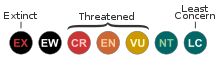
IUCN Red List
Growth: S = slow M = medium F = fast. Soil: L = light (sandy) M = medium H = heavy (clay). pH: A = acid N = neutral B = basic (alkaline). Shade: F = full shade S = semi-shade N = no shade. Moisture: D = dry M = Moist We = wet Wa = water.
Now available:
Food Forest Plants for Mediterranean Conditions
350+ Perennial Plants For Mediterranean and Drier Food Forests and Permaculture Gardens.
[Paperback and eBook]
This is the third in Plants For A Future's series of plant guides for food forests tailored to
specific climate zones. Following volumes on temperate and tropical ecosystems, this book focuses
on species suited to Mediterranean conditions—regions with hot, dry summers and cool, wet winters,
often facing the added challenge of climate change.
Read More
Expert comment
Author
(L.) Palla
Botanical References
Links / References
For a list of references used on this page please go here
Readers comment
| Add a comment |
|
If you have important information about this plant that may help other users please add a comment or link below. Only comments or links that are felt to be directly relevant to a plant will be included. If you think a comment/link or information contained on this page is inaccurate or misleading we would welcome your feedback at [email protected]. If you have questions about a plant please use the Forum on this website as we do not have the resources to answer questions ourselves.
* Please note: the comments by website users are not necessarily those held by PFAF and may give misleading or inaccurate information.
|
Subject : Bolboschoenus maritimus
|
|
|
|