Translate this page:
Summary
Physical Characteristics

 Aster latifolius is a PERENNIAL growing to 0.6 m (2ft) by 0.6 m (2ft in) at a medium rate.
See above for USDA hardiness. It is hardy to UK zone 4.
It is noted for attracting wildlife.
Suitable for: light (sandy), medium (loamy) and heavy (clay) soils. Suitable pH: mildly acid and neutral soils and can grow in very acid soils.
It can grow in full shade (deep woodland) semi-shade (light woodland) or no shade. It prefers dry or moist soil and can tolerate drought.
UK Hardiness Map
US Hardiness Map
Synonyms
Aster latifolius (L.) Kuntze [Illegitimate]. Doria flexicaulis (L.) Lunell. S. flexicaulis var. ciliata DC. S. flexicaulis f. flexicaulis. S. flexicaulis var. flexicaulis. S. flexicaulis var. latifolia (L.) Pursh. S. latifolia L. S. scrophulariifolia Mill.
Plant Habitats
Edible Uses
Leaves used for tea [1-2]. Edible seed [1-2]. No further information available.
References More on Edible Uses
Medicinal Uses
Plants For A Future can not take any responsibility for any adverse effects from the use of plants. Always seek advice from a professional before using a plant medicinally.
Many species of Solidago have medicinal qualities although we have been unable to find information on Solidago flexicaulis.
References More on Medicinal Uses
Other Uses
A good nurse plant for sites prone to drought. Erosion Control. Invertebrates shelter: beneficial for insects and other arthropods. Nectary: provides nectar or pollen for beneficial insects [1-2]. The flowerheads are pollinated by many kinds of insects, including long-tongued bees, small-tongued bees, wasps, flies, and butterflies. Several bees are oligoleges of Solidago spp. (Goldenrods). These species include: Andrena hirticincta, Andrena nubecula, Andrena placata, Andrena simplex, Andrena solidaginis, and Colletes simulans armata. Many insects feed on the leaves, flowers, seeds, and roots of goldenrods. These insect feeders include plant bugs, stink bugs, aphids, leaf beetles, and the caterpillars of many moths. These insects are a source of food to many woodland songbirds and some upland gamebirds. White-tailed Deer readily browse on the foliage of Zigzag Goldenrod [1-6]. An interesting goldenrod for shady woodland areas [368-1].
Special Uses
References More on Other Uses
Cultivation details
A long-lived upright herbaceous perennial in the sunflower family (Compositae/Asteraceae). Prefers average, medium moisture, well-drained soils in full sun to part shade. This is a woodland species that perhaps does best in sun-dappled part shade, but will also grow in full shade. Established plants tolerate some dry soils [368-1]. Soil Type: Loamy, Silty. Tolerat clay or rocky soils. Soil Moisture: Moderate - mesic or dry soils. Minimum Root Depth: 20cm/8 inches. Root Type: Fibrous Shallow. Yellow flower; adds bright color to woodland gardens in fall. Bloom Time: July to September. For polyculture design as well as the above-ground architecture (form - tree, shrub etc. and size shown above) information on the habit and root pattern is also useful and given here if available. The plant growth habit is a clumper with limited spread [1-2]. The root pattern is rhizomatous with underground stems sending roots and shoots along their length [1-2].
References Carbon Farming Information and Carbon Sequestration Information
Temperature Converter
Type a value in the Celsius field to convert the value to Fahrenheit:
Fahrenheit:
Plant Propagation
Root Division , Seeds. Fresh seed or root division. Seed Collection: Seeds ripen soon after plant blooms.
Other Names
If available other names are mentioned here
Zig-zag goldenrod, Zigzag golden rod, Broadleaved goldenrod
Native Range
NORTHERN AMERICA: Canada (Québec, Nova Scotia, Ontario, Prince Edward Island, New Brunswick), United States (Indiana, Maine, Massachusetts, Michigan, New Hampshire, New Jersey, New York, Ohio, Pennsylvania, Vermont, West Virginia, Connecticut, Illinois, Iowa, Kansas, Minnesota, Missouri, Nebraska, North Dakota, South Dakota, Wisconsin, Alabama, Arkansas, Delaware, Georgia, Kentucky, Maryland, North Carolina, Virginia, Tennessee)
Weed Potential
Right plant wrong place. We are currently updating this section.
Please note that a plant may be invasive in one area but may not
in your area so it's worth checking.
None Known
Conservation Status
IUCN Red List of Threatened Plants Status : Not Listed.
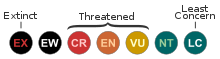
IUCN Red List
| Related Plants
|
| Latin Name | Common Name | Habit | Height | Hardiness | Growth | Soil | Shade | Moisture | Edible | Medicinal | Other |
| Achillea ageratum | Mace, Sweet-nancy | Perennial | 0.6 |
6-9
| | LMH | N | DM | 2 | 0 | |
| Achillea erba-rotta moschata | Musk Milfoil | Perennial | 0.2 |
5-9
| | LMH | N | DM | 0 | 2 | |
| Achillea millefolium | Yarrow, Boreal yarrow, California yarrow, Giant yarrow, Coast yarrow, Western yarrow, Pacific yarrow | Perennial | 0.6 |
4-8
| F | LMH | SN | DM | 3 | 4 | 4 |
| Achillea ptarmica | Sneeze-Wort, Sneezeweed | Perennial | 0.6 |
3-9
| F | LMH | N | M | 2 | 1 | 2 |
| Achillea santolina | | Perennial | 0.3 |
-
| | LMH | N | DM | 0 | 1 | 1 |
| Achillea sibirica | Siberian Yarrow | Perennial | 0.5 |
5-9
| | LMH | N | DM | 1 | 1 | |
| Acmella oleracea | Toothache plant, Paracress | Perennial | 0.4 |
9-11
| F | LMH | N | M | 3 | 3 | 2 |
| Acourtia microcephala | Sacapellote | Perennial | 1.4 |
7-10
| | LM | N | DM | 0 | 1 | |
| Actinea acaulis arizonica | | | 0.0 |
-
| | LMH | SN | M | 0 | 0 | |
| Ageratina altissima | White Snakeroot, Richweed | Perennial | 2.0 |
5-9
| | LMH | SN | M | 0 | 2 | 0 |
| Ageratina aromatica | | Perennial | 1.5 |
4-8
| | LMH | SN | M | 1 | 1 | |
| Ageratina herbacea | Fragrant Snakeroot | Perennial | 2.0 |
5-9
| | LMH | SN | M | 0 | 1 | |
| Ageratina ligustrina | | Shrub | 5.0 |
9-11
| | LMH | N | M | 0 | 0 | |
| Ageratina occidentalis | Western Snakeroot | Perennial | 0.7 |
5-9
| | LMH | SN | M | 0 | 1 | |
| Ageratina rugosum | | | 0.0 |
-
| | LMH | SN | M | 0 | 0 | |
| Ageratum conyzoides | Goatweed, Tropical whiteweed | Annual | 1.0 |
8-11
| | LMH | N | M | 0 | 3 | 2 |
| Ageratum houstonianum | Ageratum, Bluemink, Floss Flower, Garden | Annual | 0.3 |
0-0
| M | LMH | N | DM | 0 | 1 | |
| Agoseris aurantiaca | Mountain Dandelion, Orange agoseris | Perennial | 0.6 |
0-0
| | Lm | N | DM | 3 | 1 | 0 |
| Agoseris glauca | Mountain Dandelion, Pale agoseris, False agoseris | Perennial | 0.6 |
0-0
| | Lm | N | DM | 3 | 1 | 1 |
| Agoseris retrorsa | Spearleaf Agoseris | Perennial | 0.3 |
4-8
| F | LM | SN | DM | 3 | 0 | 1 |
| Ambrosia artemesiifolia | Roman Wormwood, Bitterweed, Blackweed, Carrot Weed, Hay Fever Weed, Stickeweed, Tassel Weed, Wild Ta | Annual | 0.9 |
4-8
| M | LMH | SN | M | 2 | 3 | 1 |
| Ambrosia confertiflora | Slimleaf Bursage | Perennial | 1.5 |
8-11
| M | LM | N | DM | 1 | 0 | 0 |
| Ambrosia trifida | Giant Ragweed, Great ragweed, Texan great ragweed, Bitterweed, Bloodweed, Buffalo Weed, Horse Cane | Annual | 2.0 |
1-11
| M | LMH | SN | M | 1 | 3 | 1 |
| Anacyclus pyrethrum | Mount Atlas Daisy, Chamomile Spanish, Pellitory | Perennial | 0.3 |
5-7
| M | LM | N | M | 0 | 2 | |
| Anaphalis margaritacea | Pearly Everlasting, Western pearly everlasting | Perennial | 0.9 |
3-7
| | LM | SN | DM | 1 | 2 | 1 |
| Antennaria dioica | Catsfoot, Stoloniferous pussytoes | Perennial | 0.1 |
4-8
| | L | N | DM | 0 | 2 | 2 |
| Antennaria parvifolia | Littleleaf Pussytoes | Perennial | 0.2 |
3-8
| F | LM | SN | DM | 1 | 0 | 2 |
| Antennaria rosea | Rosy Pussytoes | Perennial | 0.2 |
3-8
| F | LM | N | DM | 1 | 0 | 2 |
| Anthemis arvensis | Corn Chamomile | Annual | 0.4 |
4-8
| | LMH | N | DM | 0 | 2 | 2 |
| Anthemis cotula | Mayweed, Stinking chamomile | Annual | 0.6 |
4-8
| | MH | N | DM | 1 | 2 | 1 |
|
|
Growth: S = slow M = medium F = fast. Soil: L = light (sandy) M = medium H = heavy (clay). pH: A = acid N = neutral B = basic (alkaline). Shade: F = full shade S = semi-shade N = no shade. Moisture: D = dry M = Moist We = wet Wa = water.
Support Plants For A Future
Plants For A Future relies on regular donations to keep our free database and search facilities going, to pay for ongoing research, improvements and enhancements, and to develop and publish new books.
Read more
Choose Currency
Donate in £ GBP
Donate in $ USD
Donate in € EUR
Securely pay via PayPal or Credit/Debit Card without an account.
Expert comment
Author
L.
Botanical References
Links / References
For a list of references used on this page please go here
Readers comment
| Add a comment |
|
If you have important information about this plant that may help other users please add a comment or link below. Only comments or links that are felt to be directly relevant to a plant will be included. If you think a comment/link or information contained on this page is inaccurate or misleading we would welcome your feedback at [email protected]. If you have questions about a plant please use the Forum on this website as we do not have the resources to answer questions ourselves.
* Please note: the comments by website users are not necessarily those held by PFAF and may give misleading or inaccurate information.
|
Subject : Aster latifolius
|
|
|
|