 |
|
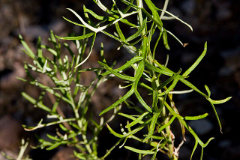
Patrick Alexander from Las Cruces, NM wikimedia.org |
 |
|
Translate this page:
Summary
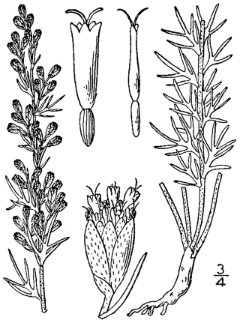
Artemisia carruthii is an herbaceous perennial plant that usually grows 15 - 40cm tall, sometimes to 70cm. The plant usually produces 3 - 8 stems from a rhizomatous rootstock[270 ]. It is harvested from the wild for local use as a food. Carruth’s sagewort produces bland leaves of no culinary value, but its small seeds were historically important to the Zuni, who steamed them into food balls. Seeds mature in autumn and can be used like those of wild tarragon. It grows in USDA Zones 5–9 and is not invasive.
Physical Characteristics

 Artemisia carruthii is a PERENNIAL growing to 0.4 m (1ft 4in) by 0.3 m (1ft) at a medium rate.
See above for USDA hardiness. It is hardy to UK zone 5 and is not frost tender. The flowers are pollinated by Wind.
Suitable for: light (sandy) and medium (loamy) soils, prefers well-drained soil and can grow in nutritionally poor soil. Suitable pH: neutral and basic (mildly alkaline) soils and can grow in very alkaline soils.
It cannot grow in the shade. It prefers dry or moist soil and can tolerate drought. The plant can tolerates strong winds but not maritime exposure.
UK Hardiness Map
US Hardiness Map
Synonyms
A. bakeri Greene. A. carruthii var. wrightii (A.Gray). A. coloradensis Osterh. A. kansana Britton. A. mexicana var. bakeri A.Nelson. A. vulgaris subsp. wrightii (A.Gray) H.M.Hall & Clem. A. vulgaris var. wrightii (A.Gray) E.J.Palmer & Steyerm. A. wrightii A.Gray. A. wrightii var. coloradensis A.Nelson.
Plant Habitats
Edible Uses
Leaves - cooked[61 ]. Seed - raw or cooked. An oily texture[61 , 161 , 177 ]. The seed is very small and fiddly to use[K ]. Carruth’s sagewort (Artemisia carruthii) is a common species native to the southwestern United States. It closely resembles wild tarragon but lacks its strong flavor, as the leaves are bland and not useful as seasoning. The seeds, however, were an important food resource for the Zuni Indians of western New Mexico. The Zuni name for this plant, kia’tsanna (“small seeds”), reflects its role in their diet. According to early ethnographic accounts, the Zuni ground the seeds, mixed them with water, and shaped the mixture into balls or pats, which were then steamed. This preparation was considered one of their most ancient foods, relied upon at times when other resources were scarce. Although the seeds are very small, they are comparable in quality to those of wild tarragon (A. dracunculus), which are excellent for grinding into flour or adding to porridge. Seeds mature in autumn, making this a late-season resource. Other plant parts are not considered edible due to the presence of bitter, potentially toxic compounds common to the genus [2-3].
References More on Edible Uses
Medicinal Uses
Plants For A Future can not take any responsibility for any adverse effects from the use of plants. Always seek advice from a professional before using a plant medicinally.
Minor medicinal use, but the main ethnobotanical role was as food seeds.
References More on Medicinal Uses
The Bookshop: Edible Plant Books
Our Latest books on Perennial Plants For Food Forests and Permaculture Gardens in paperback or digital formats.
Edible Tropical Plants
Food Forest Plants for Hotter Conditions: 250+ Plants For Tropical Food Forests & Permaculture Gardens.
More
Edible Temperate Plants
Plants for Your Food Forest: 500 Plants for Temperate Food Forests & Permaculture Gardens.
More
More Books
PFAF have eight books available in paperback and digital formats. Browse the shop for more information.
Shop Now
Other Uses
References More on Other Uses
Cultivation details
Native to southwestern U.S., especially New Mexico, Arizona, and Texas. Grows in open plains, juniper–oak–pine woodlands, and disturbed areas. Species in this genus are generally easily grown, succeeding in a well-drained circumneutral or slightly alkaline loamy soil, preferring a sunny position[1, 200 ]. They tend to be longer lived, more hardy and more aromatic when they are grown in poor, dry soil[245 ]. Established plants are drought tolerant. Artemisia carruthii is closely related to members of the Artemisia ludoviciana complex, with which it may intergrade[270 ]. Members of this genus are rarely if ever, troubled by browsing deer[233 ].
References Carbon Farming Information and Carbon Sequestration Information
Temperature Converter
Type a value in the Celsius field to convert the value to Fahrenheit:
Fahrenheit:
The PFAF Bookshop
Plants For A Future have a number of books available in paperback and digital form. Book titles include Edible Plants, Edible Perennials, Edible Trees,Edible Shrubs, Woodland Gardening, and Temperate Food Forest Plants. Our new book is Food Forest Plants For Hotter Conditions (Tropical and Sub-Tropical).
Shop Now
Plant Propagation
Seed - surface sow from late winter to early summer in a greenhouse, making sure that the compost does not dry out[200 ]. When large enough to handle, prick the seedlings out into individual pots and grow them in the greenhouse for their first winter. Plant out in late spring or early summer. Division in spring or autumn[200 ]. Basal cuttings in late spring. Harvest the young shoots when about 10 - 15cm long, pot up in a lightly shaded position in a greenhouse or cold frame and plant them out when well rooted. Very easy.
Other Names
If available other names are mentioned here
Carruth’s sagewort
Native Range
Native to: Arizona, Colorado, Kansas, Mexico Northeast, Mexico Northwest, Michigan, Missouri, New Mexico, Oklahoma, Texas, Utah. Introduced into: New York.
Weed Potential
Right plant wrong place. We are currently updating this section.
Please note that a plant may be invasive in one area but may not in your area so it's worth checking.
It is a native species and not considered invasive or weedy outside its natural range.
Conservation Status
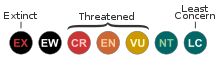
IUCN Red List of Threatened Plants Status : Least Concern
| Related Plants
|
| Latin Name | Common Name | Habit | Height | Hardiness | Growth | Soil | Shade | Moisture | Edible | Medicinal | Other |
| Artemisia abrotanum | Southernwood | Shrub | 1.2 |
4-8
| M | LMH | SN | DM | 1 | 3 | 3 |
| Artemisia absinthium | Wormwood, Absinthium. | Perennial | 1.0 |
4-9
| M | LM | SN | DM | 1 | 3 | 3 |
| Artemisia annua | Qing Hao, Sweet sagewort | Annual | 3.0 |
6-9
| F | LM | SN | DM | 1 | 4 | 2 |
| Artemisia anomala | Anomalous Wormwood | Perennial | 1.0 |
8-10
| M | LMH | SN | M | 0 | 2 | 0 |
| Artemisia arborescens | Tree Wormwood | Shrub | 1.0 |
8-10
| F | LM | N | DM | 0 | 2 | 3 |
| Artemisia argyi | Chinese Mugwort | Perennial | 1.5 |
4-9
| F | LM | SN | DM | 0 | 2 | 0 |
| Artemisia biennis | Biennial Wormwood | Annual/Biennial | 1.0 |
3-8
| F | LM | SN | DM | 1 | 1 | 1 |
| Artemisia californica | California Sagebrush | Shrub | 2.0 |
7-10
| F | LM | N | DM | 0 | 2 | 3 |
| Artemisia campestris | Field Southernwood | Perennial | 1.5 |
3-8
| M | LM | SN | DM | 1 | 2 | 1 |
| Artemisia campestris glutinosa | Sticky Field Wormwood | Perennial | 1.5 |
5-9
| M | LM | SN | DM | 0 | 0 | 1 |
| Artemisia capillaris | Yin Chen Hao | Shrub | 0.5 |
6-9
| M | LM | SN | DM | 1 | 3 | 0 |
| Artemisia caruifolia | Carrot-leaved Wormwood | Annual | 1.0 |
0-0
| | LM | SN | DM | 1 | 3 | 1 |
| Artemisia cina | Cina, Santonica | Shrub | 1.0 |
6-9
| M | LM | S | DM | 0 | 3 | 0 |
| Artemisia dracunculoides | Russian Tarragon, Tarragon, French Tarragon | Perennial | 1.0 |
5-8
| M | LM | SN | DM | 2 | 1 | 3 |
| Artemisia dracunculus | Tarragon, French Tarragon | Perennial | 0.6 |
5-9
| M | LM | SN | DM | 4 | 2 | 3 |
| Artemisia filifolia | Sand Sage, Sand sagebrush | Shrub | 1.2 |
3-7
| M | LM | SN | DM | 0 | 2 | 3 |
| Artemisia frigida | Fringed Wormwood, Prairie sagewort | Perennial | 0.3 |
3-8
| M | LM | N | DM | 2 | 2 | 3 |
| Artemisia glacialis | Glacier Wormwood | Perennial | 0.2 |
4-8
| S | LMH | N | DM | 1 | 2 | 0 |
| Artemisia gmelinii | Russian Wormwood, Gmelin's wormwood | Perennial | 1.5 |
3-7
| M | LMH | N | DM | 1 | 1 | 2 |
| Artemisia herba-alba | White Wormwood | Shrub | 0.3 |
7-10
| F | LM | N | DM | 0 | 3 | 3 |
| Artemisia indica | Indian Wormwood; Indian Mugwort | Annual/Perennial | 1.2 |
6-9
| F | LM | SN | DM | 3 | 3 | 2 |
| Artemisia japonica | Japanese Wormwood | Perennial | 1.0 |
7-10
| F | LMH | SN | DM | 1 | 2 | 1 |
| Artemisia keiskeana | Keiske’s Wormwood | Perennial | 0.6 |
5-8
| F | LMH | SN | DM | 2 | 1 | 2 |
| Artemisia laciniata | Siberian wormwood | Perennial | 1.0 |
3-7
| S | LMH | SN | DM | 1 | 0 | 0 |
| Artemisia lactiflora | White Mugwort | Perennial | 1.5 |
4-8
| S | LMH | SN | M | 0 | 2 | |
| Artemisia lancea | Lance-leaved Wormwood | Perennial | 1.2 |
4-9
| F | LMH | SN | DM | 1 | 1 | 0 |
| Artemisia ludoviciana | White Sage, Louisiana Sage, Prairie Sage, Western Mugwort | Perennial | 1.0 |
3-9
| M | LM | SN | DM | 2 | 2 | 2 |
| Artemisia ludoviciana gnaphalodes | White Sage | Perennial | 1.0 |
4-8
| M | LM | SN | DM | 0 | 2 | 1 |
| Artemisia maritima | Sea Wormwood | Shrub | 0.6 |
6-9
| M | LM | N | DM | 1 | 2 | 1 |
|
|
Growth: S = slow M = medium F = fast. Soil: L = light (sandy) M = medium H = heavy (clay). pH: A = acid N = neutral B = basic (alkaline). Shade: F = full shade S = semi-shade N = no shade. Moisture: D = dry M = Moist We = wet Wa = water.
Now available:
Food Forest Plants for Mediterranean Conditions
350+ Perennial Plants For Mediterranean and Drier Food Forests and Permaculture Gardens.
[Paperback and eBook]
This is the third in Plants For A Future's series of plant guides for food forests tailored to
specific climate zones. Following volumes on temperate and tropical ecosystems, this book focuses
on species suited to Mediterranean conditions—regions with hot, dry summers and cool, wet winters,
often facing the added challenge of climate change.
Read More
Expert comment
Author
Alph.Wood ex Carruth.
Botanical References
Links / References
For a list of references used on this page please go here
A special thanks to Ken Fern for some of the information used on this page.
Readers comment
| Add a comment |
|
If you have important information about this plant that may help other users please add a comment or link below. Only comments or links that are felt to be directly relevant to a plant will be included. If you think a comment/link or information contained on this page is inaccurate or misleading we would welcome your feedback at [email protected]. If you have questions about a plant please use the Forum on this website as we do not have the resources to answer questions ourselves.
* Please note: the comments by website users are not necessarily those held by PFAF and may give misleading or inaccurate information.
|
Subject : Artemisia carruthii
|
|
|
|