Translate this page:
Summary
Physical Characteristics

 Ammi visn is a ANNUAL/BIENNIAL growing to 0.8 m (2ft 7in) by 0.4 m (1ft 4in). It is in flower from July to September. The species is hermaphrodite (has both male and female organs) and is pollinated by Insects. The plant is self-fertile.
Suitable for: light (sandy), medium (loamy) and heavy (clay) soils and prefers well-drained soil. Suitable pH: mildly acid, neutral and basic (mildly alkaline) soils and can grow in very alkaline soils.
It can grow in semi-shade (light woodland) or no shade. It prefers moist soil.
UK Hardiness Map
US Hardiness Map
Synonyms
Ammi dilatatum. Apium visnaga. Carum visnaga. Daucus visnaga.
Plant Habitats
Edible Uses
Leaves - raw[177]. Chewed for their pleasant aromatic flavour[183].
References More on Edible Uses
Medicinal Uses
Plants For A Future can not take any responsibility for any adverse effects from the use of plants. Always seek advice from a professional before using a plant medicinally.
Visnaga is an effective muscle relaxant and has been used for centuries to alleviate the excruciating pain of kidney stones[254]. Modern research has confirmed the validity of this traditional use[254]. Visnagin contains khellin, from which particularly safe pharmaceutical drugs for the treatment of asthma have been made[254]. The seeds are diuretic and lithontripic[46]. They contain a fatty oil that includes the substance 'khellin'. This has been shown to be of benefit in the treatment of asthma[238]. Taken internally, the seeds have a strongly antispasmodic action on the smaller bronchial muscles[254], they also dilate the bronchial, urinary and blood vessels without affecting blood pressure[238]. The affect last for about 6 hours and the plant has practically no side effects[254]. The seeds are used in the treatment of asthma, angina, coronary arteriosclerosis and kidney stones[238]. By relaxing the muscles of the urethra, visnaga reduces the pain caused by trapped kidney stones and helps ease the stone down into the bladder[254]. The seeds are harvested in late summer before they have fully ripened and are dried for later use[254].
References More on Medicinal Uses
The Bookshop: Edible Plant Books
Our Latest books on Perennial Plants For Food Forests and Permaculture Gardens in paperback or digital formats.

Edible Tropical Plants
Food Forest Plants for Hotter Conditions: 250+ Plants For Tropical Food Forests & Permaculture Gardens.
More

Edible Temperate Plants
Plants for Your Food Forest: 500 Plants for Temperate Food Forests & Permaculture Gardens.
More

More Books
PFAF have eight books available in paperback and digital formats. Browse the shop for more information.
Shop Now
Other Uses
The fruiting pedicel is used as a toothpick[46, 61, 114] whilst the seeds have been used as a tooth cleaner[254].
Special Uses
References More on Other Uses
Cultivation details
Prefers a well-drained soil in a sunny position[238], succeeding in ordinary garden soil. Tolerates a pH in the range 6.8 to 8.3. This species is not fully winter-hardy in the colder areas of Britain, though it should be possible to grow it as a spring-sown annual[238]. This plant is sold as toothpicks in Egyptian markets[46].
References Carbon Farming Information and Carbon Sequestration Information
Temperature Converter
Type a value in the Celsius field to convert the value to Fahrenheit:
Fahrenheit:
The PFAF Bookshop
Plants For A Future have a number of books available in paperback and digital form. Book titles include Edible Plants, Edible Perennials, Edible Trees,Edible Shrubs, Woodland Gardening, and Temperate Food Forest Plants. Our new book is Food Forest Plants For Hotter Conditions (Tropical and Sub-Tropical).
Shop Now
Plant Propagation
Seed - sow spring in situ.
Other Names
If available other names are mentioned here
Native Range
TEMPERATE ASIA: Cyprus, Iran, Iraq, Israel, Lebanon, Syria, Turkey, Armenia, Azerbaijan, Georgia EUROPE: Albania, Greece, Italy (incl. Sardinia, Sicily), Spain (incl. Baleares), France (s. & Corsica), Portugal AFRICA: Algeria, Libya, Morocco, Tunisia
Weed Potential
Right plant wrong place. We are currently updating this section.
Please note that a plant may be invasive in one area but may not
in your area so it's worth checking.
Conservation Status
IUCN Red List of Threatened Plants Status :
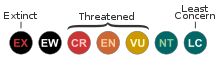
IUCN Red List
Growth: S = slow M = medium F = fast. Soil: L = light (sandy) M = medium H = heavy (clay). pH: A = acid N = neutral B = basic (alkaline). Shade: F = full shade S = semi-shade N = no shade. Moisture: D = dry M = Moist We = wet Wa = water.
Now available:
Food Forest Plants for Mediterranean Conditions
350+ Perennial Plants For Mediterranean and Drier Food Forests and Permaculture Gardens.
[Paperback and eBook]
This is the third in Plants For A Future's series of plant guides for food forests tailored to
specific climate zones. Following volumes on temperate and tropical ecosystems, this book focuses
on species suited to Mediterranean conditions—regions with hot, dry summers and cool, wet winters,
often facing the added challenge of climate change.
Read More
Expert comment
Author
(L.)Lam.
Botanical References
150
Links / References
For a list of references used on this page please go here
Readers comment
| Add a comment |
|
If you have important information about this plant that may help other users please add a comment or link below. Only comments or links that are felt to be directly relevant to a plant will be included. If you think a comment/link or information contained on this page is inaccurate or misleading we would welcome your feedback at [email protected]. If you have questions about a plant please use the Forum on this website as we do not have the resources to answer questions ourselves.
* Please note: the comments by website users are not necessarily those held by PFAF and may give misleading or inaccurate information.
|
|