 |
|
edibleplants.org |
 |
| David E Mead wikimedia.org |
Translate this page:
Summary
Taxonomic Note: This genus was formerly classified in the family Tiliaceae. Modern classifications include it within the Malvaceae.
Physical Characteristics

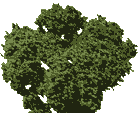 Abroma augusta is a SHRUB growing to 3 m (9ft) by 2 m (6ft) at a fast rate.
See above for USDA hardiness. It is hardy to UK zone 10.
Suitable for: light (sandy), medium (loamy) and heavy (clay) soils and prefers well-drained soil. Suitable pH: mildly acid and neutral soils and can grow in very acid soils.
It cannot grow in the shade. It prefers moist soil.
UK Hardiness Map
US Hardiness Map
Synonyms
Ambroma augustum (L.) L.f. Abroma alata Blanco. Abroma angulata Lam. Abroma angulosa Poir.
Abroma communis Blanco. Abroma denticulata Miq. Abroma elongata Lam. Abroma fastuosa R.Br. Abroma javanica Miq. Abroma mariae Mart. Abroma mollis DC. Abroma obliqua C.Presl. Abroma sinuosa G.Nicholson. Abroma wheleri Retz. Ambroma augustum (L.) L. f. Herrania mariae (Mart.) Decne. ex Goudot. Theobroma augustum L. Theobroma mariae (Mart.) K. Schum.
Plant Habitats
Edible Uses
References More on Edible Uses
Medicinal Uses
Plants For A Future can not take any responsibility for any adverse effects from the use of plants. Always seek advice from a professional before using a plant medicinally.
The fresh viscid sap of the root bark is considered to be a valuable emmenagogue and uterine tonic[372]. The juice of the plant is used to treat dysmenorrhoea[46, 272]. The root has been used to treat itch[372]. Used in the treatment of diabetes[266].
References More on Medicinal Uses
Other Uses
Agroforestry Uses: The plant is used in soil reclamation projects[418 ]. Other Uses: A high quality fibre is obtained from the bark[46 , 266 ]. Soft, glossy, strong, white, and clean, it is much valued for local uses[272 , 454 ]. It might be used as a substitute for silk[454 ]. Similar to jute (Corchorus spp.), it is a good cordage fibre used for making ropes, nets etc[46 , 266 , 272 ]. It is also used for false hair[418 ]. The bark is retted in water, taking about a week before the fibres can be removed[272 ]. Sometimes grown as an ornamental[266, 317]. Carbon Farming - Industrial Crop: fiber.
Special Uses
Carbon Farming
References More on Other Uses
Cultivation details
Industrial Crop: Fiber Management: Coppice Regional Crop
A plant of the tropics, where it is found at elevations up to 1,200 metres. It grows best in areas where annual daytime temperatures are within the range 26 - 31°c, but can tolerate 18 - 36°c[418].It prefers a mean annual rainfall in the range 1,500 - 3,000mm, but tolerates 1,300 - 3,500mm, and dislikes marked dry seasons[418]. Requires a sunny position[418]. Succeeds in most soils, so long as they are well-drained, growing best in a fertile, medium loam[418]. Prefers a pH in the range 5 - 6, tolerating 4.5 - 6.5[418].
For the best quality fibre, the plant should be harvested when the flowers open - after about 100 - 120 days of growth[418]. The plant yields three crops a year, and is said to be more easily cultivated than jute (Corchorus spp.) or sunn hemp (Crotalaria juncea)[454]. Can be grown as an annual. Bloom Color:Maroon/Burgundy. Carbon Farming - Cultivation: regional crop. Management: coppice.
Carbon Farming
-
Industrial Crop: Fiber
Clothing, rugs, sheets, blankets etc. Currently, almost none of our fiber are produced from perennial crops but could be!
-
Management: Coppice
Cut to the ground repeatedly - resprouting vigorously. Non-destructive management systems maintaining the soil organic carbon.
-
Regional Crop
These crops have been domesticated and cultivated regionally but have not been adopted elsewhere and are typically not traded globally, Examples in this broad category include perennial cottons and many nuts and staple fruits.
References Carbon Farming Information and Carbon Sequestration Information
Temperature Converter
Type a value in the Celsius field to convert the value to Fahrenheit:
Fahrenheit:
Plant Propagation
Seed. Propagated from seed. Seed germinate in 21–30 days at 72 °F (24 °C).
Other Names
If available other names are mentioned here
Pisachkarpas, Ulatkambal
Native Range
Coming Soon
Weed Potential
Right plant wrong place. We are currently updating this section.
Please note that a plant may be invasive in one area but may not
in your area so it's worth checking.
None Known
Conservation Status
IUCN Red List of Threatened Plants Status : This taxon has not yet been assessed
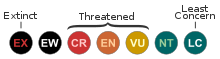
IUCN Red List
Growth: S = slow M = medium F = fast. Soil: L = light (sandy) M = medium H = heavy (clay). pH: A = acid N = neutral B = basic (alkaline). Shade: F = full shade S = semi-shade N = no shade. Moisture: D = dry M = Moist We = wet Wa = water.
Support Plants For A Future
Plants For A Future relies on regular donations to keep our free database and search facilities going, to pay for ongoing research, improvements and enhancements, and to develop and publish new books.
Read more
Choose Currency
Donate in £ GBP
Donate in $ USD
Donate in € EUR
Securely pay via PayPal or Credit/Debit Card without an account.
Expert comment
Author
(L.) L.f.
Botanical References
Links / References
For a list of references used on this page please go here
A special thanks to Ken Fern for some of the information used on this page.
Readers comment
| Add a comment |
|
If you have important information about this plant that may help other users please add a comment or link below. Only comments or links that are felt to be directly relevant to a plant will be included. If you think a comment/link or information contained on this page is inaccurate or misleading we would welcome your feedback at [email protected]. If you have questions about a plant please use the Forum on this website as we do not have the resources to answer questions ourselves.
* Please note: the comments by website users are not necessarily those held by PFAF and may give misleading or inaccurate information.
|
|