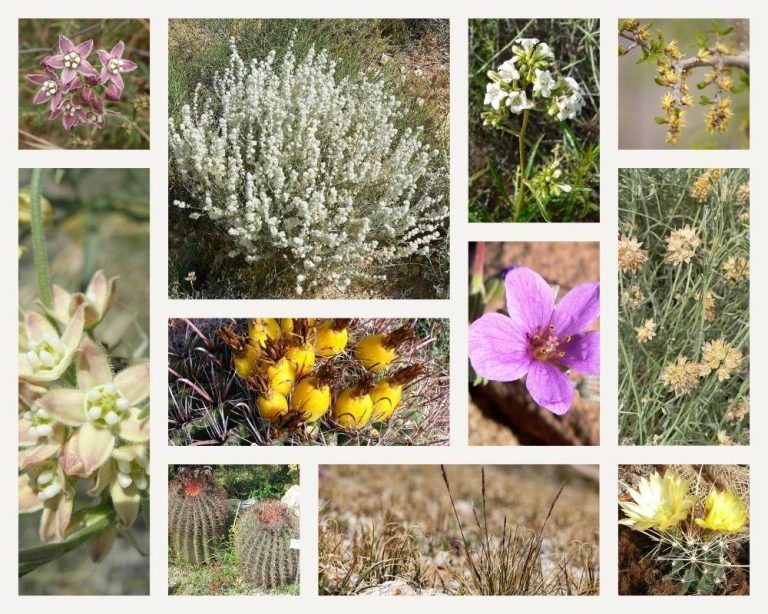

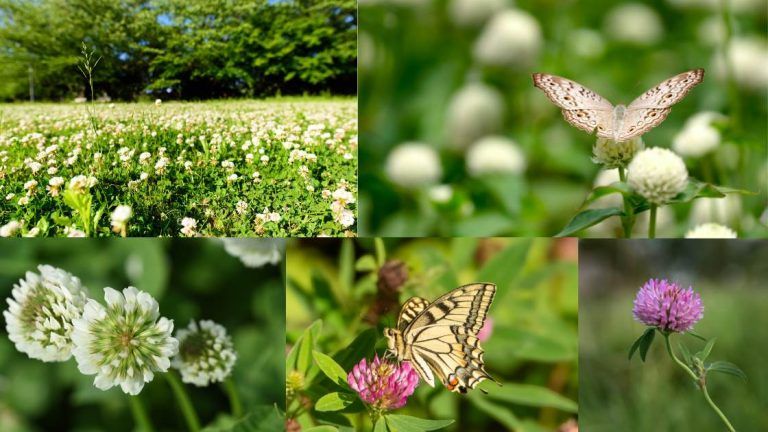
Clover is not just one plant. The common name “clover” is used for a wide range of species—some closely related, others only loosely connected—that share similar leaves, flowers, or uses. Many belong to the Fabaceae (pea family), while a few only resemble clovers in appearance.
This article explains why different plants share the name “clover,” introduces the wider legume family, and explores six important clover species with edible, medicinal, and ecological value.
- “Clover” refers to multiple genera, not just one plant.
- Most clovers belong to the Fabaceae (legume) family and fix nitrogen.
- True clovers belong to the genus Trifolium.
- Some clovers are edible; others are mainly ecological or agricultural plants.
- Several species were historically important food plants.
- PFAF is expanding its database with hundreds of new and updated species.
Table of Contents
- What Is Clover?
- The Fabaceae Family
- PFAF’s Expanding Fabaceae Database
- Why Do Different Plants Share the Name Clover?
- Six Important Clover Species
- The Genus Trifolium
- Why Clover Matters
- FAQs
- Glossary
What Is Clover?
Most people recognise clover as a low-growing plant with three leaflets and small rounded flowers. In botanical terms, this description fits the genus Trifolium, often called the “true clovers.”
However, the common name extends far beyond this genus. Many plants with similar leaves, similar flower structures, or similar uses have also been called clovers. In practice, “clover” is a functional name—based on how plants look and behave—rather than a strict scientific category.
The Fabaceae Family: The Legume Connection
Most clover species belong to the Fabaceae, or pea family—one of the largest plant families on Earth, with around 19,000 species. (https://anpsa.org.au/genera/legume-family-fabaceae/)
Fabaceae species share several key traits:
- Compound leaves, often with multiple leaflets
- Pea-like flowers
- Seed pods
- Symbiotic nitrogen fixation with soil bacteria
This nitrogen-fixing ability makes legumes especially valuable. They naturally improve soil fertility and play a central role in sustainable agriculture, pasture systems, and ecological restoration.
Important genera include Trifolium, Medicago, Melilotus, Desmodium, and Dalea—many of which contain species commonly called clover.
PFAF’s Expanding Database
Plants For A Future (PFAF) continues to expand its global plant database to better reflect the importance of useful plant families such as Fabaceae.
A major current initiative—Major Southwest Expansion: 946 New and Updated Plants Coming to the Database—is adding and refining hundreds of species, particularly those adapted to dryland and climate-stressed environments. (https://pfaf.org/plants/pfaf-announces-major-southwest-expansion-946-new-and-updated-plants-coming-to-the-database/)
This project introduces 946 new and updated plant entries, with detailed information on edible uses, traditional knowledge, ecology, and practical cultivation.
As part of this work, 57 Fabaceae species are being added or updated, significantly strengthening coverage of one of the most important plant families for food systems, soil health, and regenerative land use.
This expansion is particularly valuable for:
- Climate-resilient food forest design
- Dryland and Mediterranean gardening systems
- Ecological restoration and carbon farming
- Indigenous and traditional food knowledge
For clover and clover-like plants, this means improved data on edible potential, safety, identification, and real-world usability—moving beyond simple plant lists toward practical, field-ready knowledge.
Why Do Different Plants Share the Name Clover?
The shared name “clover” comes from three main similarities:
- Trifoliate leaves – Many species have three leaflets.
- Similar flowers – Small, clustered, pea-like blooms.
- Shared uses – Forage, soil improvement, and ground cover.
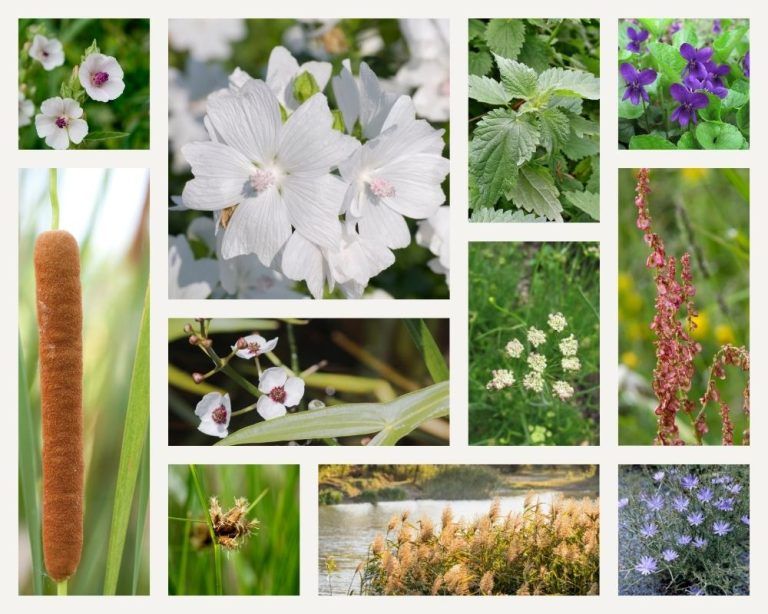
Because of this, plants that look and function like clovers are often called clovers—even when they belong to different genera. In rare cases, the resemblance is purely visual, as with water clover, which is actually a fern.
Six Important Clover Species
1. White Prairie Clover (Dalea candida)
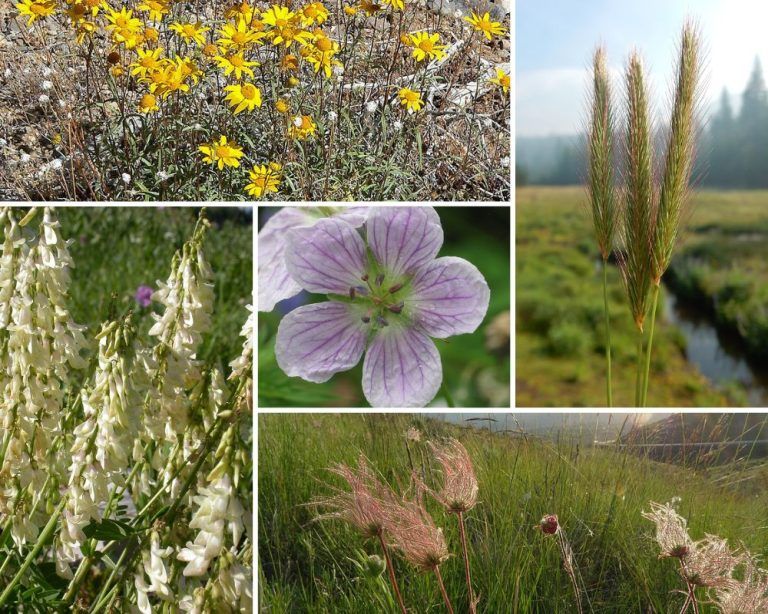
This North American native is valued for prairie restoration and soil health. The root has been used as a food source, though it is not a staple crop.
- Edible: Root (limited use)
- Key role: Prairie restoration, nitrogen cycling
- Note: Not a true clover
2. Toothed Bur-Clover (Medicago polymorpha)
A widespread and practical plant, bur-clover produces edible leaves, shoots, and seeds, and is widely used in pasture systems.
- Edible: Leaves, shoots, seeds
- Key role: Ground cover, forage
3. Tick-Clover (Desmodium cinereum)
Primarily a functional plant, this species is used in agroforestry systems for soil improvement and erosion control.
- Edible: Minimal
- Key role: Nitrogen-rich mulch, carbon farming
4. Red Clover (Trifolium pratense)
A classic clover species used in agriculture and herbal traditions.
- Edible: Leaves and flowers
- Medicinal: Widely used in herbal preparations
- Key role: Pollinator support, soil fertility
5. White Clover (Trifolium repens)
One of the most familiar clovers, common in lawns and pastures worldwide.
- Edible: Leaves, flowers
- Key role: Ground cover, nitrogen fixation
6. Springbank Clover (Trifolium fimbriatum)
A historically important food plant, cultivated by Indigenous communities for its edible roots.
- Edible: Roots
- Key role: Traditional food crop
The Genus Trifolium: True Clovers
The genus Trifolium represents the true clovers and contains hundreds of species worldwide. The name means “three-leaved,” referring to the characteristic leaf structure.
These plants are central to pasture systems, pollinator habitats, and soil-building strategies. Some species are also edible or medicinal, making the genus one of the most useful plant groups in temperate ecosystems.
Why Clover Matters
Clover species are small, but their impact is large. They play a key role in:
- Soil health: Natural nitrogen enrichment
- Agriculture: Essential forage crops
- Biodiversity: Support for pollinators
- Food systems: Edible leaves, flowers, and roots
As plant knowledge expands—especially through projects focused on climate-resilient species—clovers and their relatives are becoming increasingly important in sustainable landscape design.
FAQs
Are all clovers edible?
No. Some are edible, while others are mainly used for ecological or agricultural purposes.
What is a “true clover”?
A plant in the genus Trifolium.
Why are clovers important?
They improve soil fertility, support pollinators, and provide forage.
Is water clover a real clover?
No. It is a fern with clover-like leaves.
Glossary
- Fabaceae: The legume family.
- Trifoliate: Having three leaflets.
- Nitrogen fixation: Conversion of atmospheric nitrogen into soil nutrients.
- Forage: Plant material eaten by grazing animals.
- Agroforestry: Combining trees and crops in one system.
| Scientific Name | Common Name | Habit | Edible Rating | Medicinal | Other Rating |
|---|---|---|---|---|---|
| Dalea candida | White Prairie Clover | Perennial | Medium | Low | Medium |
| Dalea candida oligophylla | White Prairie Clover | Perennial | Medium | Low | Medium |
| Dalea lanata | Woolly Prairie-Clover, Woolly Parosella | Perennial | Low | Low | Medium |
| Dalea lasiathera | Pecos prairie-clover, Purple Prairie-clover | Perennial | Low | None | Medium |
| Dalea purpurea | Purple Prairie Clover | Perennial | Low | Low | Medium |
| Desmodium cinereum | Rensoni. Tickclover | Perennial | None | None | High |
| Desmodium uncinatum | Silverleaf desmodium. Spanish tick-clover | Perennial | None | None | Medium |
| Kummerowia stipulacea | Korean Lespedeza, Korean clover | Annual | None | Low | Medium |
| Kummerowia striata | Common Lespedeza, Japanese clover | Annual | Low | Low | Medium |
| Marsilea mutica | Nardoo, Australian Water-Clover | Fern | Low | None | |
| Marsilea quadrifolia | Water Clover, European waterclover | Fern | Low | Low | None |
| Medicago polymorpha | Toothed Bur-Clover, Burclover | Annual | Low | None | Medium |
| Melilotus altissimus | Tall Melilot, Tall yellow sweetclover | Biennial/Perennial | Low | None | Low |
| Melilotus elegans | Elegant sweetclover | Annual | Low | None | |
| Melilotus indicus | Annual Yellow Sweetclover | Annual | Low | Low | Low |
| Melilotus officinalis | Melilot, Sweetclover | Annual/Biennial | Low | Medium | Medium |
| Melilotus suaveolens | Sweetclover | Annual/Biennial | Low | Low | |
| Melilotus wolgicus | Sweetclover | Biennial | Low | None | |
| Trifolium bifidum | Piñole Clover, Notchleaf clover | Annual | Low | None | Medium |
| Trifolium ciliatum | Foothill Clover | Annual | Low | None | Medium |
| Trifolium cyathiferum | Cup Clover | Annual | Low | None | Medium |
| Trifolium dichotomum | Branched Indian Clover | Annual | Low | None | Medium |
| Trifolium dubium | Suckling Clover | Annual | None | Low | Medium |
| Trifolium fimbriatum | Springbank Clover, Cows clover | Perennial | Medium | None | Medium |
| Trifolium fucatum | Sour Clover, Bull clover | Annual | Low | None | Medium |
| Trifolium gracilentum | Pin-Point Clover, Palmer's clover | Annual | Low | None | Medium |
| Trifolium hybridum | Alsike Clover | Perennial | Low | Low | Medium |
| Trifolium incarnatum | Crimson Clover | Annual | Low | None | High |
| Trifolium lupinaster | Lupine clover | Perennial | Low | None | Medium |
| Trifolium macrocephalum | Bighead Clover, Largehead clover | Perennial | Low | None | Medium |
| Trifolium microcephalum | Smallhead Clover | Annual | Low | None | Medium |
| Trifolium obtusiflorum | Clammy Clover | Annual | Low | None | Medium |
| Trifolium ornithopodioides | Birdsfoot Fenugreek, Bird clover | Annual/Perennial | Low | None | Medium |
| Trifolium pratense | Red Clover | Perennial | Medium | Medium | High |
| Trifolium repens | White Clover, Dutch Clover, Purple Dutch Clover, Shamrock, White Clover | Perennial | Medium | Low | High |
| Trifolium subterraneum | Subterranean Clover | Annual | Low | None | High |
| Trifolium tridentatum | Tomcat Clover | Annual | Low | None | Medium |
| Trifolium variegatum | Whitetip Clover | Annual | Low | None | Medium |
| Trifolium wormskioldii | Cow clover | Perennial | Medium | None | Medium |