


You might be looking for a native tree that provides fruit and shade, a shrub for a wildlife hedge, or perennial greens to fill a gap in a border. Each has a different place in the garden. Our updated Native Plant Search by Location now lets you narrow your results by Habit, so you can focus on the kind of plant you have room to grow.
What does plant habit mean?
Plant habit describes how a plant grows. A tree can form a canopy. A shrub typically branches close to the ground and can fill the space between a tree canopy and lower-growing plants. In the PFAF search, Perennial is the category to try when you’re looking for non-woody plants that live for several years. Many die back in winter and send up new growth in spring.
Habit helps you decide where a plant might fit in your design. The individual plant profile tells you more about how much space it will need and whether it will suit your soil, light and moisture conditions.
How to search by location and habit
- Open the PFAF Native Plant Search by Location.
- Enter the full name of your country or, where supported, your state. For example, enter United Kingdom or California.
- Choose a Habit, such as Tree, Shrub or Perennial.
- Add a rating or special-use filter if you have a specific goal. For example, use the edibility rating to shortlist food plants or the wildlife filter to find plants that can support wildlife.
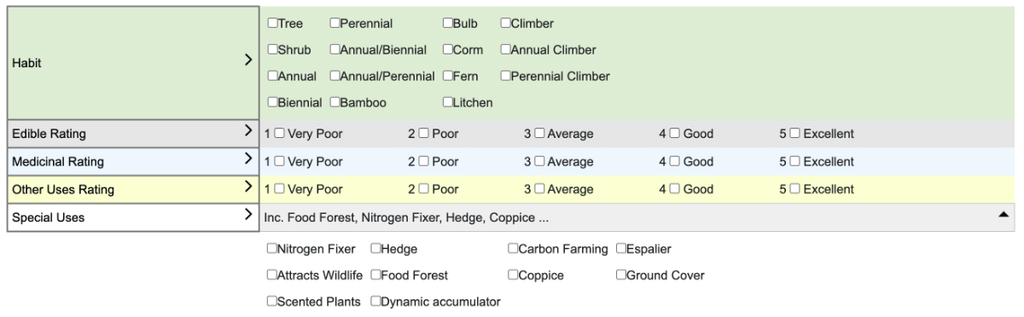
For more on the location search, ratings and special-use filters, see our original guide to finding native plants by location.
How the Habit filter helps you plan a planting
Find plants for the space you have. If you’re filling a narrow border, start with perennials and check their mature spread. If you’re planting a hedge, start with shrubs and compare their mature height, width and tolerance of pruning.
Build a food forest one layer at a time. Search for trees for the canopy, shrubs for the middle layer and herbaceous perennials for beds and edges. If you’re planting beneath existing trees, check the profiles for shade tolerance before making your shortlist.
Give each plant a job. Combine Shrub with the wildlife filter when planning a boundary, or Perennial with an edibility rating when looking for food plants that return year after year. Open the profiles to see which parts are edible, how they’re prepared and what conditions the plants need.

Explore native plants by region
We’re writing a series of posts on native plants in specific regions, with ideas for what to grow and how to fit those plants into a garden. The first two guides focus on the United Kingdom.
- Growing UK-Native Edible Perennials explores perennial food plants for a range of settings, from garden borders to wet ground.
- Growing UK-Native Edible Trees: Food, Wildlife and a Garden for the Future looks at what you can harvest from native trees, how much room they need and what they offer wildlife.
More plants and better information in the PFAF database
We’re continually adding plants and updating existing profiles. Our September 2026 Southwest Expansion added 14 plant records and updated 41 others, with more information on plants including native grains, edible roots and species that support pollinators. Southwest Expansion: New Plants and Updates in September 2026
If you garden where summers are dry and winters are wet, our guide to Mediterranean-climate planting shows how to use the wider PFAF database to find edible plants suited to your soil, rainfall and exposure. Planting for a Mediterranean Future: Use the PFAF Database to Choose Climate-Ready Edibles
Have a spot in mind? Try the updated Native Plant Search and choose the habit that fits.