Translate this page:
Summary
Broadleaf pepperweed is a robust perennial mustard native to Europe and western Asia that has become widely naturalised across western North America. It is regarded as an invasive weed in many regions, particularly around wetlands, irrigation channels, and agricultural land. Like many members of the Lepidium genus, it produces edible leaves and seeds with the characteristic peppery flavour of the mustard family. Although edible, its culinary qualities are generally inferior to the better pepperweeds, and it is valued more as an abundant emergency food than as a desirable vegetable.
Physical Characteristics

 Lepidium latifolium is a PERENNIAL growing to 1.5 m (5ft) by 2 m (6ft) at a fast rate.
See above for USDA hardiness. It is hardy to UK zone 5 and is not frost tender. It is in flower from June to July, and the seeds ripen from July to August. The species is hermaphrodite (has both male and female organs) and is pollinated by Insects.
It is noted for attracting wildlife.
Suitable for: light (sandy), medium (loamy) and heavy (clay) soils. Suitable pH: mildly acid, neutral and basic (mildly alkaline) soils and can grow in very alkaline and saline soils.
It can grow in semi-shade (light woodland) or no shade. It prefers moist or wet soil. The plant can tolerate maritime exposure.
UK Hardiness Map
US Hardiness Map
Synonyms
Cardaria latifolia (L.) Spach. Crucifera latifolia (L.) E.H.L.Krause. Lepidium dioscoridis Bubani. Lepidium latifolium subsp. eulatifolium Thell. Nasturtiastrum latifolium (L.) Gillet & Magne. Nasturtium latifolium (L.) Crantz.
Plant Habitats
Woodland Garden Sunny Edge; Dappled Shade; Meadow; Cultivated Beds;
Edible Uses
Edible Parts: Leaves Root
Edible Uses: Condiment
Broadleaf pepperweed is an abundant edible mustard that provides useful greens and spicy seeds, but its aggressive, invasive nature and strong flavor make it better appreciated as an emergency food than a preferred wild vegetable. Where it occurs, it offers a dependable source of edible foliage, although most foragers will find the milder pepperweeds and other wild greens more enjoyable. The leaves are edible raw or cooked, while the seeds can be used as a pepper substitute or ground into meal. Young leaves are preferred, as mature foliage becomes increasingly fibrous and strongly flavored. Like other pepperweeds, the seeds develop their best flavor after they mature and can be used fresh, dried, or ground [2-3]. Edibility Rating: 3 out of 5 – An abundant and useful edible weed, but the strong peppery flavor limits its culinary appeal compared with milder members of the genus. Taste and Preparation: Young leaves have a distinctly peppery, mustard-like flavor that grows hotter and more bitter as they mature. The pungency is similar to watercress, mustard greens, or horseradish, making the leaves suitable for adding small amounts to mixed salads. Cooking softens both the texture and the pungency. Boiling produces a reasonably good potherb, although the cooking water absorbs much of the strong flavor and is best discarded if you want a milder vegetable. The seeds possess the spicy qualities typical of the genus and can be dried and ground as a seasoning. Like other pepperweeds, they lose much of their pungency when thoroughly cooked [2-3]. Seasonality (Phenology): Young leaves are available from spring through early summer, while flowering generally occurs from May to September. Seeds mature from summer into early autumn. Nutritional Value: The leaves provide vitamin C, vitamin A, minerals, fiber, and antioxidants typical of leafy mustards. The seeds contain oils, protein, carbohydrates, and natural mustard compounds [2-3]. Traditional Uses: Although broadleaf pepperweed has not been documented as an important traditional food in the American Southwest, Indigenous peoples widely gathered related Lepidium species for both their leaves and seeds. In its native Eurasian range, people have long eaten young leaves as a potherb or spicy green [2-3]. No significant toxicity is reported. As with other members of the mustard family, the leaves and seeds contain glucosinolates that give them their pungent flavor. Eat them in moderation as part of a varied diet. Young leaves - raw or cooked[2, 61, 74]. A very hot cress-like flavor [K]. The leaves are nice when used in small quantities as a flavouring in salads[K]. Some reports also suggest using them as a potherb[183], though they have always seemed to be too strong for us to want to try this[K]. The leaves are available very early in the year[K]. Root - it can be grated and made into a sauce which is used as a horseradish substitute[2, 5, 183]. It has a pungently hot flavor. Seed - used as a condiment[177, 183].
References More on Edible Uses
Medicinal Uses
Plants For A Future can not take any responsibility for any adverse effects from the use of plants. Always seek advice from a professional before using a plant medicinally.
Antiscorbutic Depurative Hepatic Kidney Resolvent Stomachic
The plant is antiscorbutic, depurative and stomachic[61, 240]. An infusion of the plant is used in the treatment of liver and kidney diseases, it increases cardiac amplitude, decreases frequency and regulates the rhythm[240]. It is also used as a resolvent in the treatment of skin diseases[240].
References More on Medicinal Uses
The Bookshop: Edible Plant Books
Our Latest books on Perennial Plants For Food Forests and Permaculture Gardens in paperback or digital formats.

Edible Tropical Plants
Food Forest Plants for Hotter Conditions: 250+ Plants For Tropical Food Forests & Permaculture Gardens.
More

Edible Temperate Plants
Plants for Your Food Forest: 500 Plants for Temperate Food Forests & Permaculture Gardens.
More

More Books
PFAF have eight books available in paperback and digital formats. Browse the shop for more information.
Shop Now
Other Uses
Insecticide
Used as an insecticide[100]. No further details are given, but it is likely to be a strong infusion of the leaves and stems that is used. Wildlife Value: The flowers provide nectar and pollen for insects, while the dense vegetation offers cover for small animals. However, extensive colonies often displace native wetland vegetation, reducing overall biodiversity. Pollinators: The abundant white flowers attract bees, hoverflies, butterflies, and numerous other pollinating insects.
Special Uses
References More on Other Uses
Cultivation details
Broadleaf pepperweed grows best in full sun but tolerates partial shade. It prefers moist, fertile soils and thrives where groundwater or irrigation is available. Unlike many desert pepperweeds, it favors consistently moist conditions. Habitat: Typically found along streams, irrigation ditches, wetlands, floodplains, roadsides, agricultural fields, and other disturbed moist habitats. In the southwestern United States, it is most commonly associated with irrigated land rather than natural desert communities. USDA Hardiness Zones: USDA Zones 4–9. Growth Rate: Fast. This vigorous perennial spreads rapidly by creeping roots and seed, allowing colonies to expand quickly. Mature Size: Typically 60–150 cm (2–5 ft) tall, occasionally reaching nearly 2 meters (6½ ft) under favorable conditions. Cultivation: Easily grown in moist soils with full sun. It tolerates flooding, alkaline soils, and periodic disturbance. Because of its vigorous underground rhizomes, cultivation is generally discouraged outside its native range. Pollinators: The abundant white flowers attract bees, hoverflies, butterflies, and numerous other pollinating insects. Identification: Broadleaf pepperweed is a tall perennial with erect branching stems arising from creeping rhizomes. The leaves are broad, bluish-green, and alternate, becoming smaller toward the top of the plant. Dense clusters of small white four-petalled flowers develop at the ends of the stems, followed by flattened, rounded seedpods typical of the Lepidium genus. Similar Species: Broadleaf pepperweed differs from most other southwestern pepperweeds by its large size, broad leaves, perennial growth habit, and preference for moist habitats. Field pepperweed (Lepidium campestre), miner's pepperweed (Lepidium densiflorum), and shaggyfruit pepperweed (Lepidium lasiocarpum) are much smaller annual species of drier environments. A very easily grown plant, it succeeds in most soils in sun or light shade. Plants have been surviving quite happily with us, and are still spreading freely, in dense grass that is rarely cut[K]. Dittander was formerly cultivated as a food condiment in Britain and in ancient Greece[17, 183]. It is a very invasive plant, capable of spreading more than a metre per year by means of its aggressive root system[K]. It produces new growth early in the year and so can be a useful salad ingredient in late winter[K].
References Carbon Farming Information and Carbon Sequestration Information
Temperature Converter
Type a value in the Celsius field to convert the value to Fahrenheit:
Fahrenheit:
The PFAF Bookshop
Plants For A Future have a number of books available in paperback and digital form. Book titles include Edible Plants, Edible Perennials, Edible Trees,Edible Shrubs, Woodland Gardening, and Temperate Food Forest Plants. Our new book is Food Forest Plants For Hotter Conditions (Tropical and Sub-Tropical).
Shop Now
Plant Propagation
Seed - sow spring in a cold frame. When they are large enough to handle, prick the seedlings out into individual pots and plant them out in the spring. Divide in spring. Plant them out direct into their permanent positions. Division is very simple and succeeds at almost any time of the year[K].
Other Names
If available other names are mentioned here
Broadleaf pepperweed, Tall pepperweed, Perennial pepperweed, Dittander.
Native Range
TEMPERATE ASIA: Afghanistan, Cyprus, Iran, Iraq, Israel, Jordan, Lebanon, Syria, Turkey, Russian Federation-Ciscaucasia (Ciscaucasia), Azerbaijan, Russian Federation (Dagestan), Russian Federation (Gorno-Altay, Altay, Krasnoyarsk (south), Irkutsk (south), Kurganskaja oblast, Novosibirsk, Omsk, Tyumen (south)), Kazakhstan, Kyrgyzstan, Tajikistan, Turkmenistan, Uzbekistan, Mongolia, China (Gansu Sheng, Hebei Sheng, Heilongjiang Sheng, Henan Sheng, Liaoning Sheng, Nei Mongol Zizhiqu, Ningxia Huizi Zizhiqu, Qinghai Sheng, Shaanxi Sheng, Shandong Sheng, Shanxi Sheng, Sichuan Sheng, Xinjiang Uygur Zizhiqu, Xizang Zizhiqu) TROPICAL ASIA: India (Himachal Pradesh, Jammu and Kashmir), Pakistan (north) EUROPE: Denmark, United Kingdom, Sweden (south), Russian Federation-European part (European part (south)), Ukraine (incl. Krym), Albania, Bulgaria, Greece, Italy (incl. Sardinia, Sicily), North Macedonia, Romania, Spain, France (incl. Corsica), Portugal AFRICA: Algeria (north), Egypt (north), Morocco
Weed Potential
Right plant wrong place. We are currently updating this section.
Please note that a plant may be invasive in one area but may not in your area so it's worth checking.
Very High. Broadleaf pepperweed is considered an aggressive invasive weed throughout much of western North America. It spreads rapidly through extensive underground rhizomes and prolific seed production, forming dense colonies that outcompete native plants and are difficult to eradicate.
Conservation Status
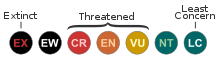
IUCN Red List of Threatened Plants Status : Not listed.
Growth: S = slow M = medium F = fast. Soil: L = light (sandy) M = medium H = heavy (clay). pH: A = acid N = neutral B = basic (alkaline). Shade: F = full shade S = semi-shade N = no shade. Moisture: D = dry M = Moist We = wet Wa = water.
Now available:
Food Forest Plants for Mediterranean Conditions
350+ Perennial Plants For Mediterranean and Drier Food Forests and Permaculture Gardens.
[Paperback and eBook]
This is the third in Plants For A Future's series of plant guides for food forests tailored to
specific climate zones. Following volumes on temperate and tropical ecosystems, this book focuses
on species suited to Mediterranean conditions—regions with hot, dry summers and cool, wet winters,
often facing the added challenge of climate change.
Read More
Expert comment
Author
L.
Botanical References
17
Links / References
For a list of references used on this page please go here
Readers comment
| Add a comment |
|
If you have important information about this plant that may help other users please add a comment or link below. Only comments or links that are felt to be directly relevant to a plant will be included. If you think a comment/link or information contained on this page is inaccurate or misleading we would welcome your feedback at [email protected]. If you have questions about a plant please use the Forum on this website as we do not have the resources to answer questions ourselves.
* Please note: the comments by website users are not necessarily those held by PFAF and may give misleading or inaccurate information.
|
Subject : Lepidium latifolium
|
|
|
|