Translate this page:
Summary
Rocky Mountain juniper is a handsome evergreen conifer that provides important wildlife habitat throughout the western United States. It commonly grows on rocky cliffs, canyon walls, and dry mountain slopes where few other trees thrive. The species has become one of the most widely cultivated native junipers because of its attractive blue-green foliage and naturally upright form. Like other members of the genus, its so-called berries are actually fleshy seed cones. Indigenous peoples gathered the ripe cones as a seasonal food and also made extensive use of the wood, bark and foliage for fuel, tools, medicine and ceremonial purposes. Our field observations indicate that Rocky Mountain juniper is one of the least desirable edible junipers. Fruits collected from eastern Utah, northern New Mexico and several additional locations consistently possessed an intensely resinous flavor that remained unpleasant after processing. Unlike one-seeded juniper or some alligator junipers, little sweetness was apparent to balance the resins. Although historically utilized as food, Rocky Mountain juniper is best regarded as an occasional emergency or supplementary resource rather than a species sought specifically for its fruits. Taxonomic Note: This genus was formerly classified in the family Taxodiaceae. Modern classifications include it within the Cupressaceae. Main Bloom Time: Early spring, Late spring, Mid spring. Form: Pyramidal, Upright or erect, Weeping.
Physical Characteristics

 Juniperus scopulorum is an evergreen Tree growing to 8 m (26ft) by 8 m (26ft) at a slow rate.
See above for USDA hardiness. It is hardy to UK zone 3. It is in leaf all year, in flower from April to May, and the seeds ripen in October. The species is dioecious (individual flowers are either male or female, but only one sex is to be found on any one plant so both male and female plants must be grown if seed is required). and is pollinated by Wind. The plant is not self-fertile.
Suitable for: light (sandy), medium (loamy) and heavy (clay) soils, prefers well-drained soil and can grow in nutritionally poor soil. Suitable pH: mildly acid, neutral and basic (mildly alkaline) soils and can grow in very alkaline soils.
It cannot grow in the shade. It prefers dry or moist soil and can tolerate drought. The plant can tolerates strong winds but not maritime exposure.
UK Hardiness Map
US Hardiness Map
Synonyms
J. virginiana scopulorum. (Sarg.)Lemmon.
Plant Habitats
Woodland Garden Canopy; Sunny Edge; Ground Cover;
Edible Uses
Edible Parts: Fruit Shoots
Edible Uses: Coffee Condiment Tea
Only the mature fleshy seed cones are edible, and they should be eaten only in small quantities [2-3]. The fleshy cone scales contain natural sugars together with volatile oils and aromatic resins typical of the genus. Most cones contain one or two seeds, leaving only a modest quantity of edible flesh. Historical records indicate that Indigenous peoples occasionally ate the fruits fresh or dried. Field observations consistently found the ripe fruits to be strongly resinous and lacking the sweetness associated with better edible junipers. The fruits therefore have greater ethnobotanical than culinary significance [2-3]. Edibility Rating: 1.5/5. Rocky Mountain juniper receives an edibility rating of 1.5 out of 5. The rating reflects its documented traditional use together with its consistently poor flavor, high resin content, and limited practical value as a food. While edible in small quantities, it is considerably inferior to one-seeded or alligator juniper. Taste, Processing & Culinary Use: Field observations found Rocky Mountain juniper fruits consistently unpleasant regardless of where they were collected. Samples gathered from the Book Cliffs of eastern Utah, the Sangre de Cristo Mountains of northern New Mexico, and several additional locations all displayed the same strongly acrid, resinous flavor [2-3]. Any underlying sweetness was largely overwhelmed by pungent evergreen resins [2-3]. Cooking did not significantly improve the fruits. The fleshy cone scales possess a soft, fibrous texture surrounding one or occasionally two hard seeds. Drying preserved the fruits but did not noticeably improve flavor. Although the cones could theoretically be ground into meal or used sparingly as flavoring, their culinary quality is generally too poor to justify extensive processing. Compared with other southwestern junipers, Rocky Mountain juniper ranks among the least palatable species [2-3]. Seasonality (Phenology): Rocky Mountain juniper remains evergreen year-round. Flowering generally occurs during spring. The fleshy seed cones mature during late summer and autumn, developing a bluish color covered by a pale waxy bloom. Mature cones frequently remain attached throughout winter, allowing harvesting well beyond the initial ripening period. This persistence made the species a dependable seasonal resource even if the fruits were not especially desirable. Safety & Cautions: Consume Rocky Mountain juniper fruits only in small quantities. Like all junipers, they contain biologically active volatile oils and resinous compounds that may irritate the kidneys when consumed regularly or in large amounts. Individuals with kidney disease should avoid juniper fruits. Medicinal or concentrated use during pregnancy is not recommended. Only fully ripe blue fruits should be harvested. Immature green cones contain higher concentrations of resins and should not be eaten. Leaves, bark and wood are not edible. Harvest & Processing: Harvest mature blue cones during autumn after they have fully ripened. Taste fruits from individual trees before collecting large quantities, although your observations suggest consistently resinous flavour across multiple populations. Remove leaves, twigs and damaged fruits. Remove seeds before further processing. Drying improves storage life but has little effect on flavor. Grinding dried fruits into meal allows them to be mixed with other foods, reducing resin intensity, although culinary results remain modest. Because of the poor flavor, gathering large quantities is generally not worthwhile [2-3]. Traditional Indigenous Uses: Rocky Mountain juniper served as an important multipurpose tree for many Indigenous peoples throughout the western United States. People occasionally gathered ripe seed cones for food or flavoring, particularly during seasons when other fruits were scarce. The wood was valued for fuel, fence posts, tools, and construction. Branches, bark and foliage were widely used in traditional medicine, ceremonies and practical household applications. Its cultural importance therefore extended far beyond its limited food value. Nutritional Value: The fleshy seed cones contain natural sugars, dietary fiber and aromatic essential oils. Most of the edible value comes from the carbohydrates in the fleshy cone scales. Because the fruits contain relatively little flesh and are consumed only sparingly, they should be regarded as a supplementary rather than significant food source. Fruit - raw or cooked[105, 161, 183]. Sweet and fleshy, but strongly flavoured[85, 229]. Resinous[227]. Often used as a flavouring, imparting a sage-like taste, for which purpose it is usually dried and ground into a powder[85, 183]. The fruit can also be dried and ground into a meal for making mush and cakes[183].The fruits are about 5 - 8mm in diameter[200, 227]. The roasted fruit is a coffee substitute[183]. A tea is made from the fruits and young shoots[183].
References More on Edible Uses
Medicinal Uses
Plants For A Future can not take any responsibility for any adverse effects from the use of plants. Always seek advice from a professional before using a plant medicinally.
Antidandruff Appetizer Diaphoretic Disinfectant Diuretic Haemostatic Kidney Laxative
Parasiticide Poultice Sedative Stomachic Tonic VD
Rocky Mountain juniper was widely employed medicinally by many native North American Indian tribes who used it in particular to treat problems connected with the chest and kidneys[257]. It is little, if at all, used in modern herbalism. A tea made from the terminal shoots has been used in the treatment of VD by some N. American Indian tribes[213]. The treatment has to be taken over a long period of time[257]. The fruits are appetizer, diuretic and stomachic[257]. An infusion has been used in the treatment of stomach, kidney and bladder problems[213, 257]. An infusion of the twigs has been used in the treatment of fevers, pneumonia, coughs and colds[257]. A poultice of the mashed and dampened branches has been applied to skin sores[257]. The leaves are diaphoretic, disinfectant, febrifuge, haemostatic, laxative, sedative and tonic[99, 216, 257]. A decoction has been used in the treatment of internal bleeding, constipation and constant coughing[257]. The leaves have been boiled, then mixed with turpentine and used as an external treatment on rheumatic joints[257]. The leaves have been rubbed into the hair in order to treat dandruff[213, 257].
References More on Medicinal Uses
The Bookshop: Edible Plant Books
Our Latest books on Perennial Plants For Food Forests and Permaculture Gardens in paperback or digital formats.

Edible Tropical Plants
Food Forest Plants for Hotter Conditions: 250+ Plants For Tropical Food Forests & Permaculture Gardens.
More
Edible Temperate Plants
Plants for Your Food Forest: 500 Plants for Temperate Food Forests & Permaculture Gardens.
More
More Books
PFAF have eight books available in paperback and digital formats. Browse the shop for more information.
Shop Now
Other Uses
Beads Disinfectant Incense Parasiticide Repellent Shelterbelt Tinder Wax Wood
Rocky Mountain juniper is widely planted as an ornamental and shelterbelt tree. Landscape Uses: Alpine garden, Border, Screen, Specimen, Street tree. A fragrant wax on the fruits can be obtained by boiling the fruit and skimming off the wax as it floats to the surface. It is used to make aromatic candles but is only present in small quantities[85]. The boughs are used as an incense to fumigate houses and to drive off smells. The wood can be burnt or just hung in the room, or it can be boiled up in water and the water used to wash the walls, floor etc[99]. The bark is employed as a tinder and is also made into a slow match[216]. The dried seeds have been used as beads or as the 'rattle' in rattles[99, 216]. The fruits and the leaves are used as an insect repellent[169]. A strong infusion of the cones is used to kill ticks[99]. Plants can be grown as a ground cover, the cultivar 'Repens' is especially suitable[208]. A fairly wind resistant tree, it can be grown as part of a shelterbelt planting[200]. In N. America it is used to some extent in re-afforestation and shelterbelt plantings on the prairies[227]. Wood - extremely tough, aromatic, close grained, light, fairly strong in endwise compression but moderately weak in bending, hard, durable in the soil. Used for interior finishes, bows, hoops, hafts, wheels etc[99, 149, 227]. Wildlife & Ecology: Rocky Mountain juniper is an extremely valuable wildlife tree. Its fleshy cones provide food for many birds and mammals, including waxwings, robins, bluebirds, grouse, foxes, coyotes and small rodents. Birds disperse the seeds over considerable distances. Dense evergreen foliage provides year-round shelter and nesting habitat. The tree also stabilizes rocky slopes, reduces erosion and contributes greatly to the structure and diversity of western woodland ecosystems.
Special Uses
Food Forest Ground cover
References More on Other Uses
Cultivation details
Rocky Mountain juniper thrives in full sun and well-drained soils. It tolerates limestone, sandstone, gravel, and shallow rocky soils exceptionally well. Once established, it is highly drought-tolerant. Growth is generally slow to moderate. The species performs poorly on permanently wet or poorly drained sites. It commonly grows with pinyon pines, ponderosa pine, Douglas-fir, and Gambel oak depending upon elevation. Habitat & Distribution: Rocky Mountain juniper ranges from British Columbia and Alberta south through Montana, Wyoming, Idaho, Colorado, Utah, Nevada, Arizona, New Mexico and western Texas. It occupies rocky slopes, canyon rims, cliffs, foothills, and open woodland, generally between 500 and 2,700 meters elevation. The species frequently grows on steep, dry sites where competition from larger forest trees is limited. Its ability to establish on exposed rock makes it one of the characteristic trees of many western mountain landscapes. Cultivation: Rocky Mountain juniper is widely planted as an ornamental and shelterbelt tree. It performs best in full sun with excellent drainage. Young trees require occasional watering while establishing but become highly drought-tolerant with age. Little fertilizer is needed. Minimal pruning maintains the natural form. Numerous ornamental cultivars have been selected for narrow columnar growth, blue foliage and compact habit. The species is well suited to xeriscaping and wildlife-friendly landscapes. Pollinators: Rocky Mountain juniper is wind-pollinated. Male trees release pollen during spring while female trees produce the fleshy seed cones. The species offers little direct value to insect pollinators because it lacks nectar-producing flowers. Successful pollination depends upon airborne pollen rather than insect visitation. Identification: Rocky Mountain juniper is a medium-sized evergreen tree with grey to reddish-brown fibrous bark that becomes shredding with age. The foliage consists of tiny overlapping scale-like leaves that may be blue-green, grey-green, or dark green depending on the population. The fleshy seed cones measure approximately 5–9 mm across and usually contain one or two seeds. The species differs from common juniper by its scale-like foliage rather than needle-like leaves, and from alligator juniper by lacking the distinctive square, checkered bark. Its upright habit, bluish foliage, and occurrence on dry rocky mountain slopes help distinguish it in the field. Succeeds in most soils, including chalk[200], so long as they are well-drained, preferring a neutral or slightly alkaline soil[1, 11]. A drought-tolerant species once established, succeeding in hot, dry positions[200]. Plants are fairly wind-resistant[200]. A long-lived but slow-growing tree in its native range[227], it is very slow-growing in Britain, where it only makes a shrub[185]. Closely allied to J. virginiana[1, 81] and hybridizes with it where the ranges meet[226]. It differs mainly in the fruit, which takes two years to mature in this species instead of one[226]. Plants are resistant to honey fungus[88]. This tree is apparently resistant to the rust fungus that attacks the closely related J. virginiana[149]. Dioecious. Male and female plants must be grown if seed is required. Special Features: North American native, Fragrant foliage, Inconspicuous flowers or blooms. In garden design, as well as the above-ground architecture of a plant, root structure considerations help in choosing plants that work together for their optimal soil requirements including nutrients and water. The root pattern is flat with shallow roots spreading near the soil surface [2-1]. Rocky Mountain juniper, Juniperus scopulorum Sarg., belongs to the cypress family (Cupressaceae) and the genus Juniperus. Common names include Rocky Mountain juniper, mountain juniper and Colorado red cedar. It is native to western North America, occurring from British Columbia and Alberta south through the Rocky Mountains into Arizona, New Mexico and western Texas. It is one of the characteristic evergreen trees of dry mountain slopes, canyons and foothills. Rocky Mountain juniper is generally hardy in USDA Hardiness Zones 3–8. Mature trees commonly reach 10–15 metres tall, occasionally exceeding 20 metres, with a crown spread of 4–8 metres. The species is long-lived, drought tolerant and well adapted to dry mountain environments.
References Carbon Farming Information and Carbon Sequestration Information
Temperature Converter
Type a value in the Celsius field to convert the value to Fahrenheit:
Fahrenheit:
The PFAF Bookshop
Plants For A Future have a number of books available in paperback and digital form. Book titles include Edible Plants, Edible Perennials, Edible Trees,Edible Shrubs, Woodland Gardening, and Temperate Food Forest Plants. Our new book is Food Forest Plants For Hotter Conditions (Tropical and Sub-Tropical).
Shop Now
Plant Propagation
The seed requires a period of cold stratification. The seed has a hard seedcoat and can be very slow to germinate, requiring a cold period followed by a warm period and then another cold spell, each of 2 - 3 months duration[78, 81]. Soaking the seed for 3 - 6 seconds in boiling water may speed up the germination process[11]. The seed is best sown as soon as it is ripe in a cold frame. Some might germinate in the following spring, though most will take another year. Another possibility is to harvest the seed 'green' (when the embryo has fully formed but before the seedcoat has hardened). The seedlings can be potted up into individual pots when they are large enough to handle. Grow on in pots until large enough, then plant out in early summer. When stored dry, the seed can remain viable for several years[1]. Cuttings of mature wood, 5 - 10cm with a heel, September/October in a cold frame. Plant out in the following autumn[1, 78]. Layering in September/October. Takes 12 months[78].
Other Names
If available other names are mentioned here
Weeping Rocky Mountian Juniper, Colorado Red Cedar.
Native Range
NORTHERN AMERICA: Canada (Alberta, British Columbia), United States (Nebraska, North Dakota, Oklahoma, South Dakota, Colorado, Idaho, Montana, Oregon, Washington, Wyoming, New Mexico, Texas, Arizona, Nevada, Utah), Mexico (Chihuahua (north), Coahuila de Zaragoza)
Weed Potential
Right plant wrong place. We are currently updating this section.
Please note that a plant may be invasive in one area but may not in your area so it's worth checking.
Rocky Mountain juniper has low weed potential. Natural regeneration occurs through bird-dispersed seed, but establishment is generally slow. Volunteer seedlings occasionally appear beneath bird perches but are easy to remove while young. Within portions of its native range, the species may gradually expand where fire has been suppressed, although this represents natural ecological succession rather than invasive behavior. For PFAF purposes, its weed potential is best rated 2/5 (low).
Conservation Status
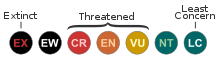
IUCN Red List of Threatened Plants Status : Juniperus scopulorum is listed as Least Concern.
| Related Plants
|
| Latin Name | Common Name | Habit | Height | Hardiness | Growth | Soil | Shade | Moisture | Edible | Medicinal | Other |
| Juniperus ashei | Ashe Juniper, Mountain Cedar | Tree | 6.0 |
7-9
| S | LMH | N | DM | 1 | 0 | 2 |
| Juniperus californica | Californian Juniper, Chuperosa | Tree | 4.5 |
7-10
| S | LMH | N | DM | 2 | 1 | 3 |
| Juniperus chinensis | Chinese Juniper, Sargent juniper | Tree | 15.0 |
4-10
| S | LMH | N | DM | 0 | 2 | 3 |
| Juniperus communis | Juniper, Common juniper | Shrub | 9.0 |
2-7
| S | LMH | SN | DM | 2 | 3 | 4 |
| Juniperus communis nana | Juniper | Shrub | 0.5 |
4-10
| S | LMH | SN | DM | 3 | 3 | 4 |
| Juniperus conferta | Shore Juniper | Shrub | 0.2 |
6-10
| S | LMH | SN | DM | 2 | 0 | 3 |
| Juniperus deppeana | Alligator Juniper | Tree | 18.0 |
6-9
| S | LMH | N | DM | 3 | 0 | 3 |
| Juniperus drupacea | Syrian Juniper | Tree | 15.0 |
6-9
| M | LMH | N | DM | 3 | 0 | |
| Juniperus excelsa | Grecian Juniper | Tree | 20.0 |
5-9
| | LMH | N | DM | 2 | 1 | 3 |
| Juniperus horizontalis | Creeping Juniper, Horizontal Juniper | Shrub | 1.0 |
4-9
| M | LMH | N | DM | 2 | 1 | 3 |
| Juniperus monosperma | One-Seed Juniper | Tree | 8.0 |
5-9
| M | LMH | N | DM | 3 | 2 | 3 |
| Juniperus occidentalis | Western Juniper | Tree | 15.0 |
5-8
| S | LMH | N | DM | 2 | 2 | 3 |
| Juniperus osteosperma | Utah juniper, Desert Juniper | Tree | 8.0 |
3-7
| S | LMH | N | DM | 2 | 2 | 3 |
| Juniperus oxycedrus | Prickly Juniper, Cade juniper | Tree | 15.0 |
8-10
| M | LMH | N | DM | 0 | 1 | 3 |
| Juniperus phoenicea | Phoenician Juniper | Tree | 7.0 |
7-11
| S | LMH | SN | DM | 2 | 2 | 3 |
| Juniperus recurva | Himalayan Juniper | Tree | 12.0 |
6-9
| S | LMH | N | M | 1 | 1 | 1 |
| Juniperus rigida | Temple Juniper, Needle Juniper | Tree | 8.0 |
6-7
| S | LMH | N | DM | 2 | 1 | 3 |
| Juniperus sabina | Savine, Tam Juniper | Shrub | 4.0 |
4-7
| S | LMH | N | DM | 0 | 2 | 4 |
| Juniperus silicicola | Southern Redcedar, Juniper, Southern Red Cedar | Tree | 20.0 |
7-10
| S | LMH | N | DM | 2 | 2 | 3 |
| Juniperus squamata | Flaky Juniper | Shrub | 4.0 |
4-7
| S | LMH | N | DM | 0 | 1 | 3 |
| Juniperus tetragona | | Tree | 0.0 |
7-10
| | LMH | N | DM | 2 | 0 | 2 |
| Juniperus virginiana | Pencil Cedar, Eastern redcedar, Southern redcedar, Silver Cedar, Burk Eastern Red Cedar, Silver East | Tree | 20.0 |
3-9
| S | LMH | N | DM | 2 | 2 | 4 |
|
Growth: S = slow M = medium F = fast. Soil: L = light (sandy) M = medium H = heavy (clay). pH: A = acid N = neutral B = basic (alkaline). Shade: F = full shade S = semi-shade N = no shade. Moisture: D = dry M = Moist We = wet Wa = water.
Now available:
Food Forest Plants for Mediterranean Conditions
350+ Perennial Plants For Mediterranean and Drier Food Forests and Permaculture Gardens.
[Paperback and eBook]
This is the third in Plants For A Future's series of plant guides for food forests tailored to
specific climate zones. Following volumes on temperate and tropical ecosystems, this book focuses
on species suited to Mediterranean conditions—regions with hot, dry summers and cool, wet winters,
often facing the added challenge of climate change.
Read More
Expert comment
Author
Sarg.
Botanical References
82200
Links / References
For a list of references used on this page please go here
Readers comment
© 2010, Plants For A Future. Plants For A Future is a charitable company limited by guarantee, registered in England and Wales. Charity No. 1057719, Company No. 3204567.