 |
|
https://edibleplants.org/ |
 |
| https://edibleplants.org/ |
Translate this page:
Summary
Golden Eye-Grass or Curculigo orchioides is a tropical flowering plant native to China, Japan, Indian Subcontinent, Papuasia, and Micronesia. It is a stem-less perennial herb with a cluster of leaves from the roots that forms into a clump. The leaves are large, sword shaped and folded like a fan. The flowers are star shaped, yellow in colour and small. The fruit is a berry that is pale green in colour. The plant is used in traditional medicine as a general tonic and restorative. In particular, it is used in the treatment of peptic ulcers, piles, gonorrhoea, leucorrhea, asthma, jaundice, diarrhoea, lumbago, and headache. The tubers are eaten when cooked. It is grown through seed sowing, division of rootstock, and offsets.
Physical Characteristics

 Curculigo orchioides is an evergreen Perennial growing to 0.5 m (1ft 8in) by 0.5 m (1ft 8in).
See above for USDA hardiness. It is hardy to UK zone 10 and is frost tender.
Suitable for: light (sandy), medium (loamy) and heavy (clay) soils and prefers well-drained soil. Suitable pH: mildly acid, neutral and basic (mildly alkaline) soils. It can grow in semi-shade (light woodland) or no shade. It prefers moist soil.
UK Hardiness Map
US Hardiness Map
Synonyms
Curculigo brevifolia Dryand. ex W.T.Aiton Curculigo firma Kotschy & Peyr. Curculigo malabarica Wight
Plant Habitats
Edible Uses
Edible Parts: Root
Edible Uses:
The tubers are cooked and eaten.
References More on Edible Uses
Medicinal Uses
Plants For A Future can not take any responsibility for any adverse effects from the use of plants. Always seek advice from a professional before using a plant medicinally.
Adaptogen Antiasthmatic Antidiarrhoeal Antihaemorrhoidal Antiinflammatory Aphrodisiac Diuretic Emmenagogue
Sedative Skin Stimulant Tonic
The rhizome is used in traditional medicine throughout the plants range. It is especially valued in Chinese traditional medicine as a general tonic and restorative in the treatment of decline (especially of physical strength)[ 310 ]. A bitter tasting, mucilaginous herb, it is said to be adaptogenic, analeptic, androgenic, anticonvulsive, antiinflammatory, aphrodisiac, diuretic, emmenagogue, sedative, tonic and uterine tonic[ 310 ]. It also has a stimulating effect upon the immune system[ 310 ]. Pharmacological studies have shown the presence of several medically active compounds in the rhizome including saponins and glycosides. Curculigosaponins C and F can promote the proliferation of spleen lymphocytes very significantly[ 310 ]. Curculigosaponins F and G increase the weight of the thymus[ 310 ]. Curculigoside exerts immunological and protective effects[ 310 ]. In addition to its use as a general restorative, the rhizome is used internally in the treatment of a range of diseases including peptic ulcers, piles, gonorrhoea, leucorrhoea, asthma, jaundice, chronic nephritis, diarrhoea, lumbago and headache[ 310 ]. Externally, the rhizome is used to treat skin diseases[ 310 ]. The rhizomes are washed, freed from roots, and sliced; the slices are dried in the shade[ 310 ]. Usually the dried slices are powdered, and small amounts of powder are mixed in a glass of milk with sugar or used to prepare a decoction for drinking[ 310 ]. Swelling of the tongue has been reported as a side-effect after drinking a decoction from the rhizome; in China the recommended antidote is a decoction of Rheum tanguticum with sodium sulphate[ 310 ].
References More on Medicinal Uses
Other Uses
References More on Other Uses
Cultivation details
Succeeds in humid tropical and subtropical areas and can be cultivated outdoors in warm, essentially frost-free temperate areas[ 200 ]. Prefers a humus-rich, fertile, well-drained soil and a position in dappled shade[ 200 ]. The rhizomes may reach 30 cm x 11.5 cm. Only 3 - 5 leaves are found on the plant at a given time. The flowers and fruits are inconspicuous because they are close to the ground and partially covered by the bracts and leaves[ 310 ].
References Carbon Farming Information and Carbon Sequestration Information
Temperature Converter
Type a value in the Celsius field to convert the value to Fahrenheit:
Fahrenheit:
Plant Propagation
Seed - best sown as soon as it is ripe[ 200 ]. Division of the rootstock[ 200 ]. Offsets[ 200 ].
Other Names
If available other names are mentioned here
Golden Eye-Grass or Curculigo orchioides. Also known as: Star grass, golden eye-grass, xian mao, weevil-wort, black musli, Kali musli, or Kali Musali, Kuluthupokie, Mushali, Nelatati-gadde, Nelatatygadda, Nilappanai, Tala nuli, Toloangi, Wan prao.
Native Range
TEMPERATE ASIA: China (Fujian Sheng, Guangdong Sheng, Guangxi Zhuangzu Zizhiqu, Guizhou Sheng, Hunan Sheng, Jiangxi Sheng, Sichuan Sheng (south), Yunnan Sheng, Zhejiang Sheng), Japan (Honshu (west), Kyushu, Ryukyu Islands, Shikoku), Taiwan TROPICAL ASIA: India (north), Sri Lanka, Nepal, Pakistan (north), Indochina, Cambodia, Myanmar, Thailand, Vietnam, Indonesia, Malaysia, Philippines
Weed Potential
Right plant wrong place. We are currently updating this section.
Please note that a plant may be invasive in one area but may not
in your area so it's worth checking.
None Known
Conservation Status
IUCN Red List of Threatened Plants Status : This taxon has not yet been assessed.
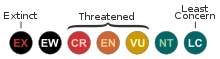
IUCN Red List
Growth: S = slow M = medium F = fast. Soil: L = light (sandy) M = medium H = heavy (clay). pH: A = acid N = neutral B = basic (alkaline). Shade: F = full shade S = semi-shade N = no shade. Moisture: D = dry M = Moist We = wet Wa = water.
Support Plants For A Future
Plants For A Future relies on regular donations to keep our free database and search facilities going, to pay for ongoing research, improvements and enhancements, and to develop and publish new books.
Read more
Choose Currency
Donate in £ GBP
Donate in $ USD
Donate in € EUR
Securely pay via PayPal or Credit/Debit Card without an account.
Expert comment
Author
Gaertn.
Botanical References
Links / References
For a list of references used on this page please go here
A special thanks to Ken Fern for some of the information used on this page.
Readers comment
| Add a comment |
|
If you have important information about this plant that may help other users please add a comment or link below. Only comments or links that are felt to be directly relevant to a plant will be included. If you think a comment/link or information contained on this page is inaccurate or misleading we would welcome your feedback at [email protected]. If you have questions about a plant please use the Forum on this website as we do not have the resources to answer questions ourselves.
* Please note: the comments by website users are not necessarily those held by PFAF and may give misleading or inaccurate information.
|
Subject : Curculigo orchioides
|
|
|
|