Translate this page:
Summary
Purple beeplant is one of the most historically significant edible beeplants in the Southwest, documented as cultivated and widely eaten in ancient times in parts of the region. It is also one of the most emotionally “place-defining” plants of desert washes and disturbed flats, because when it blooms it can paint landscapes in striking purple and hum with pollinators. As food, it is a study in trade-offs: it can provide large amounts of greens and it can be preserved into durable cakes, but the raw aroma and flavor are notoriously off-putting. Processing is the whole story here. Boiling, changing water, and drying transform it from an aggressive, malodorous green into a storable, ready-to-eat resource that—while still not delicious—can be genuinely useful.
Physical Characteristics

 Cleome serrulata is a ANNUAL growing to 1 m (3ft 3in).
See above for USDA hardiness. It is hardy to UK zone 4 and is frost tender. It is in flower from July to August. The species is hermaphrodite (has both male and female organs) and is pollinated by Bees.
It is noted for attracting wildlife.
Suitable for: light (sandy) and medium (loamy) soils and prefers well-drained soil. Suitable pH: mildly acid, neutral and basic (mildly alkaline) soils. It can grow in semi-shade (light woodland) or no shade. It prefers dry or moist soil.
UK Hardiness Map
US Hardiness Map
Synonyms
Cleome integrifolia. Peritoma integrifolia.
Plant Habitats
Cultivated Beds;
Edible Uses
Edible Parts: Flowers Leaves Seed Seedpod Shoots
Edible Uses:
Edible leaves, flowers, very young pods, and seeds [2-3]. Flavor is often unpleasant, so boiling and water changes are strongly recommended. Best used as a processed and preserved green rather than a fresh vegetable. Edible Uses & Rating: Leaves, flowers, seedpods (very young), and seeds are considered edible, but palatability is consistently the limiting factor. In practical terms, the leaves are the most useful part because they can be harvested in bulk and processed into dried cakes for storage. Seeds are naturally storable and relatively easy to gather and process, but their flavor is often bitter and unpleasant. Overall, purple beeplant rates as an important “reliable processing plant” rather than a pleasant fresh vegetable [2-3]. Taste, Processing & Kitchen Notes: Fresh leaves are strongly malodorous and the flavor often mirrors the smell, making raw use difficult for most people. Boiling the leaves, ideally with a change of water, reduces intensity and makes them more manageable. The traditional-style preservation approach—boil, then sun-dry, then form into hard cakes—produces a durable food that can be eaten later without further cooking. These cakes tend to become dark greenish-black and can smell seaweed-like, with a texture reminiscent of dry rice cakes. Seasonings and mixed dishes help. Drying should be done outdoors or in very well-ventilated spaces due to lingering odor. Seedpods can look temptingly like green beans but behave very differently. Only the youngest pods are worth considering, and even then they can be fibrous, gum-like, and unpleasant. Cooking does little to fix texture, so pods can ruin a dish if added indiscriminately. Seeds are rich in oil and store well, but their coats can be bitter and awkward. Toasting can blunt some harshness, yet many people still find the flavor objectionable. If coarsely ground and mixed with water, some separation of seed parts may be possible because hull fragments tend to behave differently than the oily seed interior, but it is not a clean or easy refinement [2-3]. Seasonality (Phenology): Purple beeplant can bloom from spring through autumn, often responding to rainfall patterns. Leaf harvest is best earlier, while plants are lush and before leaves wither during pod development. Seeds develop over the long flowering season and may be available across warm months depending on local moisture timing. Safety & Cautions (Food Use): Because purple beeplant commonly grows along roadsides and in disturbed soils, harvest location matters. Avoid sprayed verges, contaminated washes, and areas with heavy livestock or pet impacts. Strong flavors and odors can also signal high levels of plant compounds that some people may not tolerate well in large servings, so moderation and thorough cooking are prudent. Harvest & Processing Workflow: For greens, harvest whole young plants or leafy tops before pods dominate and leaves wither. Boil thoroughly, ideally changing water once, then drain well. Dry the cooked greens in sun or airflow and press into cakes or store as dried leaf material. For seeds, allow pods to mature and dry, then gather and thresh; toast lightly if you want a more stable stored product, but expect flavor to remain challenging. Cultivar/Selection Notes: This species is sometimes treated within Cleome or Peritoma depending on taxonomy; for practical use the plant’s growth stage and habitat matter more than naming. Related regional spiderflowers exist, including slender spiderflower in some areas, distinguishable by leaf and pod traits. Look-Alikes & Confusion Risks: Beeplants are distinctive, and confusion is usually within the same general group of spiderflowers. The bigger practical risk is culinary, not botanical: mistaking mature pods for edible “green bean” equivalents. Only very young pods are even marginally chewable, and even then they can be unpleasant. Traditional / Indigenous Use Summary: Purple beeplant has strong documentation of Indigenous use in the Southwest, including cultivation by Pueblo peoples and archaeological evidence of common consumption. Preservation into dried forms, including cakes, aligns with practical needs in arid regions and helps explain how such a strongly flavored plant could still be an important food. Young shoots, leaves and flowers are cooked and used as potherbs[46, 105, 161, 183]. The plants were gathered and, after removing an alkaline taste[46], were eaten with cornmeal porridge[61, 183]. The plant smells like a skunk, but it was an important potherb for the native North American Indians and the early European settlers in America[207]. Seed - raw or cooked[257]. It can be dried and ground into a meal then used as a mush or mixed with flour to make bread etc[85, 183, 207, 257]. Seedpods - cooked[183]. The hardened cakes of dyestuff (see note on the plants other uses) can be soaked in hot water and then eaten fried[207].
References More on Edible Uses
Medicinal Uses
Plants For A Future can not take any responsibility for any adverse effects from the use of plants. Always seek advice from a professional before using a plant medicinally.
Deodorant Febrifuge
An infusion of the plant is drunk in the treatment of fevers and stomach disorders[213, 257]. A poultice made from the pounded, soaked leaves has been applied to sore eyes[257].
References More on Medicinal Uses
The Bookshop: Edible Plant Books
Our Latest books on Perennial Plants For Food Forests and Permaculture Gardens in paperback or digital formats.

Edible Tropical Plants
Food Forest Plants for Hotter Conditions: 250+ Plants For Tropical Food Forests & Permaculture Gardens.
More

Edible Temperate Plants
Plants for Your Food Forest: 500 Plants for Temperate Food Forests & Permaculture Gardens.
More

More Books
PFAF have eight books available in paperback and digital formats. Browse the shop for more information.
Shop Now
Other Uses
Deodorant Dye
A black dye is obtained[46, 61, 85] by boiling down the whole plant[95]. It is used as a paint for decorating pottery[207]. The young plants are harvested in mid-summer, boiled well in water, the woody parts of the plant are removed and the decoction is boiled again until it becomes thick and turns black. This thick liquid is then poured onto a board to dry in cakes and can be kept for an indefinite period. When needed it is soaked in hot water until the correct consistency for paint is achieved[207]. A decoction of the leaves has been used as a body and shoe deodorant[257]. It is a strong pollinator plant and can be used in restoration and habitat plantings. This is a major pollinator resource, especially for bees, and it can support dense insect activity during bloom. Its seasonal biomass also provides structure and microhabitats. Because it often grows in colonies, it can be ecologically prominent in disturbed desert landscapes.
Special Uses
Attracts Wildlife
References More on Other Uses
Cultivation details
Purple beeplant is a historically important Southwestern food plant whose modern usefulness depends on processing. Fresh it is difficult; boiled and dried it becomes a durable, ready-to-eat resource. It is also one of the region’s standout pollinator plants and a visually striking marker of desert washes and disturbed ground. Growing Conditions: This species is well adapted to arid climates and thrives in open sun with periodic moisture, especially in washes, flood-scoured areas, and disturbed soils. It is easy to grow and can produce substantial biomass where conditions allow, which supports its value as a processing green. Habitat & Range: Purple beeplant is widespread in the Southwest in fields, floodplains, barren ground, disturbed sites, and watercourses. It commonly forms colonies along washes and roadsides, sometimes creating large, visually dramatic stands. Size & Landscape Performance: Plants can become tall and leafy, with a strong ornamental impact when flowering. In landscape terms, it performs as a bold seasonal annual for pollinator gardens and native displays. It can be especially effective in arid-region plantings where long bloom and heat tolerance are desired. Cultivation (Horticulture): Purple beeplant is easy to cultivate from seed, tolerant of heat, and well-suited to low-water gardens once established. It is a strong pollinator plant and can be used in restoration and habitat plantings. For food-focused cultivation, the most realistic goal is producing greens for boiling and drying, rather than fresh eating. Pests & Problems: Leaves and pods can be heavily affected by insects, fungi, and general damage, which complicates clean raw use. This is one reason cooking before drying is a sensible strategy: it improves food safety and reduces the risk of spoilage in storage. Pollination: Pollinated primarily by bees and other insects attracted to abundant nectar and pollen. The plant’s long bloom window and colony growth make it an exceptionally visible pollinator hub. Identification & Habit: Purple beeplant is an upright annual with palmately compound leaves, typically with three leaflets, and terminal racemes of pinkish-purple flowers with long stamens. Long, narrow seedpods develop as flowering continues. The plant has a distinctive cleome-family odor, and it often grows in colonies, especially in washes, roadsides, floodplains, and other disturbed or periodically wet desert ground. Leaves tend to wither as pods develop, which can shift harvest emphasis from greens earlier to seeds later. Prefers a light fertile soil in a warm dry sunny position with plenty of room to spread[200]. A frost tender plant, it can be grown as a summer annual in Britain[200]. A very good bee plant, it is often planted by apiarists in America[207]. This plant was probably cultivated by the N. American Indians[85]. The Indians would allow the plant to produce seed when it was growing wild in the cornfields in order to ensure a supply the following year[216].
References Carbon Farming Information and Carbon Sequestration Information
Temperature Converter
Type a value in the Celsius field to convert the value to Fahrenheit:
Fahrenheit:
The PFAF Bookshop
Plants For A Future have a number of books available in paperback and digital form. Book titles include Edible Plants, Edible Perennials, Edible Trees,Edible Shrubs, Woodland Gardening, and Temperate Food Forest Plants. Our new book is Food Forest Plants For Hotter Conditions (Tropical and Sub-Tropical).
Shop Now
Plant Propagation
Seed - surface sow or only lightly cover the seed in spring in a greenhouse[164]. The seed usually germinates in 5 - 14 days at 25°c[164]. When large enough to handle, prick the seedlings out into individual pots and plant them out in late spring. Day time temperatures below 20°c depress germination but a night time fall to 20° is necessary[164].
Other Names
If available other names are mentioned here
Clammy weed, Stinking clover, Rocky Mountain beeplant/beeweed, stinking-clover,bee spiderflower, bee spider-flower, skunk weed, Navajo spinach, and guaco
Native Range
NORTHERN AMERICA: Canada (Québec, Saskatchewan, Alberta, Manitoba, British Columbia), United States (Indiana, Massachusetts, Michigan, Ohio, Iowa, Kansas, Minnesota, Missouri, Nebraska, North Dakota, South Dakota, Illinois, Oklahoma, Colorado, Idaho, Montana, Oregon, Washington, Wyoming, New Mexico, Texas, Arizona, California, Nevada, Utah)
Weed Potential
Right plant wrong place. We are currently updating this section.
Please note that a plant may be invasive in one area but may not in your area so it's worth checking.
This plant can be weedy or invasive. In suitable disturbed sites it can volunteer freely. In stable, competitive plant communities it is less dominant, but in gardens or restoration areas it may persist through self-seeding.
Conservation Status
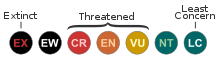
IUCN Red List of Threatened Plants Status : This taxon has not yet been assessed.
Growth: S = slow M = medium F = fast. Soil: L = light (sandy) M = medium H = heavy (clay). pH: A = acid N = neutral B = basic (alkaline). Shade: F = full shade S = semi-shade N = no shade. Moisture: D = dry M = Moist We = wet Wa = water.
Now available:
Food Forest Plants for Mediterranean Conditions
350+ Perennial Plants For Mediterranean and Drier Food Forests and Permaculture Gardens.
[Paperback and eBook]
This is the third in Plants For A Future's series of plant guides for food forests tailored to
specific climate zones. Following volumes on temperate and tropical ecosystems, this book focuses
on species suited to Mediterranean conditions—regions with hot, dry summers and cool, wet winters,
often facing the added challenge of climate change.
Read More
Expert comment
Author
Pursh.
Botanical References
60200
Links / References
For a list of references used on this page please go here
Readers comment
| Add a comment |
|
If you have important information about this plant that may help other users please add a comment or link below. Only comments or links that are felt to be directly relevant to a plant will be included. If you think a comment/link or information contained on this page is inaccurate or misleading we would welcome your feedback at [email protected]. If you have questions about a plant please use the Forum on this website as we do not have the resources to answer questions ourselves.
* Please note: the comments by website users are not necessarily those held by PFAF and may give misleading or inaccurate information.
|
Subject : Cleome serrulata
|
|
|
|