

Many temperate gardens are shifting toward summer-dry, winter-wet conditions: hotter spells, longer dry periods, surprise frosts, and stronger winds. That’s challenging—but also an opportunity to grow delicious, resilient plants that love this pattern.
What’s changing—and why it matters to edible gardeners
- Summer droughts stress shallow-rooted crops and thirsty ornamentals.
- Warmer winters can push plants to break bud early, then late frosts bite.
- Stronger winds increase transpiration (water loss) and damage young growth.
- Heavier winter rain on slow-draining soils can cause root problems.
Bottom line: Match plants to heat, dryness, wind, frost risk, soil, and light. The PFAF database lets you filter for precisely that.
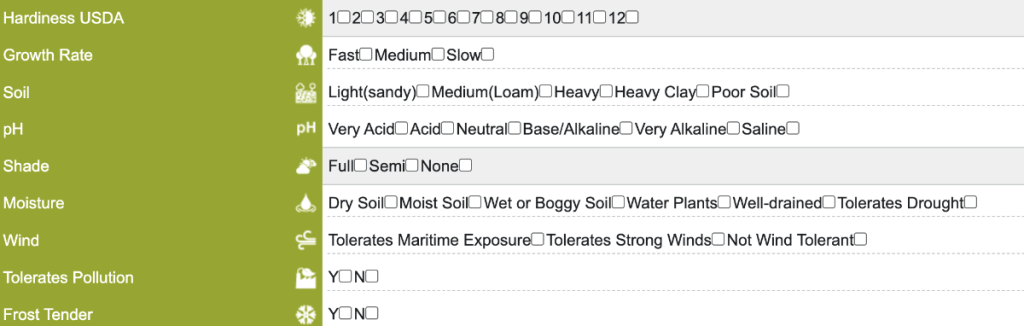
How to choose plants with the PFAF filters (step-by-step)
- Start with cold tolerance (USDA Hardiness Zone).
- Pick your USDA Zone to filter plants that survive your typical winter minimums. (Outside the US? Choose the zone that matches your average annual minimum temperature.)
- Set moisture needs.
- For summer-dry sites, start with “dry” to “medium” moisture requirements.
- If your winters are wet, look for notes like good drainage or tolerates winter wet.
- Dial in frost tolerance.
- Use Frost tolerance to avoid spring heartbreak; prioritize plants that handle your cold snaps.
- Account for wind.
- Select wind-tolerant (or maritime-tolerant for coasts) if you have exposure; add living windbreaks.
- Match your soil.
- Choose Soil type (sand/loam/clay) and pH (acid/neutral/alkaline). Many Mediterranean edibles prefer free-draining, neutral-to-alkaline soils; use raised beds or grit for clays.
- Light & Shade.
- Set Shade to full sun for heat lovers, or partial Shade for greens that need relief in heatwaves.
- Growth rate.
- Use Growth rate for planning: quick fillers now; slower “framework” trees/shrubs for long-term Shade and structure.
Tip: Group beds by water need (hydrozoning). Group thirsty crops near a tap and drought-tolerant perennials further away.
Quick “filter recipes” you can try
Use these as starting points, then refine.
1) Sunny, summer-dry front yard (Zones 8–9)
- Filters: Zone 8–9, Moisture: Dry/Medium, pH: Neutral–Alkaline, Soil: Sand/Loam, Shade: Full Sun, Wind: Tolerant
- Shortlist ideas (edible, drought-leaning):
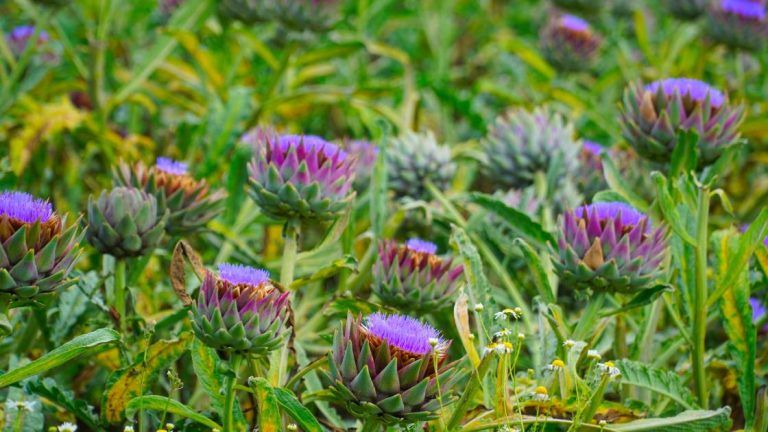
- Rosemary (Salvia rosmarinus), Thyme (Thymus spp.), Oregano (Origanum vulgare), Sage (Salvia officinalis), Bay (Laurus nobilis), Globe artichoke (Cynara cardunculus var. scolymus), Fig (Ficus carica), Pomegranate (Punica granatum), Grapevine (Vitis vinifera), Jujube (Ziziphus jujuba) in warm spots.
2) Heavy clay with winter wet (Zones 7–8)
- Filters: Zone 7–8, Soil: Clay/Loam, Moisture: Medium (avoid “permanently wet” unless plant allows), Frost: Good tolerance
- Tactics: Build mounded/raised beds for free-draining herbs and fruit; mulch in spring, not winter.
- Shortlist ideas:
- Quince (Cydonia oblonga), Sea buckthorn (Hippophae rhamnoides), Elder (Sambucus nigra), Fennel (Foeniculum vulgare), Jerusalem artichoke (Helianthus tuberosus), Perennial herbs in raised beds (thyme, sage, oregano).
3) Coastal, windy, salt-kissed (Zones 9–10)
- Filters: Zone 9–10, Wind: Maritime tolerant, Soil: Sand/Loam, pH: Neutral–Alkaline, Shade: Full Sun
- Shortlist ideas:
- Bay, Rosemary, Feijoa/pineapple guava (Acca sellowiana), Grapevine, New Zealand spinach (Tetragonia tetragonioides), Sea kale (Crambe maritima).
(Always check regional weed/invasiveness status before planting.)
Design moves that make Mediterranean-style growing work.
- Plant in autumn so roots establish on winter moisture before summer heat.
- Deep, infrequent watering (once/twice weekly) to train deep roots; use drip over sprinklers.
- Mulch 5–8 cm (wood chips, straw, or gravel for herbs) to cut evaporation.
- Create Shade with small trees (fig, feijoa, bay), espaliers, vines on pergolas, or shade cloth in heatwaves.
- Shelter from wind: hedges (feijoa, bay), trellis screens, or mixed shrub belts.
- Improve drainage on winter-wet sites by using raised beds, coarse organic matter, and avoiding the compaction of wet soil.
- Right rootstock/cultivar: choose forms bred for drought or late-frost areas where available.
Starter lists by function (edible & resilient)
- Aromatic kitchen herbs (dry-leaning): Rosemary, Thyme, Oregano, Sage, Summer savory, Bay.
- Fruits for summer-dry gardens: Fig, Pomegranate, Grapevine, Feijoa, Quince, Medlar; Almond in warm, sheltered sites.
- Heat-season greens: New Zealand spinach, Purslane (Portulaca oleracea), Malabar spinach (Basella alba), with support and water.
- Nitrogen fixers & support species: Sea buckthorn, Siberian pea shrub (Caragana arborescens); interplant to reduce fertilizer.
- Edible perennials that like it warm: Globe artichoke, Fennel, Oregano/Thyme groundcovers under trees.
Common pitfalls to avoid
- Watering little and often. Shallow watering = shallow roots.
- Planting into unamended clay, then over-watering. Fix drainage first.
- Ignoring frost pockets. Cold sinks in low spots—site tender species upslope or near thermal mass.
- One-size-fits-all beds. Mix raised, mounded, and in-ground areas to match plant needs.
A 5-minute action plan
- Look up your USDA Zone and typical summer dryness/wind.
- Open the PFAF database search and set: Zone → Moisture → Frost → Wind → pH → Soil → Shade → Growth rate.
- Save a shortlist for: (a) herbs, (b) quick fruit, (c) long-term shade/windbreak.
- Plant a trial bed this autumn; expand winners next year.
Embrace the shift. With the right filters, you’ll find plants that produce food, save water, and keep your garden thriving as conditions change.
Visit the plant database search on the homepage
Frequently Asked Questions
Q1. What are the best drought-tolerant edible plants for temperate gardens transitioning to Mediterranean climates?
Some of the most reliable include rosemary, thyme, sage, oregano, lavender, figs, pomegranates, grapes, and globe artichokes. You can find more options using the PFAF database filters for moisture = dry/medium and full sun.
Q2. How do I know which plants will survive my winters?
Check your USDA Hardiness Zone (or the UK/Europe equivalents). In the PFAF database, filter by Zone and Frost Tolerance. This ensures plants won’t be killed by your coldest nights.
Q3. Can I still grow leafy greens in hotter, drier summers?
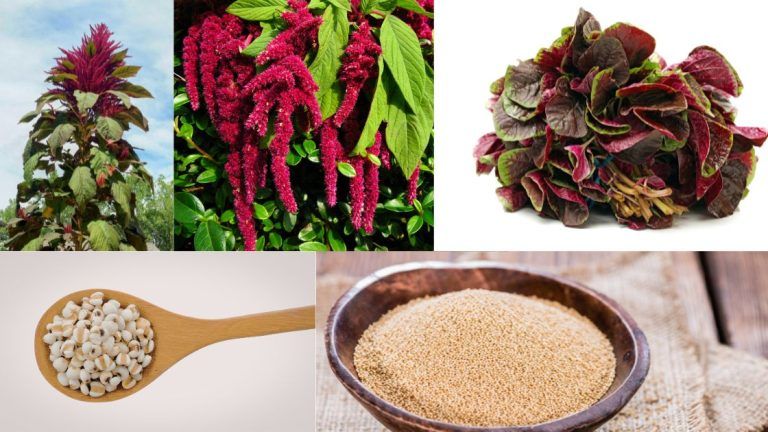
Yes. Try heat-resilient alternatives like New Zealand spinach, purslane, Malabar spinach, and amaranth. Set the filters for Shade = partial and Moisture = medium to find more.
Q4. What should I do about clay soils that stay wet in winter?
Choose plants tagged as clay-tolerant in the database, such as quince, elder, or sea buckthorn. For Mediterranean herbs and fruit that need drainage, build raised beds or mounds.
Q5. How can I protect tender plants from the hot summer sun and wind?
Use the Shade and Wind tolerance filters in PFAF to select plants that can withstand harsher conditions. Then, design your garden with living windbreaks (bay, feijoa, or mixed shrubs) and small trees for dappled Shade.
Q6. When is the best time to plant Mediterranean-style edibles in temperate regions?
Plant in autumn if possible. Roots establish in moist soil through winter, so plants are more vigorous before the dry summer arrives.
Q7. Can the PFAF database help me design a resilient food forest?
Yes. You can search not only for edible plants but also for nitrogen fixers, groundcovers, and shade providers. Combining these functions creates a resilient, self-supporting food forest adapted to climate change.
How the New Book Food Forest Plants for Mediterranean Conditions Helps Temperate Gardeners Adapt
As climate change reshapes our weather patterns, many temperate regions are beginning to feel far more Mediterranean. Summers are hotter and drier, winters milder, and rainfall less predictable. For gardeners, this shift brings real challenges — but also opportunities.
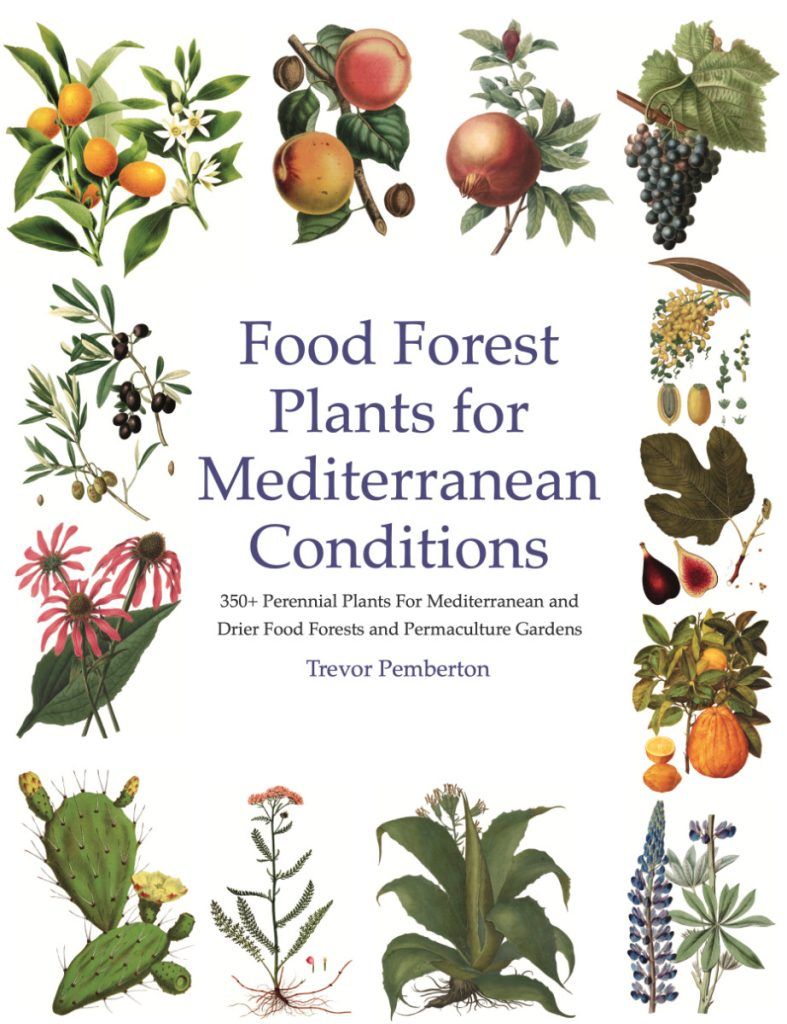
That’s where the new book, Food Forest Plants for Mediterranean Conditions: 350+ Perennial Plants For Mediterranean and Drier Food Forests and Permaculture Gardens, comes in.
A Resource for Shifting Climates
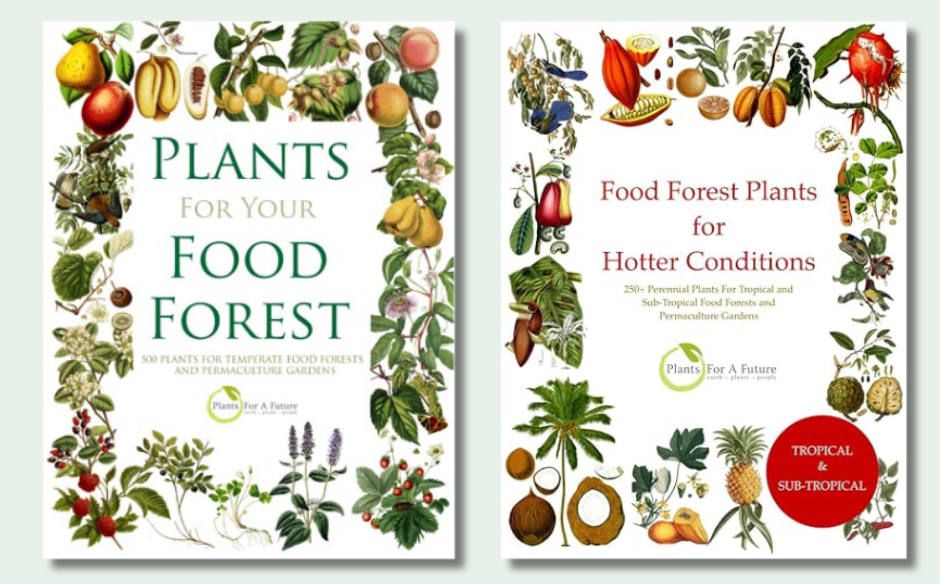
This is the third book in Plants For A Future’s acclaimed series, following volumes on temperate and tropical ecosystems. While it is written for Mediterranean climates like southern Europe, California, South Africa, Australia, and the Middle East, its value extends well beyond those regions.
For gardeners in traditionally temperate zones, this guide provides a ready-made toolkit for adapting to a hotter, drier future. The very plants chosen for Mediterranean food forests — hardy, drought-tolerant, multi-functional species — are exactly the ones that will help temperate gardeners cope with longer dry spells and heatwaves.
What the Book Offers
The book draws on the trusted PFAF plant database and real-world permaculture projects. It highlights:
- 350+ perennial plants suited to hot, dry summers and cooler, wetter winters.
- Details on edibility: which parts can be eaten, how to harvest, and seasonal yields.
- Guidance on plants that fix nitrogen, improve soil, and support wildlife.
- Insight into ecological pioneer species that prepare the ground for future growth.
Some plants may not be directly edible, but their role in restoring degraded land and creating resilient ecosystems makes them invaluable in food forest design.
Why It Matters for Temperate Gardens
If your temperate garden is increasingly feeling Mediterranean, this book bridges the gap. It helps you:
- Swap water-hungry plants for drought-tolerant alternatives.
- Design gardens and food forests that thrive with less water.
- Build resilient ecosystems that are better prepared for climate extremes.
A Guide for the Future
As our article on Temperate Gardens Becoming More Mediterranean explained, adaptation is key. This book offers the practical plant knowledge gardeners need to future-proof their landscapes, turning climate challenges into opportunities for abundance, diversity, and resilience.
For more information on the book visit the PFAF plant bookshop