
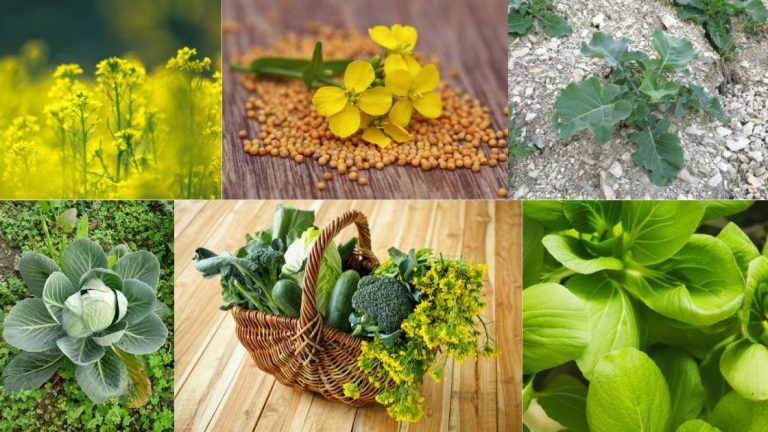
Many of the vegetables we eat today—including cabbage, broccoli, kale, cauliflower, turnips, and bok choy—developed from wild plants in the mustard family (Brassicaceae). Through centuries of human selection, these wild plants evolved into the diverse brassica vegetables we know today.
Brassicas are easy to think of as supermarket vegetables: cabbage, broccoli, cauliflower, kale, turnips, bok choy, mustard greens. But they begins much earlier, with wild plants growing along coastlines, roadsides, open fields, and disturbed ground. Many of these wild relatives are edible, and many still grow today as common “weeds.” Brassicas are not just crops. They are part of a much wider tradition of wild food plants.
To understand them, we first need to look at the plant family they belong to.
Key Takeaways
- The mustard family (Brassicaceae) contains many edible wild plants.
- Many common vegetables come from only a few wild brassica species.
- Wild coastal plants such as Brassica oleracea gave rise to cabbage, broccoli, kale, cauliflower, and Brussels sprouts.
- Brassica rapa produced vegetables such as turnips, bok choy, and napa cabbage.
- The PFAF database currently includes 51 species within the genus Brassica.
- The PFAF Southwest Expansion Project is adding or updating 946 plants, including 44 species in the Brassicaceae family.
Contents
- The Brassicaceae: the mustard family
- Brassica begins in the wild
- Another important ancestor: Brassica rapa
- Wild brassicas are still with us
- Why brassicas taste the way they do
- What the PFAF database shows
- PFAF’s Southwest plant expansion
- More than just vegetables
- The bigger lesson
- FAQs
- Glossary
The Brassicaceae: the mustard family
Brassicas belong to the Brassicaceae, often called the mustard family. This is one of the most useful plant families for both cultivated vegetables and wild edible plants.
Members of this family usually share several clear characteristics. Their flowers typically have four petals arranged in a cross shape, which is why the family was once called Cruciferae. The plants often produce long, narrow seed pods known as siliques or shorter ones called silicles. When crushed or eaten, many species have a distinct mustard-like or cabbage-like flavour.
The family includes thousands of species worldwide. Some of the best-known examples include:
- Brassica – cabbage, broccoli, kale, turnips and many related vegetables
- Eruca – rocket or arugula
- Capsella – shepherd’s purse
- Lepidium – pepperweeds
- Barbarea – yellowrocket
- Cardamine – bittercresses
- Descurainia – tansymustards
Many of these plants are edible. Leaves, young shoots, flowers, seeds, and sometimes roots can be eaten. Their flavours range from mild and cabbage-like to strongly peppery or mustard-like.
Brassicaceae plants are also remarkably adaptable. They include annuals, biennials, and perennials. Some species are tiny ground-hugging herbs only a few centimetres tall, while others grow well over a metre high. They thrive in many habitats, from coastal cliffs and mountain meadows to desert washes and farm margins. Many species are especially good at colonising disturbed soils, which is why they often appear along roadsides and in agricultural fields.
One chemical trait links much of the family: the presence of glucosinolates, compounds that give brassicas their distinctive flavour. These chemicals contribute to the pungent taste of mustard, cabbage, and horseradish. In moderate amounts they are harmless and contribute to the characteristic flavour of the vegetables. However, very large quantities of raw mustard-family plants can be irritating, which is why many wild mustards are traditionally cooked before being eaten.
Brassica in the wild
Within the mustard family, the genus Brassica produced some of the most important vegetables humans have ever grown.
One of the most important ancestors is Brassica oleracea, a plant that originally grew wild along the rocky coasts of Europe and the Mediterranean. The wild plant was tough and leafy, able to survive salty winds and poor soils.
Over hundreds and eventually thousands of years, farmers began selecting plants with useful traits. Through this process different vegetables emerged from the same species:
- Cabbage – tightly packed leaves
- Kale and collards – abundant open leaves
- Broccoli – enlarged flower buds
- Cauliflower – dense immature flower heads
- Brussels sprouts – many compact buds along the stem
- Kohlrabi – swollen edible stem
These vegetables may look different, but botanically they are simply different forms of the same species.
Another important ancestor: Brassica rapa
A similar story occurred with Brassica rapa, a species that originated as a wild mustard-like plant across Eurasia.
Different cultures selected different edible parts, producing vegetables such as:
- Turnips
- Napa cabbage
- Bok choy
- Rapini
- Mizuna
- Tatsoi
- Komatsuna
Some varieties were also selected for their oil-rich seeds, which have long been used for vegetable oil.
Wild brassicas are still with us
Today, wild and weedy brassicas grow in many landscapes. Some colonise disturbed ground, while others thrive in dry regions.
Species such as Brassica tournefortii (Sahara mustard) can produce dense winter rosettes and large seed crops in arid regions. Although sometimes invasive, these plants are often edible. Young leaves can be cooked as greens, while seeds may be used as a mustard-like spice.
Other edible species include Brassica juncea, Brassica nigra, and wild forms of Brassica rapa.
Why brassicas taste the way they do
The distinctive flavour of brassicas comes largely from compounds called glucosinolates. These chemicals produce the characteristic mustard-like sharpness found in cabbage, mustard, and horseradish.
Different plant parts offer different textures and flavours:
- Leaves – mild to slightly bitter
- Roots – sweet and starchy
- Flower buds – tender and mild
- Seeds – strongly pungent
Cooking changes these flavours dramatically. Boiling softens sharp flavours, roasting adds sweetness, and stir-frying preserves the crisp bite of young greens.
What the PFAF database shows
The Plants For A Future (PFAF) database currently includes 51 species within the genus Brassica. These range from widely cultivated vegetables to lesser-known edible species.
Many receive high edibility ratings in the database. Broccoli (Brassica oleracea var. italica) receives the highest edible rating of 5 out of 5, while several others—including Brassica juncea, Brassica rapa, Brassica napus, and multiple forms of Brassica oleracea—also rank highly.
Botanically Brassica is one of the most food-rich plant genera in the world. Within a single genus there are vegetables that provide leaves, stems, roots, buds, flowers, and seeds.
PFAF’s Southwest plant expansion
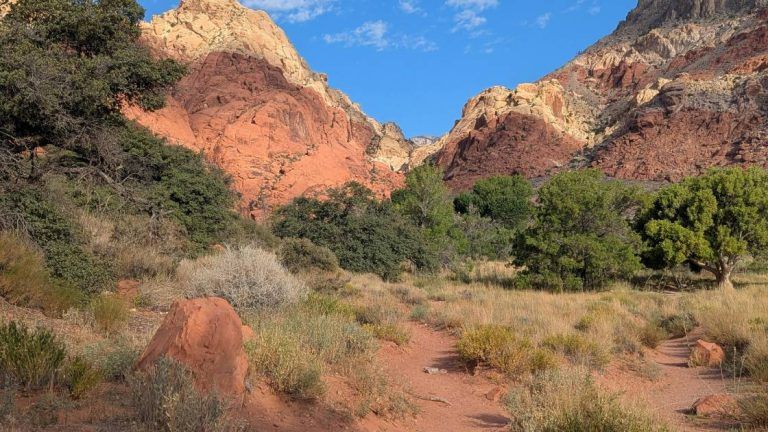
The Plants For A Future database is currently expanding through the Southwest Expansion Project, which is adding or updating 946 plants from the American Southwest.
Within the Brassicaceae family, this project includes 44 species being added or updated, including six Brassica species. The project helps broaden the coverage of useful plants from dryland ecosystems and highlights the ecological and food value of mustard-family plants.
PFAF Announces Major Southwest Expansion: 946 New and Updated Plants Coming to the Database
More than vegetables
Although brassicas are best known as food crops, they have many other uses.
Some species are grown for oil production, especially varieties of Brassica rapa and related plants. Mustard seeds are widely used as a spice and condiment. Other species are planted as green manure crops to improve soil health and suppress weeds.
Traditional herbal systems have also used certain brassicas medicinally.
Many vegetables we eat today—broccoli, cabbage, kale, cauliflower, turnips, and bok choy—began as wild mustard plants growing in open landscapes. Through careful selection, farmers gradually transformed those plants into the vegetables we recognise.
The vegetables in our kitchens are simply refined versions of wild edible plants, and the mustard family shows how powerful that transformation can be.
Frequently Asked Questions
What vegetables belong to the Brassica genus?
Many common vegetables belong to the genus Brassica, including cabbage, broccoli, cauliflower, kale, Brussels sprouts, turnips, and bok choy.
Are wild mustard plants edible?
Many wild members of the mustard family are edible. Young leaves, shoots, flowers, and seeds are often used as greens or spices, although they are frequently cooked to reduce bitterness.
Why do brassicas taste peppery?
Brassicas contain glucosinolates, natural compounds that produce the sharp mustard-like flavour found in many members of the family.
How many Brassica species are in the PFAF database?
The PFAF database currently includes 51 species within the genus Brassica.
Glossary
Brassicaceae: The mustard family of flowering plants that includes brassicas, mustards, and many wild edible species.
Brassica: A genus within the mustard family that includes many important vegetables.
Glucosinolates: Natural chemical compounds responsible for the pungent flavour of mustard-family plants.
Silique: A long seed pod typical of mustard-family plants.
Selection: The process of choosing plants with desirable traits and breeding them over generations.
| Scientific Name | Common Name | Habit | Edible | Medicinal | Other Uses |
|---|---|---|---|---|---|
| Brassica balearica | Col borda | Perennial | 1 | 0 | |
| Brassica carinata | Abyssinian Cabbage | Annual | 4 | 2 | 3 |
| Brassica cretica | Mustard | Perennial | 2 | 0 | |
| Brassica elongata | Elongated mustard | Biennial/Perennial | 2 | 0 | 2 |
| Brassica juncea | Brown Mustard | Annual | 4 | 2 | 2 |
| Brassica juncea crispifolia | Curled Mustard | Annual | 4 | 2 | 2 |
| Brassica juncea foliosa | Leaf Mustard | Annual | 4 | 2 | 2 |
| Brassica juncea integrifolia crispifolia | Curled Mustard | Annual | 4 | 2 | 2 |
| Brassica juncea integrifolia rugosa | Head Mustard | Annual | 4 | 2 | 2 |
| Brassica juncea integrifolia strumata | Large Petiole Mustard | Annual | 4 | 2 | 2 |
| Brassica juncea integrifolia subintegrifolia | Leaf Mustard | Annual | 4 | 2 | 2 |
| Brassica juncea multiceps | Green In The Snow | Annual | 4 | 2 | 2 |
| Brassica juncea napiformis | Root Mustard | Annual | 4 | 2 | 2 |
| Brassica juncea rugosa | Head Mustard | Annual | 4 | 2 | 2 |
| Brassica juncea strumata | Large Petiole Mustard | Annual | 4 | 2 | |
| Brassica juncea tsatsai multiceps | Green In The Snow | Annual | 4 | 2 | 2 |
| Brassica juncea tsatsai tumida | Swollen-Stem Mustard | Annual | 4 | 2 | 2 |
| Brassica juncea tumida | Swollen-Stem Mustard | Annual | 4 | 2 | 2 |
| Brassica napus | Colza, Rape | Annual/Biennial | 3 | 2 | 3 |
| Brassica napus arvensis | Coleseed | Annual/Biennial | 3 | 2 | 3 |
| Brassica napus napobrassica | Swede | Biennial | 4 | 2 | 2 |
| Brassica napus napus | Rape | Annual/Biennial | 3 | 2 | 2 |
| Brassica napus pabularia | Rape Kale | Annual/Biennial | 3 | 2 | 2 |
| Brassica nigra | Black Mustard | Annual | 3 | 3 | 2 |
| Brassica oleracea | Wild Cabbage | Biennial/Perennial | 4 | 2 | 3 |
| Brassica oleracea acephala | Collards | Biennial/Perennial | 4 | 0 | 0 |
| Brassica oleracea alboglabra | Chinese Kale | Perennial | 3 | 0 | 0 |
| Brassica oleracea botrytis | Cauliflower | Biennial | 4 | 0 | 3 |
| Brassica oleracea botrytis aparagoides | Nine Star Perennial Broccoli | Perennial | 4 | 0 | 2 |
| Brassica oleracea capitata | Cabbage | Biennial | 4 | 0 | 3 |
| Brassica oleracea costata | Couve Tronchuda | Biennial | 3 | 0 | 0 |
| Brassica oleracea gemmifera | Brussels Sprouts | Biennial | 4 | 0 | 0 |
| Brassica oleracea gongylodes | Kohl Rabi | Biennial | 3 | 1 | 0 |
| Brassica oleracea italica | Broccoli | Biennial | 5 | 0 | 2 |
| Brassica oleracea medullosa | Marrow-Stem Kale | Biennial/Perennial | 4 | 0 | 0 |
| Brassica oleracea palmifolia | Jersey Kale | Biennial | 3 | 0 | 1 |
| Brassica oleracea ramosa | Perpetual Kale | Biennial/Perennial | 4 | 0 | 0 |
| Brassica oleracea sabauda | Savoy Cabbage | Biennial | 4 | 0 | 2 |
| Brassica oleracea sabellica | Curly Kale | Biennial/Perennial | 4 | 0 | 0 |
| Brassica rapa | Turnip | Biennial | 3 | 2 | 1 |
| Brassica rapa campestris | Wild Turnip | Annual | 2 | 1 | 2 |
| Brassica rapa chinensis | Pak Choi | Biennial | 4 | 1 | 0 |
| Brassica rapa dichotoma | Indian Rape | Biennial | 2 | 0 | 0 |
| Brassica rapa narinosa | Chinese Savoy | Biennial | 3 | 0 | 0 |
| Brassica rapa nipposinica | Mizuna | Biennial | 4 | 0 | 0 |
| Brassica rapa oleifera | Stubble Turnip | Biennial | 2 | 0 | 3 |
| Brassica rapa parachinensis | False Pak Choi | Biennial | 4 | 0 | 0 |
| Brassica rapa pekinensis | Chinese Cabbage | Annual | 4 | 1 | 2 |
| Brassica rapa perviridis | Mustard Spinach | Biennial | 3 | 0 | 0 |
| Brassica rapa trilocularis | Indian Colza | Biennial | 2 | 0 | 2 |
| Brassica tournefortii | Wild Turnip-Rape | Annual | 4 | 0 | 2 |