
Annette Ochs
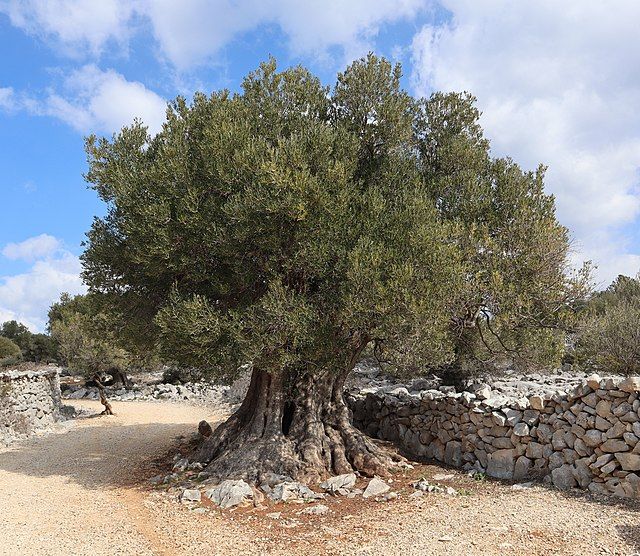
In Corfu, as in many other places in the Mediterranean, we find an olive monoculture that results in an unbalanced amount of a bug, the Daikos (Bactrocera oleae), that lays its eggs in the olive fruit.
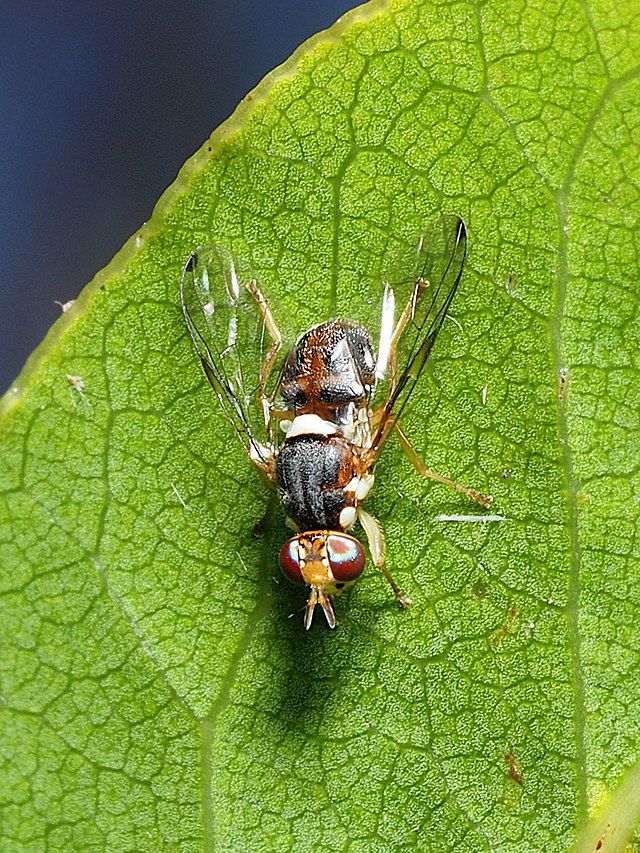
Daikos (Bactrocera oleae) Katja Schulz
As there are more and more eco-olive producers, unsprayed olive oil can be nearly 100 percent Daikos worms – and this is not only bad news for vegans, but a disturbing thought for most people. As we are happy about every place that does not use pesticides, and as they maybe will be banned in the EU, it is high time for experiment and information about traditional ways to keep the populations of the Daikos small. One way is to draw the bugs towards the fruits of the Carob tree (Ceratonia siliqua). The bugs prefer the sweet Carob fruit over the olives and in the old days Carob trees have been planted here and there for this purpose. With the introduction of chemical pesticides, the carob trees have been seen as no longer useful, and have been cut down and replaced with more olive trees.
In some of the gardens and in different parts of North-West Corfu, we have started to plant some Carob trees again. We plan to plant a whole lot more this autumn, hoping that we can find more partners for this project all over the area, and see some positive effect in the next few years. For sure, enhancing the biodiversity is the very best thing to do, to keep insects in balance.
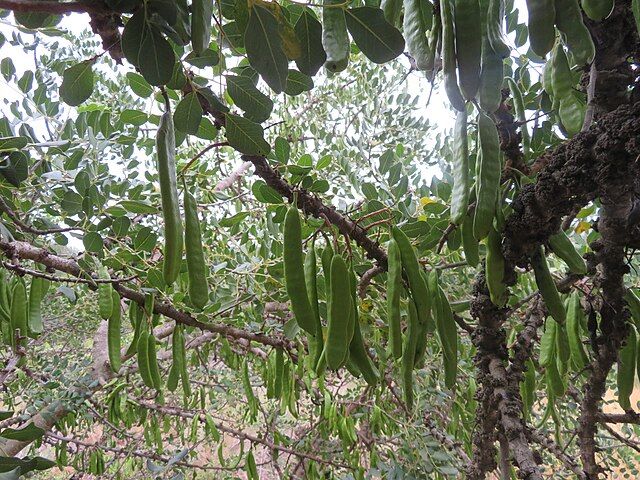
Carob tree. Juan Emilio Prades Bel
Strong smelling plants like herbs are helpful to confuse pests, so it would be beneficial to spread these again, especially wild thyme and other herbs that have been growing wild everywhere. In many places, the thyme was just grabbed and pulled out by the roots by wild harvesters for selling. In our project, we plan to plant some little herb islands here and there, at spots where they are not in the way of olive nets and harvesting, around the Carob trees or on the edges of the plantings.
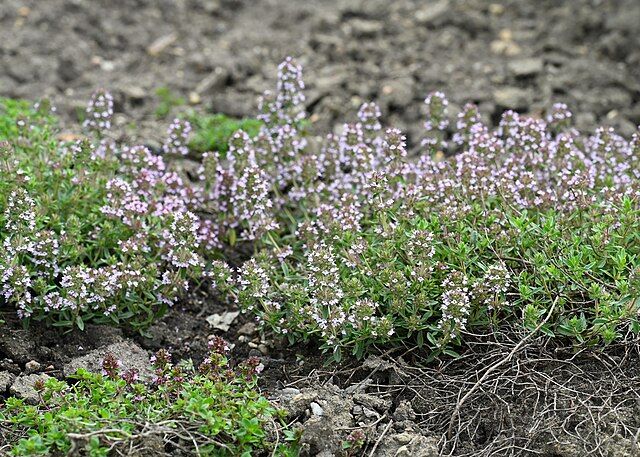
Wild thyme. Krzysztof Ziarnek, Kenraiz
At some of the certified eco-olive oil producers’ sites, there are quite high hedges of rosemary shrubs, which look and smell gorgeous, specially when they flower and they do not need extra watering.
The main traditional method that I heard about – and I would be more than happy to hear about more methods – is to reduce the Daikos population by planting the Fava bean (Vicia faba). In the old days, they just pushed some Fava seeds in the ground in a big circle around each tree, after the harvest.

Fava Bean Vinayaraj
Traditionally the olive harvest started in September and went on till April. Nowadays, due to the Daikos, they try to finish the harvest as soon as possible, trying to finish in November – as later is worse for the quality. In the old days it was possible to leave the olives a long time and then they became sweeter and tastier and black. The early harvest is green and the worms are still small. The benefit of the Fava bean is that it attracts and nourishes the larvae of fireflies which only eat the leaves and it is possible to harvest the Fava bean without any damage. Also this bean is very low maintenance as it is like a small shrub that needs no support. It grows over the rainy season and ripens in the summer and can be harvested before the olives are ripe, so it doesn’t get in the way of harvesting, when there are nets and sometimes many people and activity around the olive trees.
It is highly recommended to cook the Fava bean before eating and traditionally there was a kind of paste made from it, like hummus, which is served with a little olive oil, some capers and finely cut spring onions and tomatoes on top. It is very delicious and nourishing and is served in the best, most expensive restaurants in Corfu, and is even found in fancy Berlin cafés. While some young mainstream people in Greece still think that the Fava is old fashioned, we want to promote them with our project, and are happy that some of our Greek friends still have them somewhere in their gardens, maybe along a path or at the edge of a vegetable garden – as they are very low maintenance and look quite nice like a small hedge when planted in a row.
Image Attribution https://creativecommons.org/licenses/by-sa/4.0/
All Wikimedia.org
Daikos (Bactrocera oleae) Katja Schulz.
Olive. Palauenc05
Carob tree. Juan Emilio Prades Bel
Wild thyme. Krzysztof Ziarnek, Kenraiz
Fava Bean Vinayaraj