 |
|
http://commons.wikimedia.org/wiki/User:Fanghong |
 |
| http://commons.wikimedia.org/wiki/User:Minghong |
Translate this page:
Summary
Physical Characteristics

 Oxalis corymbosa is a PERENNIAL growing to 0.2 m (0ft 8in).
See above for USDA hardiness. It is hardy to UK zone 8. It is in flower from July to September. The species is hermaphrodite (has both male and female organs) and is pollinated by Insects.
Suitable for: light (sandy), medium (loamy) and heavy (clay) soils and prefers well-drained soil. Suitable pH: mildly acid, neutral and basic (mildly alkaline) soils. It cannot grow in the shade. It prefers dry or moist soil.
UK Hardiness Map
US Hardiness Map
Synonyms
O. martiana.
Plant Habitats
Cultivated Beds; South Wall. In. West Wall. In.
Edible Uses
Edible Parts: Flowers Leaves Root
Edible Uses:
Leaves and leafstalks - raw or cooked[144]. Use in moderation, see notes at top of sheet. Flowers - raw. A pleasant acid flavour, they make an ornamental addition to a mixed salad[K]. Root - raw. Sweet, crisp and succulent[144, 177].
References More on Edible Uses
Medicinal Uses
Plants For A Future can not take any responsibility for any adverse effects from the use of plants. Always seek advice from a professional before using a plant medicinally.
None known
References More on Medicinal Uses
Other Uses
References More on Other Uses
Cultivation details
Easily grown in a sandy soil in a warm dry position[1]. Plants are not very hardy in Britain according to one report which lists this plant as succeeding in climatic zone 9 and thus only tolerating occasional light frosts[200]. However, it is naturalized in parts of Britain, especially near London[17]. It is growing well in our Cornwall site, where it has proved to be hardy since 1994[K].
References Carbon Farming Information and Carbon Sequestration Information
Temperature Converter
Type a value in the Celsius field to convert the value to Fahrenheit:
Fahrenheit:
Plant Propagation
Seed - best sown as soon as ripe in a cold frame. Prick out the seedlings into individual pots when they are large enough to handle and plant them out in late spring or early summer. Division in spring. Larger divisions can be planted out direct into their permanent positions. We have found that it is better to pot up the smaller divisions and grow them on in light shade in a cold frame until they are well established before planting them out in late spring or early summer.
Other Names
If available other names are mentioned here
Native Range
SOUTHERN AMERICA: Trinidad and Tobago (Trinidad), French Guiana, Guyana, Venezuela, Brazil (Bahia, Ceará, Espírito Santo, Minas Gerais, Pará, Paraná, Pernambuco, Rio de Janeiro, Rio Grande do Sul, Santa Catarina, São Paulo), Bolivia, Ecuador, Peru, Argentina (Buenos Aires, Catamarca, Chaco, Corrientes, Entre Ríos, Misiones, Salta, San Juan, Santa Fe, Tucumán), Paraguay, Uruguay
Weed Potential
Right plant wrong place. We are currently updating this section.
Please note that a plant may be invasive in one area but may not
in your area so it's worth checking.
Conservation Status
IUCN Red List of Threatened Plants Status :
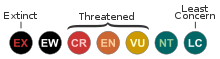
IUCN Red List
Growth: S = slow M = medium F = fast. Soil: L = light (sandy) M = medium H = heavy (clay). pH: A = acid N = neutral B = basic (alkaline). Shade: F = full shade S = semi-shade N = no shade. Moisture: D = dry M = Moist We = wet Wa = water.
Support Plants For A Future
Plants For A Future relies on regular donations to keep our free database and search facilities going, to pay for ongoing research, improvements and enhancements, and to develop and publish new books.
Read more
Choose Currency
Donate in £ GBP
Donate in $ USD
Donate in € EUR
Securely pay via PayPal or Credit/Debit Card without an account.
Expert comment
Author
DC.
Botanical References
17200
Links / References
For a list of references used on this page please go here
Readers comment
© 2010, Plants For A Future. Plants For A Future is a charitable company limited by guarantee, registered in England and Wales. Charity No. 1057719, Company No. 3204567.