Translate this page:
Summary
Black medic is a low-growing annual or short-lived perennial plant belonging to the bean family (Fabaceae). Originally native to Europe, western Asia, and northern Africa, it has become naturalised throughout much of the world, including North America and Australia. It commonly grows in lawns, pastures, meadows, roadsides, and other disturbed areas.
The plant produces small, yellow, clover-like flowers followed by distinctive black, kidney-shaped seedpods. Its leaves and flowers are edible in small quantities and can be used in salads or cooked as leafy vegetables. However, their flavor varies considerably between plants, ranging from reasonably mild to strongly bitter and acrid.
Black medic is a nitrogen-fixing legume that can improve soil fertility and provide forage for grazing animals. Although widespread and easy to gather, it is generally considered a modest wild food because of its variable flavor and the potential health concerns associated with regular consumption of Medicago species.
Physical Characteristics

 Medicago lupulina is a ANNUAL/PERENNIAL growing to 0.5 m (1ft 8in) at a fast rate.
See above for USDA hardiness. It is hardy to UK zone 5 and is not frost tender. It is in flower from April to August, and the seeds ripen from July to September. The species is hermaphrodite (has both male and female organs) and is pollinated by Bees, Lepidoptera (Moths & Butterflies). The plant is self-fertile.
It can fix Nitrogen.
It is noted for attracting wildlife.
Suitable for: light (sandy), medium (loamy) and heavy (clay) soils and prefers well-drained soil. Suitable pH: neutral and basic (mildly alkaline) soils. It can grow in semi-shade (light woodland) or no shade. It prefers moist soil.
UK Hardiness Map
US Hardiness Map
Synonyms
Lupularia parviflora Opiz. Lupulina aurata Noulet. Medica lupulina (L.) Scop. Medicula lupulina (L.) Medik. Melilotus lupulinus (L.) Trautv. Trifolium lupulinum (L.) Savi.
Plant Habitats
Meadow; Cultivated Beds;
Edible Uses
Edible Parts: Leaves Seed
Edible Uses:
Black medic is a common, easily recognized wild legume that provides edible leaves and flowers in small quantities. However, its variable flavour, often bitter leaves, and potential health concerns limit its usefulness as a food plant. Its greatest practical value lies in its ability to fix nitrogen, provide forage, and establish groundcover in disturbed environments. With an edibility rating of 2 out of 5, black medic is best regarded as an occasional supplementary wild vegetable rather than a dependable food resource. The young leaves, flowers, and seeds are edible, but consumption should be limited because the genus contains potentially harmful compounds. Young leaves can be eaten raw in small quantities or cooked as a leafy vegetable. However, some populations have an unpleasantly bitter or acrid flavour, making them unsuitable for salads. Cooking may improve their palatability. The small yellow flowers are also edible and generally have a slightly more pleasant flavor than the leaves. They can be added sparingly to salads or cooked dishes [2-3]. The seeds are not recommended as a regular food because of concerns about canavanine and other potentially harmful compounds found in Medicago species. Specific safety information for black medic seeds is limited [2-3]. Edibility Rating: 2 out of 5 – Limited edible value. Black medic is widespread and has edible leaves and flowers, but its variable bitterness, small edible portions, and potential health concerns make it less desirable than many other wild vegetables [2-3]. Taste and Preparation: Black medic leaves taste like alfalfa, though they are often more bitter and acrid. Some plants produce reasonably palatable leaves, while others have an unpleasant taste that persists after cooking. Young leaves can be added in small quantities to mixed salads, although cooking is generally preferable. Boiling or steaming may reduce some of the harsh flavors. The flowers are usually slightly more pleasant and can be eaten fresh or cooked. You can easily strip both leaves and flowers from the stems. The stems become increasingly tough as they mature, so it is best to remove them before cooking. The fine hairs covering the leaves and stems generally do not interfere with preparation. Black medic is not considered one of the better wild vegetables, but its abundance makes it an occasional supplementary food [2-3]. Seasonality: Black medic generally begins producing fresh growth in spring and continues growing through summer and autumn when sufficient moisture is available. In the Northern Hemisphere, flowering commonly occurs from May to October, although the timing varies with climate and local conditions. Young leaves are best gathered before flowering or while the plant is actively growing. You can collect flowers throughout the flowering period. Seedpods develop during summer and autumn, gradually turning black as they mature. Traditional Uses: Black medic originated outside North America and was not a significant traditional food plant for Native American communities. In Europe and Asia, people have historically used it as livestock forage and occasionally as a wild vegetable. Its principal agricultural value comes from its ability to fix atmospheric nitrogen and grow in relatively poor soils. Like other legumes, black medic forms associations with nitrogen-fixing bacteria in root nodules. This allows it to contribute nitrogen to the soil, making it useful in some pasture and soil-improvement systems [2-3]. Safety: Do not eat black medic regularly or in large quantities. Plants in the Medicago genus contain biologically active compounds, including saponins and phytoestrogens. Canavanine, a non-protein amino acid associated with potential adverse health effects, is particularly well documented in alfalfa seeds. The amounts and risks associated with individual black medic plant parts are not well established. Therefore, do not assume the safety of black medic seeds based on traditional or experimental use. People with autoimmune conditions, pregnant people, and those taking medications should be particularly cautious about consuming concentrated preparations or large quantities of Medicago plants. As with other wild vegetables, avoid gathering plants from roadsides, chemically treated lawns, or contaminated soils [2-3]. Leaves - cooked[105]. Used as a potherb[183]. A nutritional analysis is available[218]. Seed - cooked[2, 105, 161]. Parched and eaten or ground into a powder[183]. The seed is said to contain trypsin inhibitors[218]. These can interfere with certain enzymes that help in the digestion of proteins, but are normally destroyed if the seed is sprouted first.
References More on Edible Uses
| Composition
|
| Figures in grams (g) or miligrams (mg) per 100g of food.
|
|
|
Leaves (Dry weight)
|
|
- 0 Calories per 100g
- Water : 0%
- Protein: 23.3g; Fat: 3.3g; Carbohydrate: 0g; Fibre: 24.7g; Ash: 10.3g;
- Minerals - Calcium: 1330mg; Phosphorus: 300mg; Iron: 0mg; Magnesium: 450mg; Sodium: 0mg; Potassium: 2280mg; Zinc: 0mg;
- Vitamins - A: 0mg; Thiamine (B1): 0mg; Riboflavin (B2): 0mg; Niacin: 0mg; B6: 0mg; C: 0mg;
- Reference: [ 218]
- Notes:
|
|
Medicinal Uses
Plants For A Future can not take any responsibility for any adverse effects from the use of plants. Always seek advice from a professional before using a plant medicinally.
Antibacterial Lenitive
Aqueous extracts of the plant have antibacterial properties against micro-organisms[218, 240]. The plant is lenitive[218, 240]. One of our users has sent the following information 'Trypsin inhibitors can be inactivated by the application of heat, for example, boiling for 9 minutes. (Trypsin inhibitors are found in soy).
L-canavanine can be destroyed by heat as well. Major saponins in alfalfa but also black medick, known as medicagenic acid and its derivatives, have major antifungal/antimycotic activity that could lend to better medical applications than existing antimycotic drugs that are limited in number and abilities. Medical applications meaning mycoses, which is a consequence of widespread use of immunospuppressive drugs used in transplants, cytotoxic chemotherapy in cancer treatments, broad spectrum antibiotics, recurring mycotic infections in those suffering of AIDS, and a recent hazard of previously agricultural niche saprophyte fungi that are becoming etiological agents and are relatively resistant to conventional therapies.'
References More on Medicinal Uses
The Bookshop: Edible Plant Books
Our Latest books on Perennial Plants For Food Forests and Permaculture Gardens in paperback or digital formats.
Edible Tropical Plants
Food Forest Plants for Hotter Conditions: 250+ Plants For Tropical Food Forests & Permaculture Gardens.
More
Edible Temperate Plants
Plants for Your Food Forest: 500 Plants for Temperate Food Forests & Permaculture Gardens.
More
More Books
PFAF have eight books available in paperback and digital formats. Browse the shop for more information.
Shop Now
Other Uses
Green manure
A good green manure plant, it is fairly deep-rooted, has good resistance to 'Clover rot', but it is not very fast-growing for groundcover[87]. It can be undersown with cereals, succeeding even in a wet season[87]. Black medic provides nectar and pollen for bees and other pollinating insects.
Its foliage is eaten by livestock and some wild herbivores, while its low-growing habit can provide groundcover and shelter for small invertebrates.
As a nitrogen-fixing legume, it can also contribute to soil fertility and support plant growth in mixed vegetation. Its nitrogen-fixing ability makes it potentially useful as a component of mixed groundcover or pasture vegetation.
Special Uses
Attracts Wildlife Dynamic accumulator Food Forest Nitrogen Fixer
References More on Other Uses
Cultivation details
Black medic grows best in full sun to partial shade and prefers moderately fertile, well-drained soils. It tolerates a wide range of soil types, including sandy, loamy, and compacted ground. Once established, it can withstand moderate drought, though it grows more vigorously where moisture is available. The plant is particularly successful in disturbed soils and areas where competition from taller vegetation is limited. Habitat: Black medic commonly occurs in lawns, fields, meadows, roadsides, pastures, gardens, and other disturbed habitats. It is widespread throughout the United States, including the Southwest, and has become naturalized on every continent except Antarctica. The species is especially common in open, sunny locations and frequently grows alongside clovers, grasses, and other low-growing herbs. USDA Hardiness Zones: USDA Zones 3–10. Black medic tolerates a broad range of climates. It commonly behaves as a summer annual in colder regions and may persist as a short-lived perennial in milder environments. Growth Rate: Fast. Black medic establishes readily from seed and can complete its life cycle within a single growing season. Under favorable conditions, plants rapidly produce spreading stems, flowers, and numerous seedpods. Mature Size: Black medic is a low-growing plant with stems typically 15–60 cm (6–24 inches) long. The stems usually spread along the ground or rise slightly above surrounding vegetation. Plants generally remain below 30 cm tall. Cultivation: Black medic is easy to grow and requires little maintenance. It can establish naturally in lawns, gardens, pastures, and disturbed ground. Its nitrogen-fixing ability makes it potentially useful as a component of mixed groundcover or pasture vegetation. However, it produces numerous seeds and can become a persistent lawn or garden weed. Cultivating black medic specifically for food is generally unnecessary because better-tasting leafy vegetables are readily available. Identification: Black medic is a low-growing annual or short-lived perennial with slender, spreading stems approximately 15–60 cm long. The leaves are alternate and compound, consisting of three small leaflets. Individual leaflets are broadly oval to nearly round, often with a small notch at the tip. Their margins are finely toothed, particularly near the outer ends. The leaf surfaces are sometimes sparsely hairy. Small, pointed stipules occur at the base of each leaf stalk. The tiny yellow flowers resemble miniature pea flowers and are arranged in dense, rounded or elongated clusters. Each flower has five sepals, five petals, ten stamens, and a single pistil. The fruits are particularly distinctive. They are small, black, kidney-shaped, one-seeded legumes with a veined surface. Unlike bur medic, the seedpods are not prickly. Similar Species: Black medic resembles several other members of the Medicago genus, particularly bur medic (Medicago polymorpha) and little medic (Medicago minima). Bur medic has similar trifoliate leaves and small yellow flowers but produces distinctive spirally coiled, prickly seedpods. Black medic has smooth, kidney-shaped fruits without spines. Little medic is generally smaller and hairier, with prickly seedpods. Black medic can also resemble yellow-flowered clovers (Trifolium species). However, its black, kidney-shaped fruits and the arrangement of its small yellow flowers help distinguish it from true clovers. Dislikes acid soils[87]. (This conflicts with the notes on its habitat above.) Dislikes shade. A good food plant for many caterpillars[30]. This species has a symbiotic relationship with certain soil bacteria, these bacteria form nodules on the roots and fix atmospheric nitrogen. Some of this nitrogen is utilized by the growing plant but some can also be used by other plants growing nearby[200]. In garden design, as well as the above-ground architecture of a plant, root structure considerations help in choosing plants that work together for their optimal soil requirements including nutrients and water. The root pattern is suckering with new plants from runners away from the plant [2-1].
References Carbon Farming Information and Carbon Sequestration Information
Temperature Converter
Type a value in the Celsius field to convert the value to Fahrenheit:
Fahrenheit:
The PFAF Bookshop
Plants For A Future have a number of books available in paperback and digital form. Book titles include Edible Plants, Edible Perennials, Edible Trees,Edible Shrubs, Woodland Gardening, and Temperate Food Forest Plants. Our new book is Food Forest Plants For Hotter Conditions (Tropical and Sub-Tropical).
Shop Now
Plant Propagation
Pre-soak the seed for 12 hours in warm water and then sow in spring in situ[200]. The seed can also be sown in situ in autumn. Green manure crops can be sown in situ from early spring until early autumn[87]. (the later sowings are for an over-wintering crop)
Other Names
If available other names are mentioned here
Black medic, black medick, hop clover, yellow trefoil, nonesuch
Native Range
TEMPERATE ASIA: Saudi Arabia, Yemen, Afghanistan, Cyprus, Iran, Iraq, Israel, Lebanon, Syria, Turkey, Russian Federation-Ciscaucasia (Ciscaucasia), Armenia, Azerbaijan, Georgia, Russian Federation (Dagestan), China, Korea, Taiwan (north) TROPICAL ASIA: India (Bihar, Delhi, Gujarat, Haryana, Himachal Pradesh, Jammu and Kashmir, Madhya Pradesh, Punjab, Rajasthan, Uttar Pradesh, West Bengal), Nepal, Pakistan EUROPE: Denmark, Finland, United Kingdom, Ireland, Norway, Sweden, Czechoslovakia, Austria, Belgium, Switzerland, Germany, Hungary, Netherlands, Poland, Russian Federation (European part), Belarus, Estonia, Lithuania, Latvia, Ukraine (incl. Krym), Former Yugoslavia, Albania, Bulgaria, Greece (incl. Crete), Italy (incl. Sardinia, Sicily), Romania, Spain, France (incl. Corsica), Portugal AFRICA: Spain (Canarias (La Palma)), Portugal (Madeira Islands), Algeria, Egypt, Libya, Morocco, Tunisia
Weed Potential
Right plant wrong place. We are currently updating this section.
Please note that a plant may be invasive in one area but may not
in your area so it's worth checking.
Moderate to high. Black medic is a widespread naturalised plant that readily colonises lawns, gardens, agricultural fields, and disturbed habitats.
Its prolific seed production and ability to establish in compacted or relatively poor soils make it persistent in managed landscapes.
Although generally less aggressive than some invasive weeds, it can compete with desirable lawn grasses and garden plants. Its environmental impact varies by region.
Conservation Status
IUCN Red List of Threatened Plants Status : Not listed.
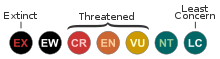
IUCN Red List
Growth: S = slow M = medium F = fast. Soil: L = light (sandy) M = medium H = heavy (clay). pH: A = acid N = neutral B = basic (alkaline). Shade: F = full shade S = semi-shade N = no shade. Moisture: D = dry M = Moist We = wet Wa = water.
Now available:
Food Forest Plants for Mediterranean Conditions
350+ Perennial Plants For Mediterranean and Drier Food Forests and Permaculture Gardens.
[Paperback and eBook]
This is the third in Plants For A Future's series of plant guides for food forests tailored to
specific climate zones. Following volumes on temperate and tropical ecosystems, this book focuses
on species suited to Mediterranean conditions—regions with hot, dry summers and cool, wet winters,
often facing the added challenge of climate change.
Read More
Expert comment
Author
L.
Botanical References
17200
Links / References
For a list of references used on this page please go here
Readers comment
| Add a comment |
|
If you have important information about this plant that may help other users please add a comment or link below. Only comments or links that are felt to be directly relevant to a plant will be included. If you think a comment/link or information contained on this page is inaccurate or misleading we would welcome your feedback at [email protected]. If you have questions about a plant please use the Forum on this website as we do not have the resources to answer questions ourselves.
* Please note: the comments by website users are not necessarily those held by PFAF and may give misleading or inaccurate information.
|
Subject : Medicago lupulina
|
|
|
|