 |
|
http://commons.wikimedia.org/wiki/File:Lamium_galeobdolon_Sturm40.jpg |
 |
| http://commons.wikimedia.org/wiki/User:Darkone |
Translate this page:
Summary
Bloom Color: Yellow. Main Bloom Time: Early summer, Late spring. Form: Spreading or horizontal.
Physical Characteristics

 Lamium galeobdolon is a PERENNIAL growing to 0.3 m (1ft) by 1 m (3ft 3in) at a fast rate.
See above for USDA hardiness. It is hardy to UK zone 6 and is not frost tender. It is in flower from May to June. The species is hermaphrodite (has both male and female organs) and is pollinated by Bees.
Suitable for: light (sandy), medium (loamy) and heavy (clay) soils, prefers well-drained soil and can grow in heavy clay soil. Suitable pH: mildly acid, neutral and basic (mildly alkaline) soils. It can grow in full shade (deep woodland) semi-shade (light woodland) or no shade. It prefers moist soil and can tolerate drought.
UK Hardiness Map
US Hardiness Map
Synonyms
Galeobdolon luteum. Lamiastrum galeobdolon.
Plant Habitats
Woodland Garden Dappled Shade; Shady Edge; not Deep Shade; Ground Cover; Hedgerow;
Edible Uses
Edible Parts: Flowers Leaves Shoots
Edible Uses:
Young leaves and shoots - cooked[183]. Young flowering tips - cooked.
References More on Edible Uses
Medicinal Uses
Plants For A Future can not take any responsibility for any adverse effects from the use of plants. Always seek advice from a professional before using a plant medicinally.
Antispasmodic Astringent Diuretic Expectorant Styptic Vasoconstrictor
The herb is antispasmodic, astringent, diuretic, expectorant, styptic and vasoconstrictor[4].
References More on Medicinal Uses
Other Uses
A good ground cover plant, spreading rapidly by means of its rooting stems and succeeding even in dense shade. It is very vigorous, however, and can smother small plants[31, 197, 200]. It does very well in woodlands[K].
Special Uses
Food Forest Food Forest Ground cover
References More on Other Uses
Cultivation details
Landscape Uses:Ground cover, Massing, Woodland garden. A very easily grown plant, it tolerates most soils and conditions[200]. It grows well in heavy clay soils[17], though it prefers a light calcareous soil[1]. Dislikes dry soils[31]. This species succeeds even in dense shade, growing well under trees[31, 200]. Once established, it can also succeed in drought conditions under the shade of trees, providing there is plenty of humus in the soil[190]. There are at least four sub-species, L. galeobdolon montanum is the form generally found wild in Britain and it is a triploid. L. galeobdolon luteum and L. galeobdolon flavidum are both diploids[187]. L. galeobdolon argentatum is the more rampant form, its clone 'Variegatum' is a commonly used ground cover plant for shady places[187]. Plants seem to be immune to the predations of rabbits[233]. A very invasive plant, sending out long prostrate shoots that root at intervals along the stems[31, 200]. Special Features:
Attractive foliage, Naturalizing. In garden design, as well as the above-ground architecture of a plant, root structure considerations help in choosing plants that work together for their optimal soil requirements including nutrients and water. The root pattern is rhizomatous with underground stems sending roots and shoots along their length [2-1].
References Carbon Farming Information and Carbon Sequestration Information
Temperature Converter
Type a value in the Celsius field to convert the value to Fahrenheit:
Fahrenheit:
Plant Propagation
Seed - usually self sows freely and should not require human intervention. When they are large enough to handle, prick the seedlings out into individual pots and plant them out in the summer. The seed can also be sown in situ as soon as it is ripe. Division in spring. Succeeds at almost any time in the growing season. Very easy, larger clumps can be replanted direct into their permanent positions, though it is best to pot up smaller clumps and grow them on in a cold frame until they are rooting well. Plant them out in the spring.
Other Names
If available other names are mentioned here
Native Range
TEMPERATE ASIA: Iran (north), Turkey (north), Azerbaijan, Georgia EUROPE: Denmark, Finland (south), United Kingdom (England (east)), Sweden (south), Czechoslovakia, Austria, Switzerland, Germany, Hungary, Netherlands, Poland, Russian Federation (European part), Belarus, Estonia, Lithuania, Latvia, Ukraine, Former Yugoslavia, Albania, Bulgaria, Greece (north), Italy, Romania, Spain (north), France Great Britain
Weed Potential
Right plant wrong place. We are currently updating this section.
Please note that a plant may be invasive in one area but may not
in your area so it's worth checking.
Conservation Status
IUCN Red List of Threatened Plants Status :
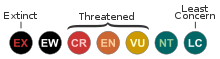
IUCN Red List
Growth: S = slow M = medium F = fast. Soil: L = light (sandy) M = medium H = heavy (clay). pH: A = acid N = neutral B = basic (alkaline). Shade: F = full shade S = semi-shade N = no shade. Moisture: D = dry M = Moist We = wet Wa = water.
Support Plants For A Future
Plants For A Future relies on regular donations to keep our free database and search facilities going, to pay for ongoing research, improvements and enhancements, and to develop and publish new books.
Read more
Choose Currency
Donate in £ GBP
Donate in $ USD
Donate in € EUR
Securely pay via PayPal or Credit/Debit Card without an account.
Expert comment
Author
(L.)L.
Botanical References
17200
Links / References
For a list of references used on this page please go here
Readers comment
© 2010, Plants For A Future. Plants For A Future is a charitable company limited by guarantee, registered in England and Wales. Charity No. 1057719, Company No. 3204567.