 |
|
http://commons.wikimedia.org/wiki/User:Llez |
 |
| http://commons.wikimedia.org/wiki/User:Jeantosti |
Translate this page:
Summary
Physical Characteristics

 Grindelia camporum is a ANNUAL/PERENNIAL growing to 1.2 m (4ft) by 0.8 m (2ft 7in).
See above for USDA hardiness. It is hardy to UK zone 8. It is in flower from July to August. The species is hermaphrodite (has both male and female organs) and is pollinated by Insects.
Suitable for: light (sandy) and medium (loamy) soils, prefers well-drained soil and can grow in nutritionally poor soil. Suitable pH: mildly acid, neutral and basic (mildly alkaline) soils. It cannot grow in the shade. It prefers dry or moist soil and can tolerate drought.
UK Hardiness Map
US Hardiness Map
Synonyms
G. robusta rigida.
Plant Habitats
Cultivated Beds;
Edible Uses
References More on Edible Uses
Medicinal Uses
Plants For A Future can not take any responsibility for any adverse effects from the use of plants. Always seek advice from a professional before using a plant medicinally.
Antiasthmatic Antiinflammatory Antispasmodic Eczema Expectorant Homeopathy Sedative
Gumplant was used by the native North American Indians to treat bronchial problems and also skin afflictions such as reactions to poison ivy[254]. It is still used in modern herbalism where it is valued especially as a treatment for bronchial asthma and for states where phlegm in the airways impedes respiration[254]. In addition, it is believed to desensitize the nerve endings in the bronchial tree and slow the heart rate, thus leading to easier breathing[254]. The herb is contraindicated for patients with kidney or heart complaints[254]. The dried leaves and flowering tops are antiasthmatic, anti-inflammatory, antispasmodic, expectorant and sedative[4, 61, 165, 238]. The principal use of this herb is in the treatment of bronchial catarrh, especially when there is an asthmatic tendency, it is also used to treat whooping cough and cystitis[4, 61, 238]. The active principle is excreted from the kidneys, and this sometimes produces signs of renal irritation[4, 238]. Externally, the plant is used to treat burns, poison ivy rash, dermatitis, eczema and skin eruptions[61, 238]. The plant is harvested when in full bloom and can be used fresh as a poultice or dried for infusions etc[238]. A homeopathic remedy is prepared from the leaves and flowering stems[4].
References More on Medicinal Uses
Other Uses
Adhesive Dye
Yellow and green dyes are obtained from the flowering heads and pods[168]. Aromatic. A possible substitute for wood rosin, used in the manufacture of adhesives etc[160]. This report probably refers to the resin that covers the flower buds.
Special Uses
References More on Other Uses
Cultivation details
Succeeds in any well-drained soil in full sun[200]. Does well on dry sandy banks and in poor soils[200]. This species is not hardy in the colder areas of the country, it tolerates temperatures down to between -5 and -10°c[200]. All parts of the plant have a balsamic odour[238].
References Carbon Farming Information and Carbon Sequestration Information
Temperature Converter
Type a value in the Celsius field to convert the value to Fahrenheit:
Fahrenheit:
Plant Propagation
Seed - sow autumn or spring in a cool greenhouse and only just cover the seed. Prick out the plants into individual pots when they are large enough to handle and plant them out into their permanent positions in early summer.
Other Names
If available other names are mentioned here
Native Range
NORTHERN AMERICA: United States (California)
Weed Potential
Right plant wrong place. We are currently updating this section.
Please note that a plant may be invasive in one area but may not
in your area so it's worth checking.
Conservation Status
IUCN Red List of Threatened Plants Status :
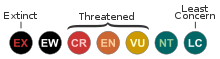
IUCN Red List
Growth: S = slow M = medium F = fast. Soil: L = light (sandy) M = medium H = heavy (clay). pH: A = acid N = neutral B = basic (alkaline). Shade: F = full shade S = semi-shade N = no shade. Moisture: D = dry M = Moist We = wet Wa = water.
Support Plants For A Future
Plants For A Future relies on regular donations to keep our free database and search facilities going, to pay for ongoing research, improvements and enhancements, and to develop and publish new books.
Read more
Choose Currency
Donate in £ GBP
Donate in $ USD
Donate in € EUR
Securely pay via PayPal or Credit/Debit Card without an account.
Expert comment
Author
Greene.
Botanical References
71200
Links / References
For a list of references used on this page please go here
Readers comment