 |
|
http://commons.wikimedia.org/wiki/User:Fabelfroh |
 |
| http://commons.wikimedia.org/wiki/User:Fabelfroh |
Translate this page:
Summary
Physical Characteristics

 Inula britannica is a PERENNIAL growing to 0.8 m (2ft 7in) by 0.5 m (1ft 8in).
See above for USDA hardiness. It is hardy to UK zone 7. It is in flower from August to October, and the seeds ripen from August to October. The species is hermaphrodite (has both male and female organs) and is pollinated by Bees, flies. The plant is self-fertile.
Suitable for: light (sandy), medium (loamy) and heavy (clay) soils and can grow in heavy clay soil. Suitable pH: mildly acid, neutral and basic (mildly alkaline) soils. It cannot grow in the shade. It prefers moist or wet soil.
UK Hardiness Map
US Hardiness Map
Synonyms
Plant Habitats
Meadow; Bog Garden;
Edible Uses
References More on Edible Uses
Medicinal Uses
Plants For A Future can not take any responsibility for any adverse effects from the use of plants. Always seek advice from a professional before using a plant medicinally.
Antibacterial Antiemetic Cancer Carminative Cholagogue Deobstruent Depurative Diuretic
Expectorant Laxative Resolvent Stomachic Tonic Vulnerary
Xuan Fu Hua is used in Chinese herbalism as a mildly warming expectorant remedy and it is especially suitable where phlegm has accumulated in the chest[254]. The flowers are more commonly used, but the leaves are also used, generally for less serious conditions[254]. The leaf is discutient and vulnerary[218]. The flowers are antibacterial, carminative, cholagogue, deobstruent, depurative, diuretic, expectorant, laxative, stomachic and tonic[218]. They are used internally in the treatment of bronchial complaints with profuse phlegm, nausea and vomiting, hiccups and flatulence[176, 238]. The flowers have an antibacterial action, but this can be destroyed by proteins in the body[176]. The plant is harvested when in flower and can be dried for later use[254]. The root is discutient, resolvent and vulnerary[218]. The plant has been mentioned as a possible treatment for cancer of the oesophagus[218].
References More on Medicinal Uses
Other Uses
References More on Other Uses
Cultivation details
Succeeds in a sunny position in any moderately fertile well-drained soil[200]. Grows well in heavy clay soils. Plants are hardy to at least -15°c[238]. The sub-species I. britannica chinensis is the form used medicinally[238].
References Carbon Farming Information and Carbon Sequestration Information
Temperature Converter
Type a value in the Celsius field to convert the value to Fahrenheit:
Fahrenheit:
Plant Propagation
Seed - sow spring or autumn in a cold frame. When they are large enough to handle, prick the seedlings out into individual pots and plant them out in the summer. If you have sufficient seed, it is worthwhile trying a sowing in situ in the spring or the autumn. Division in spring or autumn[111].
Other Names
If available other names are mentioned here
Native Range
TEMPERATE ASIA: Iran, Turkey, Russian Federation-Ciscaucasia (Ciscaucasia), Armenia, Azerbaijan, Georgia, Russian Federation (Dagestan), Russian Federation-Western Siberia (Western Siberia), Russian Federation-Eastern Siberia (Eastern Siberia), Russian Federation (Altay), Kazakhstan, Kyrgyzstan, Tajikistan, Turkmenistan, Uzbekistan, Mongolia, Russian Federation (Primorye, Kamcatskij kraj, Sakhalin), China (Hebei Sheng, Heilongjiang Sheng, Nei Mongol Zizhiqu, Xinjiang Uygur Zizhiqu), Korea, Japan (Hokkaidô, Honshu, Kyushu, Shikoku) TROPICAL ASIA: India (Jammu and Kashmir) EUROPE: Denmark, Norway, Sweden, Austria, Belgium, Switzerland, Czech Republic, Germany, Hungary, Netherlands, Poland, Slovakia, Russian Federation (European part), Belarus, Estonia, Lithuania, Latvia, Moldova, Ukraine (incl. Krym), Albania, Bulgaria, Bosnia and Herzegovina, Greece, Croatia, Italy, North Macedonia, Montenegro, Romania, Serbia, Slovenia, Spain, France
Weed Potential
Right plant wrong place. We are currently updating this section.
Please note that a plant may be invasive in one area but may not
in your area so it's worth checking.
Conservation Status
IUCN Red List of Threatened Plants Status :
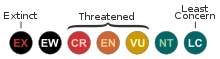
IUCN Red List
Growth: S = slow M = medium F = fast. Soil: L = light (sandy) M = medium H = heavy (clay). pH: A = acid N = neutral B = basic (alkaline). Shade: F = full shade S = semi-shade N = no shade. Moisture: D = dry M = Moist We = wet Wa = water.
Support Plants For A Future
Plants For A Future relies on regular donations to keep our free database and search facilities going, to pay for ongoing research, improvements and enhancements, and to develop and publish new books.
Read more
Choose Currency
Donate in £ GBP
Donate in $ USD
Donate in € EUR
Securely pay via PayPal or Credit/Debit Card without an account.
Expert comment
Author
L.
Botanical References
17200
Links / References
For a list of references used on this page please go here
Readers comment
| Add a comment |
|
If you have important information about this plant that may help other users please add a comment or link below. Only comments or links that are felt to be directly relevant to a plant will be included. If you think a comment/link or information contained on this page is inaccurate or misleading we would welcome your feedback at [email protected]. If you have questions about a plant please use the Forum on this website as we do not have the resources to answer questions ourselves.
* Please note: the comments by website users are not necessarily those held by PFAF and may give misleading or inaccurate information.
|
Subject : Inula britannica
|
|
|
|