Translate this page:
Summary
Coral bells is a small mountain perennial best known as an ornamental rather than a food plant. Its rounded, lobed leaves form compact rosettes among rocks, while slender flowering stems carry conspicuous red or pink bells that may continue appearing through much of the warmer season. The leaves are technically edible after substantial processing, but they are a poor-quality food. Fresh leaves are intensely astringent, somewhat bitter and covered with coarse hairs that remain troublesome after cooking. Repeated boiling can remove much of the tannin, but the treatment also removes flavour and many water-soluble nutrients. The flowers appear considerably more palatable than the foliage. They are soft, mildly flavoured and much less astringent. However, reliable published evidence confirming their use as food is limited. They should therefore be regarded as an interesting but insufficiently documented possibility rather than an established edible part. The plant has greater importance as an ornamental, pollinator resource and traditional medicinal species. Its tannin-rich roots and leaves have been used externally and internally for their astringent properties, particularly in preparations intended to reduce bleeding or diarrhoea. Medicinal use requires appropriate knowledge and should not be confused with routine food use. Bloom Color: Pink, Red, White.
Main Bloom Time: Early summer, Late spring, Mid spring. Form: Rounded.
Physical Characteristics

 Heuchera sanguinea is an evergreen Perennial growing to 0.4 m (1ft 4in) by 0.4 m (1ft 4in) at a medium rate.
See above for USDA hardiness. It is hardy to UK zone 5 and is not frost tender. It is in leaf all year, in flower from July to August, and the seeds ripen from August to September. The species is hermaphrodite (has both male and female organs) and is pollinated by Bees.
Suitable for: light (sandy) and medium (loamy) soils and prefers well-drained soil. Suitable pH: mildly acid, neutral and basic (mildly alkaline) soils and can grow in very alkaline soils.
It can grow in semi-shade (light woodland) or no shade. It prefers moist soil.
UK Hardiness Map
US Hardiness Map
Synonyms
Heuchera sanguinea var. typica Rosend., Butters & Lakela
Plant Habitats
Woodland Garden Sunny Edge; Dappled Shade; Ground Cover;
Edible Uses
The leaves are edible only after careful preparation. They should be boiled in plenty of water, with the water changed several times, until most of the astringency has been removed. Even after this treatment, they remain bland and retain a coarse, raspy texture. Young leaves are preferable to older leaves because they tend to be somewhat less tough and bitter. However, even young foliage contains enough tannin to make raw consumption undesirable. The leafstalks soften during cooking and are chewable, but they offer little substance. The hairs on the leaf blades are the greater problem. They can create a gripping or scratching sensation in the throat that boiling does not fully eliminate. The flowers taste milder than the leaves and have a soft texture, low astringency, and subtle aroma. They may be edible, but their status is not sufficiently documented to recommend them confidently. Roots are strongly astringent and should be regarded as medicinal rather than culinary [2-3]. Edible Uses & Rating: Coral bells deserves an overall edibility rating of 1/5. The leaves can be made technically palatable, but they require repeated boiling, provide little energy, and retain an unpleasantly hairy texture. Better leafy vegetables are usually available within the same region. The flowers would rate more highly for flavor and texture, perhaps around 2–3/5, but their uncertain food history prevents them from improving the plant’s overall rating. Coral bells is therefore best described as a marginal or emergency vegetable rather than a useful wild food. Taste, Processing & Kitchen Notes: Fresh leaves are sharply astringent. A faint lettuce-like or green vegetable flavor may be detectable at first, but bitterness and tannin quickly dominate. The mouth may feel dry and puckered after chewing even a small amount. The most effective preparation is prolonged boiling in several changes of water. The first cooking water often becomes pale green as soluble compounds leach from the foliage. Brief blanching is unlikely to remove enough astringency. Leaves should be cooked separately rather than added directly to soups or mixed vegetables. Otherwise, their tannins and bitterness may affect the entire dish. After repeated boiling, the flavour becomes mild or nearly bland. The leaf tissue remains chewable, and the petioles soften adequately. The coarse hairs, however, may continue to catch in the throat or create a rough mouthfeel. Chopping the cooked leaves finely may reduce this problem, but it does not eliminate it. Pureeing them into a small quantity of soup or mixed greens may make them more manageable, although there is little culinary reason to do so where better vegetables are available. The flowers have a much more agreeable character. They are mildly vegetal, faintly sweet or neutral, soft and only slightly astringent. Their attractive color could make them useful as a garnish if future evidence confirms their safety [2-3]. Seasonality (Phenology): Coral bells produces fresh foliage during spring and may remain leafy through much of the year in mild mountain climates. In colder areas, the leaves may die back or persist only close to the ground. Flowering can begin in April and continue intermittently until October, especially where moisture remains available. Peak flowering usually follows spring or summer rainfall. Young leaves are most suitable for experimentation early in the growing season. Older leaves become increasingly leathery, hairy and astringent. Flowering stems should be observed rather than removed extensively because the flowers support pollinators and are the most distinctive identifying feature of the species [2-3]. Safety & Cautions (Food Use): Coral bell leaves are very high in tannins. Large quantities of untreated foliage should not be eaten. Tannins can bind proteins and minerals and may interfere with digestion when consumed frequently or in substantial amounts. Repeated boiling reduces their concentration, although it also reduces nutritional value. The leaves should not be eaten raw. Any prepared material that remains strongly bitter or astringent should be discarded. The rough hairs can irritate the mouth and throat. Individuals with swallowing difficulties, sensitive digestive systems or existing throat irritation should avoid the foliage entirely. The flowers have not been adequately confirmed as edible. Tasting during field observations is not equivalent to a documented history of safe use. Until stronger evidence becomes available, they should be treated cautiously. Rare Heuchera species occur in parts of the Southwest. Harvesting should therefore be limited to abundant populations that have been identified with confidence [2-3]. Harvest & Processing Workflow: Choose a healthy, abundant population growing away from roads, sprayed areas, mines or polluted drainage. Confirm the species while it is in flower. The red or pink bell-shaped flowers make Heuchera sanguinea easier to recognise than many less showy alumroots. Collect only a small number of young leaves from each plant. Do not strip entire rosettes because the basal foliage supplies most of the plant’s energy. Wash the leaves thoroughly to remove dust, grit and insects. Place them in a separate pot of boiling water and cook until the water becomes coloured or noticeably astringent. Drain completely and repeat the process with fresh water. Several changes may be necessary. The leaves should be tasted only after the strongest astringency has disappeared. Chop the cooked material finely to make the persistent hairs less troublesome. Discard the leaves if they remain bitter, resinous or irritating. Given the low food value and ecological importance of the plant, harvesting is rarely worthwhile [2-3]. Cultivar/Selection Notes: Coral bells has contributed to numerous ornamental hybrids and garden cultivars. Modern plants sold under the common name “coral bells” are often complex hybrids involving Heuchera sanguinea and other species. Cultivars have been selected for red, pink, white, or coral flowers, prolonged blooming, compact growth, and foliage ranging from green to purple, bronze, silver, or almost black. These ornamental selections should not automatically be assumed to have the same edible qualities as the wild species. Hybrid ancestry, nursery treatments and chemical use may all affect their suitability. No cultivated varieties have been developed specifically for food. The genus has far greater value in horticulture than as a vegetable crop. Look-Alikes & Confusion Risks: Approximately 35 species of Heuchera occur in the United States, with several found in the Southwest. Many have similar basal rosettes of rounded, lobed leaves. Coral bells is distinguished by its relatively showy red, pink or carmine flowers. Most related alumroots have much smaller greenish, cream or white flowers. The flowers are borne in open panicles on long, mostly leafless stalks. Each bell-like structure is formed largely by the coloured hypanthium and sepals, with small petals inside. The basal leaves resemble those of some saxifrages, currants or mallows, but their rocky mountain habitat, long flowering stalks and distinctive flowers usually make mature plants recognizable. Identification should not rely on leaf shape alone because ornamental hybrids and related species can be highly variable [2-3]. Traditional/Indigenous Use Summary: Members of the genus Heuchera are better documented as medicines than as foods. Their roots contain substantial tannins and have been used as strong astringents. Traditional preparations made from alumroot species have been applied to wounds, bleeding, sores and inflammation. Internal preparations were also used for diarrhea and other conditions in which an astringent effect was desired. The common name “alumroot” refers to the drying and contracting sensation produced by the root, similar to that associated with alum. Specific evidence for coral bells as a significant traditional vegetable is limited. Its poor flavor, low calorie content and restricted distribution probably explain why it never became an important food plant. Traditional medicinal knowledge should be respected and should not be interpreted as evidence that large quantities of the roots or leaves are safe for unsupervised internal use [2-3].
References More on Edible Uses
Medicinal Uses
Plants For A Future can not take any responsibility for any adverse effects from the use of plants. Always seek advice from a professional before using a plant medicinally.
Heuchera sanguinea (commonly known as coral bells or alum root) has historical medical properties. Its primary medical property is astringency. An astringent is a substance that contracts body tissues. Historical Uses: Wound healing: Indigenous peoples applied the pounded roots and leaves to wounds to stop bleeding.Inflammation: Extracts were used to treat sore throats, ulcers, and piles.Alum substitute: The plant is rich in tannins. These compounds allow the roots to act like alum (a chemical used to shrink tissue and stop bleeding). Modern Medical Information: Today, the plant is primarily grown for garden decoration. While some Native American groups used the plant for various ailments, modern medicine does not widely use Heuchera sanguinea as a standard treatment.
References More on Medicinal Uses
The Bookshop: Edible Plant Books
Our Latest books on Perennial Plants For Food Forests and Permaculture Gardens in paperback or digital formats.
Edible Tropical Plants
Food Forest Plants for Hotter Conditions: 250+ Plants For Tropical Food Forests & Permaculture Gardens.
More

Edible Temperate Plants
Plants for Your Food Forest: 500 Plants for Temperate Food Forests & Permaculture Gardens.
More
More Books
PFAF have eight books available in paperback and digital formats. Browse the shop for more information.
Shop Now
Other Uses
Mordant
Coral bells is a small mountain perennial best known as an ornamental rather than a food plant. Landscape Uses: Border, Container, Ground cover, Rock garden, Seashore, Specimen, Woodland garden. Well suited to rock gardens, shaded borders, crevice gardens, woodland edges and containers. The root can be used as an alum substitute; this is a mordant used in fixing dyes[172]. The root is rich in tannin; is this the active ingredient that acts as a mordant?[172]. A good ground cover plant for the woodland garden[200]. Plants should be spaced about 35cm apart each way[208]. Ecology & Wildlife: Coral bells contribute nectar to hummingbirds and insects over a long flowering period. Its basal foliage provides shelter for small invertebrates among rocks and leaf litter. The roots help anchor soil in narrow crevices and on steep mountain slopes, although individual plants are too small to provide major erosion control. Seed capsules may be eaten by small birds or rodents, while foliage may occasionally be browsed by deer or rabbits. The species is particularly valuable as part of the specialised flora of the mountain “sky islands” of Arizona and New Mexico. Protecting rocky slopes, canyon habitats and natural fire regimes helps preserve wild populations. In gardens, the species offers an effective combination of ornamental colour, drought tolerance, pollinator support and low weed potential.
Special Uses
Ground cover
References More on Other Uses
Cultivation details
Coral bells is an attractive and ecologically useful mountain plant but a poor wild vegetable. Its leaves can be rendered edible through repeated boiling, yet the process removes much of their flavour and nutritional value. Persistent hairs further reduce their quality. The flowers are far more pleasant, but their edibility remains inadequately documented. The plant is better appreciated for its colourful flowers, ornamental qualities, pollinator value and historical use as an astringent medicine. Foragers seeking leafy vegetables in southeastern Arizona or southwestern New Mexico will almost always find better options. Coral bells is more useful as an example of what can be made edible than as a food worth actively seeking. Growing Conditions: Coral bells grows best in well-drained, rocky soil with partial shade or filtered sunlight. It is especially suited to mountain slopes, cliffs, canyon walls and rocky woodland openings. The plant prefers soils that retain some moisture during the growing season but do not remain waterlogged. Good drainage is essential, particularly during winter. In hot lowland gardens, afternoon shade is beneficial. In cooler mountain climates, plants may tolerate more direct sun. A neutral to slightly alkaline, mineral-rich soil is generally suitable. Organic matter can improve moisture retention, but heavy mulching around the crown may encourage rot. Habitat & Range: Wild coral bells is native principally to mountainous areas of southeastern Arizona, southwestern New Mexico and northern Mexico. It occurs at middle to upper elevations in rocky canyons, shaded cliffs, woodland margins and mountain slopes. The species is especially associated with the “sky island” mountain ranges of southern Arizona, including the Huachuca Mountains and nearby ranges. Plants may grow from narrow rock crevices where their roots remain cool and protected while the flowering stems rise into open light. Within its limited United States range, coral bells can be locally common in suitable habitat. Size & Landscape Performance: Coral bells usually forms compact clumps about 20–40 cm high and 25–45 cm wide. Flowering stalks may rise to 50–60 cm or occasionally higher, depending on moisture and soil fertility. The basal foliage creates a neat rounded mound. The red or pink flowers provide strong colour without overwhelming neighbouring plants. It is well suited to rock gardens, shaded borders, crevice gardens, woodland edges and containers with excellent drainage. Flowering may continue for several months, making the species valuable where long seasonal colour is desired. Cultivation (Horticulture): Plant coral bells with the crown at or slightly above soil level. Burial of the crown can encourage rot. Provide regular moisture during establishment, then allow the upper soil to dry slightly between waterings. Established plants tolerate short dry periods but do not perform well in prolonged drought. Remove dead or damaged leaves in spring. Spent flowering stalks may be cut back to improve appearance or left temporarily for seed production. Plants may become woody or rise above the soil after several years. Lifting and replanting divisions can restore vigour. In humid climates, good air circulation is important. In dry regions, protection from intense afternoon sun helps prevent leaf scorch. Pests & Problems: Coral bells is generally trouble-free when grown in suitable well-drained soil. Root and crown rots are the most serious problems and occur when plants are buried too deeply or kept continuously wet. Vine weevil larvae can damage cultivated plants by feeding on the roots and crown. Slugs and snails may attack tender new leaves. Leaf scorch occurs in intense sun, especially where soil moisture is inadequate. Excessive shade can produce weak growth and reduced flowering. Deer and rabbits may browse the foliage, although the tannins and rough texture can make it less appealing than neighbouring plants. Identification & Habit: Coral bells is a stemless or nearly stemless perennial arising from a compact woody crown. The leaves are simple, basal and borne on long petioles. Leaf blades are rounded or kidney-shaped in outline and usually divided into five to seven broad, rounded lobes. The margins are crenate or coarsely toothed. Both surfaces may carry coarse hairs, giving the leaves a rough texture. Flowering stalks rise well above the foliage and branch into open panicles. The flowers are bell-shaped, pinkish-red to deep carmine and formed around a coloured hypanthium. Each flower has five sepals, five small petals, five stamens and two styles. The ovary is partly inferior. The fruits are small ovoid capsules with two pointed beaks. They contain numerous tiny dark brown seeds. Pollinators: The red tubular flowers are well adapted to hummingbird pollination. Hummingbirds can hover in front of the hanging flowers and reach nectar that is less accessible to many short-tongued insects. Bees may also visit the flowers, particularly where the floral tubes are short enough for nectar access. Bumblebees occasionally obtain nectar through the flower opening or by making holes near the base. The long flowering season can make coral bells a dependable nectar source in mountain habitats. Cultivated forms with open flowers may support a broader range of insects than strongly tubular selections. Succeeds in any good sweet garden soil that does not dry out in spring[1]. Prefers full sun but tolerates partial shade[1, 111]. Prefers a well-drained fairly rich and not too heavy soil[111]. Plants are hardy to about -20°c[187]. Apt to hybridize with other members of this genus[111]. A very ornamental plant; there are many named forms[1, 233]. Special Features: Attractive foliage, North American native, Naturalizing, Suitable for cut flowers. Coral bells, Heuchera sanguinea, belongs to the saxifrage family (Saxifragaceae) and the genus Heuchera. Common names include coral bells, carmine alumroot, red-flowered alumroot and crimson bells. The name “coral bells” refers to the plant’s clusters of small, bell-shaped red or pink flowers, while “alumroot” reflects the strongly astringent quality of the tannin-rich roots found throughout much of the genus. It is an evergreen or semi-evergreen herbaceous perennial generally suited to approximately USDA Hardiness Zones 4–9, although performance varies among cultivated selections. Wild plants commonly grow about 20–45 cm tall in leaf, with flowering stems rising to around 30–60 cm. Individual plants usually spread approximately 25–45 cm and form compact basal clumps rather than extensive colonies.
References Carbon Farming Information and Carbon Sequestration Information
Temperature Converter
Type a value in the Celsius field to convert the value to Fahrenheit:
Fahrenheit:
The PFAF Bookshop
Plants For A Future have a number of books available in paperback and digital form. Book titles include Edible Plants, Edible Perennials, Edible Trees,Edible Shrubs, Woodland Gardening, and Temperate Food Forest Plants. Our new book is Food Forest Plants For Hotter Conditions (Tropical and Sub-Tropical).
Shop Now
Plant Propagation
Seed - sow early spring in a warm greenhouse and only just cover the seed. Germination is usually fairly rapid. Prick out the seedlings when they are large enough to handle and plant them out into their permanent positions in late spring or early summer. The seed can also be sown in the middle of spring in an outdoor seedbed and planted out in early summer. Alternatively, you can sow the seed in an outdoor seedbed in the middle of summer for planting out in the following spring. Division in March or October[1, 111]. It is best to divide the plants in August or early September, making sure that the woody roots are planted quite deeply with only the crown of foliage above the ground[233].
Other Names
If available other names are mentioned here
Alum Root, Coralbells, Crimson Bells.
Native Range
NORTHERN AMERICA: United States (New Mexico, Arizona), Mexico (Chihuahua (north))
Weed Potential
Right plant wrong place. We are currently updating this section.
Please note that a plant may be invasive in one area but may not in your area so it's worth checking.
Coral bells has low weed potential. It grows slowly, forms compact clumps and does not spread through aggressive underground stems. Self-seeding may occur near cultivated plants, but seedlings are usually scattered and easy to remove. The species is unlikely to become invasive because it depends on relatively specific rocky, well-drained habitats and has limited competitive ability in dense vegetation. Outside its native range, gardeners should still avoid allowing ornamental cultivars to escape into sensitive natural areas.
Conservation Status
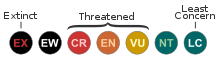
IUCN Red List of Threatened Plants Status : Not listed.
| Related Plants
|
| Latin Name | Common Name | Habit | Height | Hardiness | Growth | Soil | Shade | Moisture | Edible | Medicinal | Other |
| Heuchera americana | Rock Geranium, American alumroot, Alumroot, Coral Bells, Rock Geranium | Perennial | 0.5 |
4-9
| M | LM | SN | M | 0 | 3 | 2 |
| Heuchera cylindrica | Alum Root, Roundleaf alumroot, Alpine alumroot, Beautiful alumroot, Poker alumroot | Perennial | 0.5 |
4-8
| | LM | SN | M | 1 | 2 | 3 |
| Heuchera diversifolia | Alum Root, Crevice alumroot | Perennial | 0.6 |
4-8
| | LM | SN | M | 1 | 1 | 3 |
| Heuchera glabra | Alpine Heuchera | Perennial | 0.6 |
4-8
| | LM | SN | M | 1 | 1 | 3 |
| Heuchera micrantha | Alum Root, Crevice alumroot, Hartweg's alumroot, Coral Bells | Perennial | 0.7 |
4-9
| F | LM | SN | M | 1 | 2 | 3 |
| Heuchera versicolor | Pink alumroot | Perennial | 0.2 |
8-11
| | LM | SN | M | 0 | 1 | 3 |
|
Growth: S = slow M = medium F = fast. Soil: L = light (sandy) M = medium H = heavy (clay). pH: A = acid N = neutral B = basic (alkaline). Shade: F = full shade S = semi-shade N = no shade. Moisture: D = dry M = Moist We = wet Wa = water.
Now available:
Food Forest Plants for Mediterranean Conditions
350+ Perennial Plants For Mediterranean and Drier Food Forests and Permaculture Gardens.
[Paperback and eBook]
This is the third in Plants For A Future's series of plant guides for food forests tailored to
specific climate zones. Following volumes on temperate and tropical ecosystems, this book focuses
on species suited to Mediterranean conditions—regions with hot, dry summers and cool, wet winters,
often facing the added challenge of climate change.
Read More
Expert comment
Author
Engelm.
Botanical References
200
Links / References
For a list of references used on this page please go here
Readers comment
| Add a comment |
|
If you have important information about this plant that may help other users please add a comment or link below. Only comments or links that are felt to be directly relevant to a plant will be included. If you think a comment/link or information contained on this page is inaccurate or misleading we would welcome your feedback at [email protected]. If you have questions about a plant please use the Forum on this website as we do not have the resources to answer questions ourselves.
* Please note: the comments by website users are not necessarily those held by PFAF and may give misleading or inaccurate information.
|
Subject : Heuchera sanguinea
|
|
|
|