Follow Us:


Erythrina x bidwillii - Lindl.

Common Name Bidwill's Coral Bean
Family Fabaceae
USDA hardiness 7-10
Known Hazards The plant contains alkaloids that have powerful narcotic and purgative effects[200].
Habitats Not known in the wild.
Range A garden hybrid, E. crista-galli x E. herbacea.
Edibility Rating    (0 of 5)
Other Uses    (0 of 5)
Weed Potential No
Medicinal Rating    (1 of 5)
Care (info)
Frost Hardy Moist Soil Semi-shade Full sun
Erythrina x bidwillii Bidwill


http://flickr.com/photos/scottzona/
Erythrina x bidwillii Bidwill
http://flickr.com/photos/98083017%40N00/


Translate this page:

Summary

Erythrina x bidwillii (Bidwill's Coral Bean) is a hardy, deciduous, multi-stemmed shrub or small tree known for its, long, dramatic sprays of deep red flowers, popular with hummingbirds. Growing roughly 6–12 feet tall and wide, this hybrid thrives in full sun and zones 7b-10b, often blooming from spring until frost. Erythrina x bidwillii is an artificial hybrid. The hybrid formula of this artificial cross is E. crista-galli × E. herbacea.


Physical Characteristics

 icon of manicon of shrub
Erythrina x bidwillii is a deciduous Shrub growing to 4 m (13ft) by 2.5 m (8ft).
See above for USDA hardiness. It is hardy to UK zone 8 and is frost tender. It is in flower from July to September. The species is hermaphrodite (has both male and female organs) and is pollinated by Insects.
It can fix Nitrogen.
Suitable for: light (sandy), medium (loamy) and heavy (clay) soils. Suitable pH: mildly acid, neutral and basic (mildly alkaline) soils. It can grow in semi-shade (light woodland) or no shade. It prefers moist soil.

UK Hardiness Map US Hardiness Map

Synonyms

Plant Habitats

Woodland Garden Sunny Edge; Dappled Shade;

Edible Uses

None known

References   More on Edible Uses

Medicinal Uses

Plants For A Future can not take any responsibility for any adverse effects from the use of plants. Always seek advice from a professional before using a plant medicinally.
Narcotic  Purgative

The plant is narcotic and purgative[200].

References   More on Medicinal Uses

Other Uses

None known

Special Uses

Nitrogen Fixer

References   More on Other Uses

Cultivation details

Requires a moderately fertile well-drained soil in a very sunny position[200]. Best if given the protection of an east, south or south-west facing wall[200]. Plants are not very hardy outdoors in Britain though the rootstock can tolerate temperatures down to about -10°c provided the stem bases are thickly mulched with organic matter such as leaf litter or sawdust and covered with bracken[200]. The top growth will be killed by the frost but new growth from the rootstock will flower in late summer[200]. Plants take 3 - 4 years to flower from seed[200]. This species has a symbiotic relationship with certain soil bacteria, these bacteria form nodules on the roots and fix atmospheric nitrogen. Some of this nitrogen is utilized by the growing plant but some can also be used by other plants growing nearby[200]. Erythrina x bidwillii is an artificial hybrid. The hybrid formula of this artificial cross is E. crista-galli × E. herbacea.

References   Carbon Farming Information and Carbon Sequestration Information

Temperature Converter

Type a value in the Celsius field to convert the value to Fahrenheit:

Fahrenheit:

Plant Propagation

Seed - pre-soak for 12 hours in warm water and sow spring in a greenhouse. When they are large enough to handle, prick the seedlings out into individual pots and grow them on in the greenhouse for at least their first winter. Plant them out into their permanent positions in late spring or early summer, after the last expected frosts. Cuttings of half-ripe wood, July/August in a frame[200]. Overwinter in a greenhouse and plant out in late spring or early summer. Heeled cuttings of young growth in the spring in a frame[200]. Overwinter in a greenhouse and plant out in late spring or early summer.

Other Names

If available other names are mentioned here

Native Range

This is an artificial hybrid.

Weed Potential

Right plant wrong place. We are currently updating this section. Please note that a plant may be invasive in one area but may not in your area so it's worth checking.

Conservation Status

IUCN Red List of Threatened Plants Status :
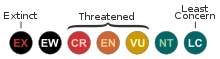
IUCN Red List

Related Plants
Latin NameCommon NameHabitHeightHardinessGrowthSoilShadeMoistureEdibleMedicinalOther
Erythrina acanthocarpa Shrub2.0 8-11  LMHSNM01 
Erythrina crista-galliCoral Tree, CrybabytreeShrub3.0 7-10  LMHNM01 
Erythrina edulisBalu. Andean tree beanTree10.0 10-12 FLMHNDM323
Erythrina fuscaCoral Bean, Swamp ImmortelleTree15.0 10-12 MLMHNDM224
Erythrina herbaceaCardinal Spear, RedcardinalPerennial1.0 7-10  LMHSNM11 
Erythrina humeanaDwarf Kaffirboom, Dwarf erythrinaShrub4.0 8-11  LMHSNM01 
Erythrina poeppigianaMountain Immortelle. Madre de CacaoTree25.0 10-12 FLMHNDM103
Erythrina sandwicensisWiliwili, Hawaiian coral treeTree10.0 10-12 FLMHNDM022
Erythrina subumbransDadap. December treeTree20.0 10-12 FLMHNDM223
Erythrina vernaMulunguTree12.0 10-12 FLMHNDM042
Erythrina zeyheriPrickly CardinalShrub1.0 8-11  LMHSNM01 

Growth: S = slow M = medium F = fast. Soil: L = light (sandy) M = medium H = heavy (clay). pH: A = acid N = neutral B = basic (alkaline). Shade: F = full shade S = semi-shade N = no shade. Moisture: D = dry M = Moist We = wet Wa = water.


Support Plants For A Future

Plants For A Future relies on regular donations to keep our free database and search facilities going, to pay for ongoing research, improvements and enhancements, and to develop and publish new books. Read more

Choose Currency

Donate in £ GBP Donate in $ USD Donate in € EUR

Securely pay via PayPal or Credit/Debit Card without an account.

Expert comment

Author

Lindl.

Botanical References

200

Links / References

For a list of references used on this page please go here

Readers comment

Colin Mills   Mon Mar 3 2008

Erythrina x bidwillii is a sterile hybrid produced at Camden Park, New South Wales, Australia, in the early 1840s by William Macarthur. It certainly cannot be propagated from seed. Its original name was Erythrina Camdeni, or the 'Camden Coral Tree' so called by William Macarthur. Where 'Indian Coral Tree' came from I have no idea. It was named after John Bidwill, by John Lindley, after an initial description by Bidwill's friend William Herbert, simply because he, Bidwill, first took it to England in 1843. He had no other association with its breeding. People who claim to have propagated it from seed either do not have Erythrina x bidwillii or are simply repeating incorrect information without testing it themselves, unfortunately far too common on the internet. E. x bidwillii's 'sibling', E. x blakei, grown from the same F1 cross, still grows in the gardens at Camden Park. This was named by Macarthur after his convict gardener Edmund Blake, who was probably responsible for making the cross, which, incidentaly was the first hybrid to be produced anywhere in the world between woody leguminous plants. E. bidwillii tends to follow its E. crista-galli parent in forming a small tree, while 'Blakei' follows the E. herbacea parent in being a low-growing shrub, dying back to a rootstock each year.

Colin Mills   Fri Apr 4 2008

Propagation information for Erythrina x bidwillii is nonsense. The method given has either not been tried by the writer or is for a plant other that bidwillii. E. x bidwillii was bred by William Macarthur of Camden Park, NSW, Australia in the early 1840s and called by called by him Erythrina Camdeni. John Bidwill took the plant to England in 1843 and gave it to William Herbert who assumed that Bidwill had bred it, hence the name. It is a totally sterile hybrid that can be raised from cuttings, with difficulty. It is probably best propagated by grafting onto seedlings of E. crista-galli, one of its parents.

   Mar 7 2017 12:00AM

Propagation from cuttings is easy. The "secret" is to use large (1"-3" in diameter, 18'-24' in length), woody but still green-barked, cuttings. Plant with approximately 2/3 of the cutting length in the soil. I recently obtained 5 large cuttings from Mrs. Irene Moon of Madera, California. I was taken aback at their size. She told me that large cuttings (and planting depth) were the secret to success. All five of my cuttings, which were just planted several weeks ago, have swelling buds. I planted one in the garden and the others in pots. Mrs. Moon also said that they don't like to be transplanted, but I don't have any experience with that yet.

   Jun 2 2017 12:00AM

Propagation is easy from large (1.5"-2" diameter) semi-hardwood (green barked) cuttings. Cuttings should be 12" or more in length and planted with approximately 2/3 of their length in the soil. I have had 100% success with this method. Young plants resent being moved, and may die if transplanted too soon.

Add a comment

If you have important information about this plant that may help other users please add a comment or link below. Only comments or links that are felt to be directly relevant to a plant will be included. If you think a comment/link or information contained on this page is inaccurate or misleading we would welcome your feedback at [email protected]. If you have questions about a plant please use the Forum on this website as we do not have the resources to answer questions ourselves.

* Please note: the comments by website users are not necessarily those held by PFAF and may give misleading or inaccurate information.

Subject : Erythrina x bidwillii  
© 2010, Plants For A Future. Plants For A Future is a charitable company limited by guarantee, registered in England and Wales. Charity No. 1057719, Company No. 3204567.