Translate this page:
Summary
Smaller fruit than Crescentia cujete (calabash) with slender limbs and a more erect habit
Physical Characteristics

 Crescentia alata is a deciduous Tree growing to 8 m (26ft) by 8 m (26ft) at a medium rate.
See above for USDA hardiness. It is hardy to UK zone 10. The flowers are pollinated by Bats.
Suitable for: light (sandy), medium (loamy) and heavy (clay) soils and prefers well-drained soil. Suitable pH: mildly acid, neutral and basic (mildly alkaline) soils. It cannot grow in the shade. It prefers dry or moist soil and can tolerate drought.
UK Hardiness Map
US Hardiness Map
Synonyms
Crescentia ternata Sess? & Moc. Crescentia trifolia Blanco Otophora paradoxa Blume Parmentiera alata (Kunth) Miers Pteromischus alatus (Kunth) Pichon
Plant Habitats
Edible Uses
Edible Parts: Fruit Oil Seed
Edible Uses: Oil
A refreshing drink is prepared using the ground seeds, mixed with other ingredients[46 , 317 , 411 ]. The seeds are mixed with raw rice, roasted pumpkin seeds, lemon peel, sugar, water and ice, and made into a non-alcoholic drink called 'horchata'[301 ]. A bland, relatively stable oil is obtained from the seeds[301 ]. The fruits are sometimes eaten or made into a drink[301 ].
References More on Edible Uses
Medicinal Uses
Plants For A Future can not take any responsibility for any adverse effects from the use of plants. Always seek advice from a professional before using a plant medicinally.
Dysentery
The fruit is pectoral[310 ]. The pulp is used particularly in the treatment of colds, and for diseases of the kidneys[310 , 331 ]. A decoction of the leaves is employed as an astringent and antihemorrhagic[345 ]. It is much used in the treatment of haemoptysis and dysentery[345 ].
References More on Medicinal Uses
Other Uses
Oil
The fruit have woody shells which can be used to make cups, containers etc[46 , 331 ]. The shells are smaller and not as good suitable for the production of bowls as the shells obtained from C. Cujete[317 ]. The shells have a very important use in Guatemala for making drinking cups and various other kinds of containers. A fruit cut in half makes two small cups, one of which is carried by almost every Indian pedestrian, often attached to his waist, as a drinking cup[331 ]. There is said to be in Guatemala a form of this tree that bears exceptionally small fruits, little larger than a hen's egg - these small fruits are often used to fashion spinning tops for children[331 ]. A decoction of the leaves is said to promote the growth of hair[411 ]. The wood is used locally for making wagons and other articles[46 , 411 ].
Special Uses
Carbon Farming
References More on Other Uses
Cultivation details
Management: Standard New Crop Staple Crop: Protein-oil
Not known
Carbon Farming
-
Management: Standard
Plants grow to their standard height. Harvest fruit, seeds, or other products. Non-Destructive management systems.
-
New Crop
Most new crops were important wild plants until recently, although some are the result of hybridization. They have been developed in the last few, decades. What they have in common is that they are currently cultivated by farmers. Examples include baobab, argan, and buffalo gourd.
-
Staple Crop: Protein-oil
(16+ percent protein, 16+ percent oil). Annuals include soybeans, peanuts, sunflower seeds. Perennials include seeds, beans, nuts, and fruits such as almond, Brazil nut, pistachio, walnut, hazel, and safou.
References Carbon Farming Information and Carbon Sequestration Information
Temperature Converter
Type a value in the Celsius field to convert the value to Fahrenheit:
Fahrenheit:
Plant Propagation
Seed
Other Names
If available other names are mentioned here
Dteen-ped-farang, Gourd tree, Jicara, Jicarillo, Morrito, Morro, Music tree, Pohon maja lonjong, Sacaguacal, Tecomate, Winged calabash, Xicara,
Native Range
NORTHERN AMERICA: Mexico (Baja California (Norte), Baja California Sur, Chihuahua, Durango, San Luis Potosí, Sinaloa, Sonora, Tamaulipas, Zacatecas, Chiapas, Colima, Guerrero, Hidalgo, Jalisco, México, Michoacán de Ocampo, Morelos, Nayarit, Oaxaca, Puebla, Querétaro, Tabasco, Veracruz de Ignacio de la Llave) SOUTHERN AMERICA: Belize, Costa Rica, Guatemala, Honduras, Nicaragua, El Salvador
Weed Potential
Right plant wrong place. We are currently updating this section.
Please note that a plant may be invasive in one area but may not
in your area so it's worth checking.
None Known
Conservation Status
IUCN Red List of Threatened Plants Status : This taxon has not yet been assessed
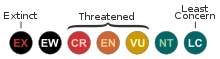
IUCN Red List
Growth: S = slow M = medium F = fast. Soil: L = light (sandy) M = medium H = heavy (clay). pH: A = acid N = neutral B = basic (alkaline). Shade: F = full shade S = semi-shade N = no shade. Moisture: D = dry M = Moist We = wet Wa = water.
Support Plants For A Future
Plants For A Future relies on regular donations to keep our free database and search facilities going, to pay for ongoing research, improvements and enhancements, and to develop and publish new books.
Read more
Choose Currency
Donate in £ GBP
Donate in $ USD
Donate in € EUR
Securely pay via PayPal or Credit/Debit Card without an account.
Expert comment
Author
Kunth
Botanical References
Links / References
For a list of references used on this page please go here
A special thanks to Ken Fern for some of the information used on this page.
Readers comment
| Add a comment |
|
If you have important information about this plant that may help other users please add a comment or link below. Only comments or links that are felt to be directly relevant to a plant will be included. If you think a comment/link or information contained on this page is inaccurate or misleading we would welcome your feedback at [email protected]. If you have questions about a plant please use the Forum on this website as we do not have the resources to answer questions ourselves.
* Please note: the comments by website users are not necessarily those held by PFAF and may give misleading or inaccurate information.
|
Subject : Crescentia alata
|
|
|
|