Translate this page:
Summary
The Artemisia genus is a diverse and ecologically dominant group across the American West, ranging from weeds like biennial wormwood to keystone shrubs like big sagebrush. While some species contributed seeds or flavorings to traditional diets, they are generally risky or unpleasant as foods. Their greater value lies in medicine, ritual, ecological stability, and seasoning. Only wild tarragon (A. dracunculus) stands out as a truly high-quality edible. Field sagewort is widespread and hardy, with some ethnobotanical reports of seed use but generally valued more medicinally. It is adaptable and drought-tolerant but not a reliable or safe food source.
Physical Characteristics

 Artemisia campestris is a PERENNIAL growing to 1.5 m (5ft) at a medium rate.
See above for USDA hardiness. It is hardy to UK zone 4. It is in flower from August to September, and the seeds ripen from September to October. The species is monoecious (individual flowers are either male or female, but both sexes can be found on the same plant) and is pollinated by Wind.
Suitable for: light (sandy) and medium (loamy) soils and prefers well-drained soil. Suitable pH: neutral and basic (mildly alkaline) soils. It can grow in semi-shade (light woodland) or no shade. It prefers dry or moist soil and can tolerate drought.
UK Hardiness Map
US Hardiness Map
Synonyms
Plant Habitats
Cultivated Beds;
Edible Uses
Seeds are occasionally eaten, e.g., Kayenta Navajo used seeds (subsp. pacifica) in mush. Rare reports elsewhere suggest limited safety. Leaves and other parts are inedible due to thujone [2-3].
References More on Edible Uses
Medicinal Uses
Plants For A Future can not take any responsibility for any adverse effects from the use of plants. Always seek advice from a professional before using a plant medicinally.
Abortifacient Anthelmintic Antiseptic Cholagogue Deobstruent Eczema Emmenagogue Ophthalmic
Poultice Stomachic Tonic
Related to the southernwood, A. abrotanum, this species has similar though milder medicinal properties[4]. The herb is anthelmintic, antiseptic, cholagogue, deobstruent, emmenagogue, stomachic and tonic[4, 7, 165]. The main use of this herb is as an emmenagogue, it is also a good stimulant tonic and has some nervine principle[4]. The leaves have been chewed in order to treat stomach problems[257]. The plant was used by some native North American Indian tribes as an abortifacient to terminate difficult pregnancies[257]. Externally, the plant has been crushed and applied to rheumatic joints, eczema, bruises and sores[257]. A poultice of the crushed leaves has been applied to sore eyes[257]. An infusion of the roots has been used, especially on children, as a hair tonic and to treat scalp infections[257]. It has been taken internally to promote urination and bowel movements[257].
References More on Medicinal Uses
Other Uses
Essential
The pulverized roots are aromatic and have been used as a perfume[257]. Antimicrobial properties may have preserved food.
Special Uses
References More on Other Uses
Cultivation details
Herbaceous perennial forming colonies. Blooms late summer to autumn. Considered hardy and adaptable, tolerant of poor soils. Easily grown in a well-drained circumneutral or slightly alkaline loamy soil, preferring a sunny position[1, 200]. Established plants are drought tolerant[200]. Plants are longer lived, more hardy and more aromatic when they are grown in a poor dry soil[245]. Members of this genus are rarely if ever troubled by browsing deer[233].
References Carbon Farming Information and Carbon Sequestration Information
Temperature Converter
Type a value in the Celsius field to convert the value to Fahrenheit:
Fahrenheit:
Plant Propagation
Seed - surface sow from late winter to early summer in a greenhouse. When large enough to handle, prick the seedlings out into individual pots and plant them out in the summer. Division in spring or autumn.
Other Names
If available other names are mentioned here
Field / Common Sagewort, field wormwood, beach wormwood, northern wormwood, Breckland wormwood, boreal wormwood, Canadian wormwood, field sagewort and field mugwort.
Native Range
TEMPERATE ASIA: Turkey, Armenia, Azerbaijan, Russian Federation (Dagestan), Russian Federation (Altay, Kurganskaja oblast, Novosibirsk, Omsk, Tyumen (south)), Kazakhstan NORTHERN AMERICA: Canada (Northwest Territories, Yukon, Québec, Ontario, New Brunswick, Newfoundland and Labrador, Saskatchewan, Manitoba, British Columbia), United States (Connecticut, Indiana, Maine, Massachusetts, Michigan, New Hampshire, New Jersey, New York, Ohio, Pennsylvania, Rhode Island, Vermont, Illinois, Iowa, Kansas, Minnesota, Missouri, Nebraska, North Dakota, Oklahoma, South Dakota, Wisconsin, Colorado, Idaho, Montana, Oregon, Washington, Wyoming, Arkansas, Florida, Mississippi, South Carolina, New Mexico, Texas, Arizona, California (north), Nevada, Utah), Mexico (Chihuahua) EUROPE: Denmark, Finland, United Kingdom, Norway, Sweden, Austria, Belgium, Switzerland, Czech Republic, Germany, Hungary, Netherlands, Poland, Slovakia, Russian Federation (European part), Belarus, Estonia, Lithuania, Latvia, Moldova, Ukraine (incl. Krym), Albania, Bulgaria, Bosnia and Herzegovina, Greece, Croatia, Italy (incl. Sardinia, Sicily), North Macedonia, Montenegro, Romania, Serbia, Slovenia, Spain, France, Portugal AFRICA: Algeria, Libya, Morocco, Tunisia
Weed Potential
Right plant wrong place. We are currently updating this section.
Please note that a plant may be invasive in one area but may not
in your area so it's worth checking.
This plant can be weedy or invasive. Some reports of weedy problems in Wyoming, USA.
Conservation Status
IUCN Red List of Threatened Plants Status : This taxon has not yet been assessed. Threatened and Endangered species in Ohio, USA (beach wormwood).
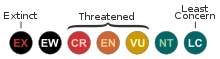
IUCN Red List
| Related Plants
|
| Latin Name | Common Name | Habit | Height | Hardiness | Growth | Soil | Shade | Moisture | Edible | Medicinal | Other |
| Artemisia abrotanum | Southernwood | Shrub | 1.2 |
4-8
| M | LMH | SN | DM | 1 | 3 | 3 |
| Artemisia absinthium | Wormwood, Absinthium. | Perennial | 1.0 |
4-9
| M | LM | SN | DM | 1 | 3 | 3 |
| Artemisia annua | Qing Hao, Sweet sagewort | Annual | 3.0 |
6-9
| F | LM | SN | DM | 1 | 4 | 2 |
| Artemisia anomala | Anomalous Wormwood | Perennial | 1.0 |
8-10
| M | LMH | SN | M | 0 | 2 | 0 |
| Artemisia arborescens | Tree Wormwood | Shrub | 1.0 |
8-10
| F | LM | N | DM | 0 | 2 | 3 |
| Artemisia argyi | Chinese Mugwort | Perennial | 1.5 |
4-9
| F | LM | SN | DM | 0 | 2 | 0 |
| Artemisia biennis | Biennial Wormwood | Annual/Biennial | 1.0 |
3-8
| F | LM | SN | DM | 1 | 1 | 1 |
| Artemisia californica | California Sagebrush | Shrub | 2.0 |
7-10
| F | LM | N | DM | 0 | 2 | 3 |
| Artemisia campestris glutinosa | Sticky Field Wormwood | Perennial | 1.5 |
5-9
| M | LM | SN | DM | 0 | 0 | 1 |
| Artemisia capillaris | Yin Chen Hao | Shrub | 0.5 |
6-9
| M | LM | SN | DM | 1 | 3 | 0 |
| Artemisia carruthii | Carruth Wormwood | Perennial | 0.4 |
4-9
| M | LM | N | DM | 1 | 0 | 0 |
| Artemisia caruifolia | Carrot-leaved Wormwood | Annual | 1.0 |
0-0
| | LM | SN | DM | 1 | 3 | 1 |
| Artemisia cina | Cina, Santonica | Shrub | 1.0 |
6-9
| M | LM | S | DM | 0 | 3 | 0 |
| Artemisia dracunculoides | Russian Tarragon, Tarragon, French Tarragon | Perennial | 1.0 |
5-8
| M | LM | SN | DM | 2 | 1 | 3 |
| Artemisia dracunculus | Tarragon, French Tarragon | Perennial | 0.6 |
5-9
| M | LM | SN | DM | 4 | 2 | 3 |
| Artemisia filifolia | Sand Sage, Sand sagebrush | Shrub | 1.2 |
3-7
| M | LM | SN | DM | 0 | 2 | 3 |
| Artemisia frigida | Fringed Wormwood, Prairie sagewort | Perennial | 0.3 |
3-8
| M | LM | N | DM | 2 | 2 | 3 |
| Artemisia glacialis | Glacier Wormwood | Perennial | 0.2 |
4-8
| S | LMH | N | DM | 1 | 2 | 0 |
| Artemisia gmelinii | Russian Wormwood, Gmelin's wormwood | Perennial | 1.5 |
3-7
| M | LMH | N | DM | 1 | 1 | 2 |
| Artemisia herba-alba | White Wormwood | Shrub | 0.3 |
7-10
| F | LM | N | DM | 0 | 3 | 3 |
| Artemisia indica | Indian Wormwood; Indian Mugwort | Annual/Perennial | 1.2 |
6-9
| F | LM | SN | DM | 3 | 3 | 2 |
| Artemisia japonica | Japanese Wormwood | Perennial | 1.0 |
7-10
| F | LMH | SN | DM | 1 | 2 | 1 |
| Artemisia keiskeana | Keiske’s Wormwood | Perennial | 0.6 |
5-8
| F | LMH | SN | DM | 2 | 1 | 2 |
| Artemisia laciniata | Siberian wormwood | Perennial | 1.0 |
3-7
| S | LMH | SN | DM | 1 | 0 | 0 |
| Artemisia lactiflora | White Mugwort | Perennial | 1.5 |
4-8
| S | LMH | SN | M | 0 | 2 | |
| Artemisia lancea | Lance-leaved Wormwood | Perennial | 1.2 |
4-9
| F | LMH | SN | DM | 1 | 1 | 0 |
| Artemisia ludoviciana | White Sage, Louisiana Sage, Prairie Sage, Western Mugwort | Perennial | 1.0 |
3-9
| M | LM | SN | DM | 2 | 2 | 2 |
| Artemisia ludoviciana gnaphalodes | White Sage | Perennial | 1.0 |
4-8
| M | LM | SN | DM | 0 | 2 | 1 |
| Artemisia maritima | Sea Wormwood | Shrub | 0.6 |
6-9
| M | LM | N | DM | 1 | 2 | 1 |
|
|
Growth: S = slow M = medium F = fast. Soil: L = light (sandy) M = medium H = heavy (clay). pH: A = acid N = neutral B = basic (alkaline). Shade: F = full shade S = semi-shade N = no shade. Moisture: D = dry M = Moist We = wet Wa = water.
Support Plants For A Future
Plants For A Future relies on regular donations to keep our free database and search facilities going, to pay for ongoing research, improvements and enhancements, and to develop and publish new books.
Read more
Choose Currency
Donate in £ GBP
Donate in $ USD
Donate in € EUR
Securely pay via PayPal or Credit/Debit Card without an account.
Expert comment
Author
L.
Botanical References
17
Links / References
For a list of references used on this page please go here
Readers comment
| Add a comment |
|
If you have important information about this plant that may help other users please add a comment or link below. Only comments or links that are felt to be directly relevant to a plant will be included. If you think a comment/link or information contained on this page is inaccurate or misleading we would welcome your feedback at [email protected]. If you have questions about a plant please use the Forum on this website as we do not have the resources to answer questions ourselves.
* Please note: the comments by website users are not necessarily those held by PFAF and may give misleading or inaccurate information.
|
Subject : Artemisia campestris
|
|
|
|