Translate this page:
Summary
Physical Characteristics

 Typha angustifolia is a PERENNIAL growing to 3 m (9ft) by 3 m (9ft).
See above for USDA hardiness. It is hardy to UK zone 3. It is in flower from June to July. The species is monoecious (individual flowers are either male or female, but both sexes can be found on the same plant) and is pollinated by Wind.
It is noted for attracting wildlife.
Suitable for: light (sandy), medium (loamy) and heavy (clay) soils. Suitable pH: mildly acid, neutral and basic (mildly alkaline) soils. It cannot grow in the shade. It prefers wet soil and can grow in water.
UK Hardiness Map
US Hardiness Map
Synonyms
Plant Habitats
Pond; Bog Garden;
Edible Uses
Edible Parts: Flowers Leaves Oil Pollen Root Seed Shoots Stem
Edible Uses: Oil
Roots - raw or cooked[12, 13, 46, 94]. They can be boiled and eaten like potatoes or macerated and then boiled to yield a sweet syrup[183]. The roots can also be dried, ground into a powder and then used as a thickener in soups etc or added to cereal flours[62]. Rich in protein, this powder is used to make biscuits etc[183]. Young shoots in spring - raw or cooked[2, 12, 94, 159, 183]. An asparagus substitute[62]. Base of mature stem - raw or cooked[62]. It is best to remove the outer part of the stem[62]. Young flowering stem - raw, cooked or made into a soup[85, 94, 183]. It tastes like sweet corn. Seed - cooked[183]. The seed is very small and fiddly to harvest, but it has a pleasant nutty taste when roasted[12]. An edible oil is obtained from the seed[85]. Due to the small size of the seed this is probably not a very worthwhile crop. Pollen - raw or cooked. A protein rich additive to flour used in making bread, porridge etc[12, 105, 183]. It can also be eaten with the young flowers[85], which makes it considerably easier to utilize[K]. The pollen can be harvested by placing the flowering stem over a wide but shallow container and then gently tapping the stem and brushing the pollen off with a fine brush[9]. This will help to pollinate the plant and thereby ensure that both pollen and seeds can be harvested[K].
References More on Edible Uses
Medicinal Uses
Plants For A Future can not take any responsibility for any adverse effects from the use of plants. Always seek advice from a professional before using a plant medicinally.
Anticoagulant Diuretic Emmenagogue Haemostatic Lithontripic Miscellany
The pollen is diuretic, emmenagogue and haemostatic[176]. The dried pollen is said to be anticoagulant, but when roasted with charcoal it becomes haemostatic[238]. It is used internally in the treatment of kidney stones, internal haemorrhage of almost any kind, painful menstruation, abnormal uterine bleeding, post-partum pains, abscesses and cancer of the lymphatic system[222, 238, 254]. It should not be prescribed for pregnant women[238]. Externally, it is used in the treatment of tapeworms, diarrhoea and injuries[238]. An infusion of the root has been used in the treatment of gravel[257].
References More on Medicinal Uses
The Bookshop: Edible Plant Books
Our Latest books on Perennial Plants For Food Forests and Permaculture Gardens in paperback or digital formats.
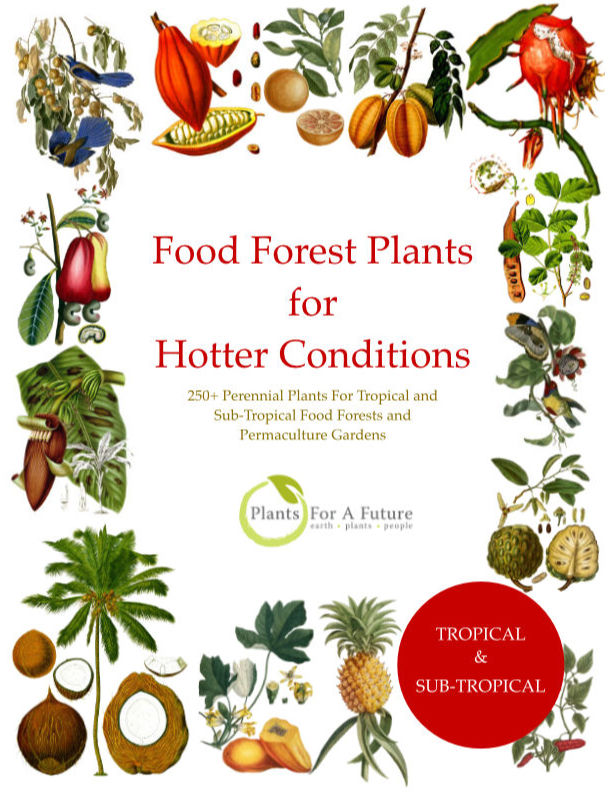
Edible Tropical Plants
Food Forest Plants for Hotter Conditions: 250+ Plants For Tropical Food Forests & Permaculture Gardens.
More
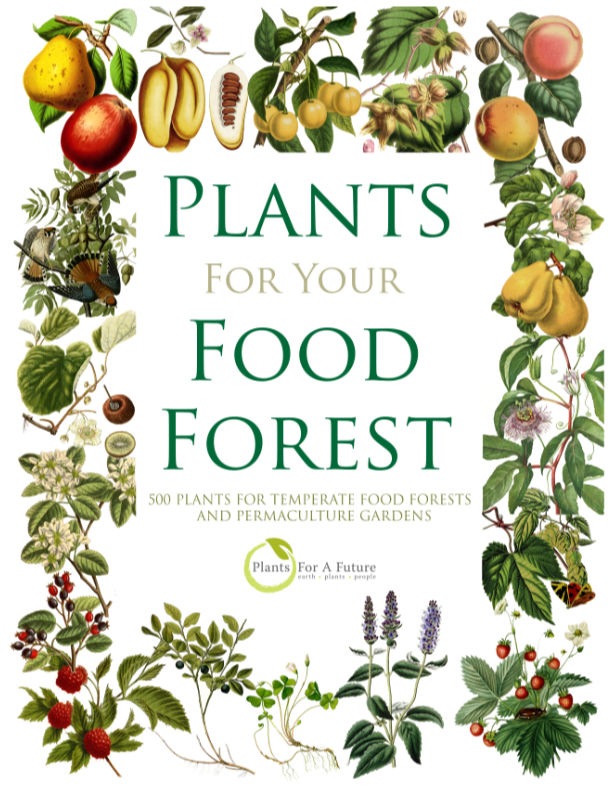
Edible Temperate Plants
Plants for Your Food Forest: 500 Plants for Temperate Food Forests & Permaculture Gardens.
More
More Books
PFAF have eight books available in paperback and digital formats. Browse the shop for more information.
Shop Now
Other Uses
Biomass Insulation Miscellany Oil Paper Soil stabilization Stuffing Thatching Tinder Weaving
The stems and leaves have many uses, they make a good thatch, can be used in making paper, can be woven into mats, chairs, hats etc[13, 46, 57, 61, 94]. They are a good source of biomass, making an excellent addition to the compost heap or used as a source of fuel etc. The hairs of the fruits are used for stuffing pillows etc[46, 57, 159]. They have good insulating and buoyancy properties[171]. The female flowers make an excellent tinder and can be lit from the spark of a flint[212]. The pollen is highly inflammable and is used in making fireworks[115]. This plants extensive root system makes it very good for stabilizing wet banks of rivers, lakes etc[200].
Special Uses
Attracts Wildlife Carbon Farming
References More on Other Uses
Cultivation details
Experimental Crop Industrial Crop: Biomass Industrial Crop: Fiber Management: Hay Staple Crop: Protein
A very easily grown plant, it grows in boggy pond margins or in shallow water up to 15cm deep[17]. It requires a rich soil if it is to do well[17]. Succeeds in sun or part shade. A very invasive plant spreading freely at the roots when in a suitable site, it is not suitable for growing in small areas. Unless restrained by some means, such as a large bottomless container, the plant will soon completely take over a site and will grow into the pond, gradually filling it in. This species will often form an almost complete monoculture in boggy soil. The dense growth provides excellent cover for water fowl[1].
Carbon Farming
-
Experimental Crop
Plant breeders are testing these plants to see if they could be domesticated for cultivation, but they are still in an experimental phase. Examples include milkweed and leafy spurge.
-
Industrial Crop: Biomass
Three broad categories: bamboos, resprouting woody plants, and giant grasses. uses include: protein, materials (paper, building materials, fibers, biochar etc.), chemicals (biobased chemicals), energy - biofuels
-
Industrial Crop: Fiber
Clothing, rugs, sheets, blankets etc. Currently, almost none of our fiber are produced from perennial crops but could be!
-
Management: Hay
Cut to the ground and harvested annually. Non-destructive management systems maintaining the soil organic carbon.
-
Staple Crop: Protein
(16+ percent protein, 0-15 percent oil). Annuals include beans, chickpeas, lentils, cowpeas, and pigeon peas. Perennials include perennial beans, nuts, leaf protein concentrates, and edible milks.
References Carbon Farming Information and Carbon Sequestration Information
Temperature Converter
Type a value in the Celsius field to convert the value to Fahrenheit:
Fahrenheit:
The PFAF Bookshop
Plants For A Future have a number of books available in paperback and digital form. Book titles include Edible Plants, Edible Perennials, Edible Trees,Edible Shrubs, Woodland Gardening, and Temperate Food Forest Plants. Our new book is Food Forest Plants For Hotter Conditions (Tropical and Sub-Tropical).
Shop Now
Plant Propagation
Seed - surface sow in a pot and stand it in 3cm of water. Pot up the young seedlings as soon as possible and, as the plants develop, increase the depth of water. Plant out in summer. Division in spring. Very easy, harvest the young shoots when they are about 10 - 30cm tall, making sure there is at least some root attached, and plant them out into their permanent positions.
Other Names
If available other names are mentioned here
Native Range
TEMPERATE ASIA: Afghanistan (northeast), Israel, Jordan, Lebanon, Syria, Turkey, Russian Federation-Ciscaucasia (Ciscaucasia), Armenia, Azerbaijan, Georgia, Russian Federation (Dagestan), Russian Federation-Western Siberia (Western Siberia), Russian Federation-Eastern Siberia (Eastern Siberia), Kazakhstan, Uzbekistan, Mongolia, China (north) NORTHERN AMERICA: Canada (Québec, Nova Scotia, Ontario, Prince Edward Island, New Brunswick, Saskatchewan, Manitoba), United States (Indiana, Maine, Massachusetts, Michigan, New Hampshire, New Jersey, New York, Ohio, Pennsylvania, Rhode Island, Vermont, West Virginia, Connecticut, Iowa, Kansas, Minnesota, Missouri, Nebraska, North Dakota, South Dakota, Illinois, Oklahoma (northwest), Wisconsin, Colorado, Wyoming, Delaware, Kentucky (north), Maryland, North Carolina, South Carolina, Virginia) EUROPE: Denmark, Finland, United Kingdom, Ireland, Norway, Sweden, Austria, Belgium, Switzerland, Czech Republic, Germany, Hungary, Netherlands, Poland, Slovakia, Russian Federation (European part), Belarus, Estonia, Lithuania, Latvia, Moldova, Russian Federation (Kalmykija, Respublika, Astrakhan, Saratov, Volgogradskaja oblast), Ukraine, Bulgaria, Croatia, Italy, Montenegro, Romania, Serbia, Slovenia, Spain, France, Portugal AFRICA: Algeria, Libya, Morocco
Weed Potential
Right plant wrong place. We are currently updating this section.
Please note that a plant may be invasive in one area but may not in your area so it’s worth checking.
Conservation Status
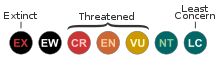
IUCN Red List of Threatened Plants Status :
Growth: S = slow M = medium F = fast. Soil: L = light (sandy) M = medium H = heavy (clay). pH: A = acid N = neutral B = basic (alkaline). Shade: F = full shade S = semi-shade N = no shade. Moisture: D = dry M = Moist We = wet Wa = water.
Expert comment
Author
L.
Botanical References
17200270
Links / References
For a list of references used on this page please go here
Readers comment