Translate this page:
Summary
Creeping barberry—commonly called Oregon grape in northern regions—is a low-growing, evergreen shrub that forms dense mats in coniferous forests and montane meadows across western North America. Unlike its taller, woody relatives, it serves primarily as a groundcover species, providing edible blue berries, striking yellow spring flowers, and brilliant red-bronze foliage in autumn. Its berries, though small and seedy, are pleasantly tart and rich in vitamin C, making them useful for jellies, juices, and syrups. Ecologically, it is one of the most important understory shrubs in western forests, stabilizing soil and providing food and habitat for wildlife. Creeping Oregon Grape (M. repens) is native to dry, rocky areas of the western United States. The berries are edible, though somewhat tart. It is drought-tolerant and can grow in poor, sandy, or rocky soils. It is used for ground cover. Bloom Color: Yellow. Main Bloom Time: Early spring, Late spring, Mid spring. Form: Prostrate. This name is a synonym of Berberis repens.
Physical Characteristics

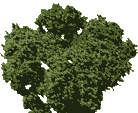 Mahonia repens is an evergreen Shrub growing to 0.3 m (1ft) by 2 m (6ft 7in) at a medium rate.
See above for USDA hardiness. It is hardy to UK zone 5. It is in leaf all year, in flower from April to May. The species is hermaphrodite (has both male and female organs) and is pollinated by Insects. The plant is self-fertile.
It is noted for attracting wildlife.
Suitable for: light (sandy), medium (loamy) and heavy (clay) soils and can grow in heavy clay soil. Suitable pH: mildly acid, neutral and basic (mildly alkaline) soils. It can grow in semi-shade (light woodland) or no shade. It prefers dry or moist soil.
UK Hardiness Map
US Hardiness Map
Synonyms
M. nana. Berberis nana. B. repens.
Plant Habitats
Woodland Garden Sunny Edge; Dappled Shade; Ground Cover;
Edible Uses
Edible Parts: Fruit Oil
Edible Uses: Oil
Fruit - raw or cooked[85, 183]. The berries are edible and make excellent jelly, syrup, or juice when sweetened. Their flavor is pleasantly tart, similar to currants or unsweetened blueberries. The fruits are too sour to eat in large quantities raw but have good nutritional value and were historically a valuable wild food [2-3]. An acid flavour but it is rather nice raw, especially when added to muesli or porridge[K]. Unfortunately, there is relatively little flesh and a lot of seeds[K]. Used for making jams. jellies etc. They can also be made into a refreshing lemonade-like beverage[183]. When sugar is added, the fruit juice is similar to grape juice[212]. The fruit is about 9mm in diameter[200]. Taste, Processing & Kitchen Notes: Fresh berries have a sharp, sour flavor due to natural malic and citric acids. Cooking softens the seeds and releases the deep purple-red pigment into the liquid, producing a rich juice similar to grape or black currant. When sweetened, it becomes refreshing and flavorful. To prepare, simmer the berries gently for 15–20 minutes, mash, and strain through muslin. The strained juice can be sweetened and reduced into syrup or combined with apple or crabapple juice for jelly. Dried berries become leathery and somewhat sweeter. Because of the high acidity, creeping barberry is ideal for preserves and beverages rather than fresh eating. Seasonality (Phenology): Creeping barberry flowers from April to July depending on elevation. Fruits ripen from mid-summer through early autumn (July–September) and may persist into early frost. Evergreen leaves provide color year-round, shifting from green to bronze as temperatures cool. Harvest & Processing Workflow: Harvest berries in mid- to late summer when blue-purple and easily detached. Gently strip clusters by hand or clip with scissors. Rinse to remove dust, mash, and simmer for juice extraction. Strain and sweeten for syrups or jellies. Berries can also be air-dried for teas or snacks. Traditional / Indigenous Use Summary: Tribes including the Kootenai, Salish, and Blackfoot used creeping barberry for food, dye, and medicine. The berries were dried, mashed, or cooked into sauces, while roots and stems yielded yellow dye and medicinal teas for stomach ailments. It also featured in traditional beverages mixed with chokecherries or serviceberries.
References More on Edible Uses
Medicinal Uses
Plants For A Future can not take any responsibility for any adverse effects from the use of plants. Always seek advice from a professional before using a plant medicinally.
Alterative Anaphrodisiac Antibacterial Antiseptic Antitumor Cholagogue Depurative Diuretic
Dysentery Expectorant Febrifuge Laxative Salve Tonic
The root and root bark is alterative, anaphrodisiac, antiseptic, cholagogue, depurative, diuretic, expectorant, febrifuge, laxative and tonic[4, 238]. It improves the digestion and absorption and is taken internally in the treatment of coughs, fevers, psoriasis, syphilis, haemorrhages, stomach complaints, kidney problems and impure blood conditions[4, 238, 257]. Externally, it is used as an antiseptic and healing wash or poultice on wounds and rheumatic joints[257]. The roots are harvested in late autumn or early spring and dried for later use[238]. A poultice of the fresh berries has been applied to boils[257]. Berberine, universally present in rhizomes of Mahonia species, has marked antibacterial effects[218] and is used as a bitter tonic[213]. Since it is not appreciably absorbed by the body, it is used orally in the treatment of various enteric infections, especially bacterial dysentery[218]. It should not be used with Glycyrrhiza species (Liquorice) because this nullifies the effects of the berberine[218]. Berberine has also shown antitumour activity[218]. The root and root bark are best harvested in the autumn[213].
References More on Medicinal Uses
The Bookshop: Edible Plant Books
Our Latest books on Perennial Plants For Food Forests and Permaculture Gardens in paperback or digital formats.
Edible Tropical Plants
Food Forest Plants for Hotter Conditions: 250+ Plants For Tropical Food Forests & Permaculture Gardens.
More
Edible Temperate Plants
Plants for Your Food Forest: 500 Plants for Temperate Food Forests & Permaculture Gardens.
More
More Books
PFAF have eight books available in paperback and digital formats. Browse the shop for more information.
Shop Now
Other Uses
Dye Oil Soil stabilization
Creeping barberry is a vital forest groundcover that unites beauty, utility, and resilience. Its berries offer modest but valuable nutrition, while its evergreen foliage enriches soil health and biodiversity. For gardeners and foragers alike, it represents the intersection of ecological function and edible potential. Agroforestry uses: Mahonia can be used as a hedge or ornamental plant and provides ground cover. The dense foliage offers shelter for wildlife and beneficial insects, and the berries attract birds.
Landscape Uses: Border, Erosion control, Ground cover, Massing.
A yellow dye is obtained from the inner bark of the stem and roots[155, 257]. It is green[168]. Dark green, violet and dark blue-purple dyes are obtained from the fruit[168]. A green dye is obtained from the leaves[168]. Plants form suckers freely, making a good dense ground cover[11, 200], though they can be slow to become established[197] and will need weeding for their first few years after planting out[K]. The sub-species M. repens rotundifolia has been especially recommended[197]. A useful plant for preventing soil erosion on slopes[155]. 1. Nectary - Flowers rich in nectar and pollen: Yes – Mahonia species produce clusters of yellow flowers that are rich in nectar and attract a variety of pollinators, especially bees and butterflies. 2. Wildlife - Food (Fruit, Seeds, Leaf litter, Shelter, Nesting, Roosting): Yes – The berries of Mahonia species are edible for birds and other wildlife, making them an important food source. The dense evergreen foliage also provides excellent shelter for small birds and insects, and it can offer nesting and roosting sites for birds. 3. Invertebrate Shelter (Overwintering sites, Leaf litter, Groundcover): Yes – The evergreen foliage and rough stems of Mahonia provide overwintering sites for invertebrates. The leaf litter from these plants can create a microhabitat for insects and small ground-dwelling organisms. 4. Pest Confuser (Smell): No – Mahonia species do not have a particularly strong or confusing scent that would act as a pest deterrent. Ecologically, it is one of the most important understory shrubs in western forests, stabilizing soil and providing food and habitat for wildlife. Cultivar / Selection Notes: Cultivated selections exist for ornamental use, often labeled “Oregon Grape.” Notable forms include those with red winter foliage or denser mat-forming growth. Cultivars such as Mahonia repens ‘Compacta’ or ‘Nana’ are popular in cold-climate landscaping.
Special Uses
Food Forest Ground cover Scented Plants
References More on Other Uses
Cultivation details
An easily grown plant, it thrives in any good garden soil[11], preferring one on the dryish side. Grows well in heavy clay soils. Succeeds in the light shade of trees[K]. This species is hardy to about -15°c if growing in a sheltered position[184]. Established plants sucker freely and form quite dense thickets[200]. The flowers are scented[245]. Resistant to honey fungus[88]. Special Features:
North American native, Attractive flowers or blooms. The plant is heat tolerant in zones 8 through 3. (Plant Hardiness Zones show how well plants withstand cold winter temperatures.
Plant Heat Zones show when plants would start suffering from the heat.
The Plant Heat Zone map is based on the number of "heat days" experienced in a given area where the temperature climbs to over 86 degrees F (30°C).
At this temperature, many plants begin to suffer physiological damage. Heat Zones range from 1 (no heat days) to 12 (210 or more heat days).
For example Heat Zone. 11-1 indicates that the plant is heat tolerant in zones 11 through 1.) For polyculture design as well as the above-ground architecture (form - tree, shrub etc. and size shown above) information on the habit and root pattern is also useful and given here if available. An evergreen. A clumping plant, forming a colony from shoots away from the crown but with a limited spread [1-2]. The root pattern is stoloniferous rooting from creeping stems above the ground [1-2]. The berries are typically harvested in late summer to early autumn when they are fully ripe.
Mahonia flowers in late winter to early spring producing clusters of yellow flowers.
Mahonia species are moderate to fast growers, typically reaching maturity in about 2 to 3 years, depending on the specific species and growing conditions. Mahonia species are generally self-fertile, but cross-pollination can improve fruit set.
References Carbon Farming Information and Carbon Sequestration Information
Temperature Converter
Type a value in the Celsius field to convert the value to Fahrenheit:
Fahrenheit:
The PFAF Bookshop
Plants For A Future have a number of books available in paperback and digital form. Book titles include Edible Plants, Edible Perennials, Edible Trees,Edible Shrubs, Woodland Gardening, and Temperate Food Forest Plants. Our new book is Food Forest Plants For Hotter Conditions (Tropical and Sub-Tropical).
Shop Now
Plant Propagation
Seed - best sown as soon as it is ripe in a cold frame[78]. It usually germinates in the spring[K]. 'Green' seed (harvested when the embryo has fully developed but before the seed case has dried) should be sown as soon as it is harvested and germinates within 6 weeks[K]. Stored seed should be sown as soon as possible in late winter or spring. 3 weeks cold stratification will improve its germination, which should take place in 3 - 6 months at 10°c. Prick out the seedlings when they are large enough to handle and grow them on in a cold frame for at least their first winter. Plant them out in late spring or early summer. Division of suckers in spring[78]. Whilst they can be placed direct into their permanent positions, better results are achieved if they are potted up and placed in a frame until established[11]. Leaf cuttings in the autumn.
Other Names
If available other names are mentioned here
Creeping Oregon Grape, Creeping barberry, Grape Oregon, Mahonia nana. Berberis nana. Berberis repens.
Native Range
NORTHERN AMERICA: Canada, Alberta (south), British Columbia (south), United States, Minnesota (central), Nebraska (northwest), South Dakota (w. & n.e.), Colorado, Idaho, Montana, Oregon, Washington, Wyoming, New Mexico, Texas, Arizona, California (northeast), Nevada, Utah,
Weed Potential
Right plant wrong place. We are currently updating this section.
Please note that a plant may be invasive in one area but may not in your area so it's worth checking.
This species is non-invasive and spreads slowly by rhizomes within confined areas. It poses no ecological threat outside its native range.
Conservation Status
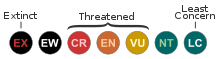
IUCN Red List of Threatened Plants Status :
| Related Plants
|
| Latin Name | Common Name | Habit | Height | Hardiness | Growth | Soil | Shade | Moisture | Edible | Medicinal | Other |
| Mahonia aquifolium | Oregon Grape, Hollyleaved barberry, Oregon Holly Grape, Oregon Holly | Shrub | 2.0 |
4-8
| F | LMH | FSN | DM | 3 | 3 | 3 |
| Mahonia bealei | Beale's barberry, Leatherleaf Mahonia | Shrub | 2.0 |
5-8
| S | LMH | FSN | M | 3 | 2 | 0 |
| Mahonia confusa | | Shrub | 1.5 |
6-9
| | LMH | FS | M | 3 | 2 | |
| Mahonia flavida | | Shrub | 2.0 |
7-10
| | LMH | FSN | M | 2 | 0 | |
| Mahonia fortunei | Fortune's Mahonia | Shrub | 2.0 |
7-9
| S | LMH | FSN | M | 3 | 2 | |
| Mahonia fremontii | Mahonia, Fremont's mahonia | Shrub | 2.5 |
7-10
| S | LMH | N | DM | 4 | 2 | 3 |
| Mahonia ganpinensis | | Shrub | 0.0 |
-
| | LMH | SN | M | 1 | 2 | |
| Mahonia gracilipes | | Shrub | 1.5 |
6-9
| | LMH | FS | M | 2 | 2 | |
| Mahonia gracilis | Mexican Barberry | Shrub | 1.5 |
7-10
| | LMH | N | DM | 2 | 0 | |
| Mahonia haematocarpa | Red barberry, Mexican Barberry | Shrub | 3.0 |
6-9
| | LMH | N | DM | 4 | 2 | 3 |
| Mahonia japonica | | Shrub | 2.0 |
5-9
| | LMH | FSN | M | 3 | 2 | |
| Mahonia lomariifolia | Chinese hollygrape | Shrub | 5.0 |
8-9
| M | LMH | SN | M | 3 | 2 | 0 |
| Mahonia napaulensis | | Shrub | 2.5 |
5-9
| | LMH | SN | M | 3 | 2 | 1 |
| Mahonia nervosa | Oregon Grape, Cascade barberry | Shrub | 0.6 |
5-9
| M | LMH | FSN | DM | 3 | 2 | 3 |
| Mahonia nevinii | Nevin's barberry | Shrub | 2.4 |
7-10
| | LMH | N | DM | 3 | 2 | 2 |
| Mahonia pinnata | California Barberry, Wavyleaf barberry, Island barberry, Creeping Holly Grape | Shrub | 1.8 |
7-8
| F | LMH | SN | M | 3 | 2 | 2 |
| Mahonia pumila | Dwarf Barberry | Shrub | 0.3 |
6-9
| S | LM | SN | DM | 3 | 2 | 3 |
| Mahonia swaseyi | Texas Mahonia, Texas barberry | Shrub | 2.5 |
7-10
| | LMH | N | DM | 3 | 2 | |
| Mahonia trifoliolata | Threeleaf Barberry, Mexican Barberry, Algerita | Shrub | 2.0 |
6-10
| | LMH | N | DM | 4 | 2 | 4 |
| Mahonia x media | | Shrub | 2.0 |
6-9
| | LMH | FSN | M | 3 | 2 | 0 |
|
Growth: S = slow M = medium F = fast. Soil: L = light (sandy) M = medium H = heavy (clay). pH: A = acid N = neutral B = basic (alkaline). Shade: F = full shade S = semi-shade N = no shade. Moisture: D = dry M = Moist We = wet Wa = water.
Now available:
Food Forest Plants for Mediterranean Conditions
350+ Perennial Plants For Mediterranean and Drier Food Forests and Permaculture Gardens.
[Paperback and eBook]
This is the third in Plants For A Future's series of plant guides for food forests tailored to
specific climate zones. Following volumes on temperate and tropical ecosystems, this book focuses
on species suited to Mediterranean conditions—regions with hot, dry summers and cool, wet winters,
often facing the added challenge of climate change.
Read More
Expert comment
Author
(Lindl.)G.Don.
Botanical References
11200
Links / References
For a list of references used on this page please go here
Readers comment
| Add a comment |
|
If you have important information about this plant that may help other users please add a comment or link below. Only comments or links that are felt to be directly relevant to a plant will be included. If you think a comment/link or information contained on this page is inaccurate or misleading we would welcome your feedback at [email protected]. If you have questions about a plant please use the Forum on this website as we do not have the resources to answer questions ourselves.
* Please note: the comments by website users are not necessarily those held by PFAF and may give misleading or inaccurate information.
|
|