 |
|
edibleplants.org |
 |
| Reuben C. J. Lim - Flickr |
Translate this page:
Summary
Taxonomic Note: This genus was formerly classified in the family Asclepiadaceae. Modern classifications include it within the Apocynaceae.
Physical Characteristics

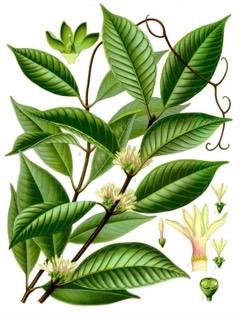
 Willughbeia coriacea is an evergreen Climber growing to 30 m (98ft) by 0.2 m (0ft 8in) at a fast rate.
See above for USDA hardiness. It is hardy to UK zone 10.
Suitable for: light (sandy), medium (loamy) and heavy (clay) soils. Suitable pH: mildly acid, neutral and basic (mildly alkaline) soils. It can grow in semi-shade (light woodland) or no shade. It prefers moist or wet soil.
UK Hardiness Map
US Hardiness Map
Synonyms
Ancylocladus coriaceus (Wall.) Kuntze Ancylocladus firmus (Blume) Kuntze Ancylocladus minutiflorus Pierre Ancylocladus nodosus Pierre Ancylocladus vriesianus Pierre Tabernaemontana macrocarpa Korth. ex Blume Willughbeia burbidgei Dyer Willughbeia firma Blume Willughbeia minutiflora (Pierre) K.Schum Willughbeia nodosa (Pierre) K.Schum Willughbeia vrieseana (Pierre) K.Schum
Plant Habitats
Edible Uses
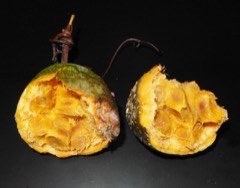
Edible Parts: Fruit
Edible Uses:
Fruit[317 ].
References More on Edible Uses
Medicinal Uses
Plants For A Future can not take any responsibility for any adverse effects from the use of plants. Always seek advice from a professional before using a plant medicinally.
The latex is used medicinally[317 ].
References More on Medicinal Uses
Other Uses
A latex obtained from the plant makes a good quality rubber[46 ].
Special Uses
Carbon Farming
References More on Other Uses
Cultivation details
Industrial Crop: Hydrocarbon Management: Standard Regional Crop
Humid tropics. Before the introduction of Hevea brasiliensis as the main source of rubber W. coriacea was cultivated in plantations to produce a high quality rubber.
Carbon Farming
-
Industrial Crop: Hydrocarbon
Materials, chemicals and energy include bioplastics, rubber, biomass products gasoline, jet fuel, diesel, butane, propane, biogas. Plants are usually resprouting plants and saps.
-
Management: Standard
Plants grow to their standard height. Harvest fruit, seeds, or other products. Non-Destructive management systems.
-
Regional Crop
These crops have been domesticated and cultivated regionally but have not been adopted elsewhere and are typically not traded globally, Examples in this broad category include perennial cottons and many nuts and staple fruits.
References Carbon Farming Information and Carbon Sequestration Information
Temperature Converter
Type a value in the Celsius field to convert the value to Fahrenheit:
Fahrenheit:
Plant Propagation
Seed
Other Names
If available other names are mentioned here
Akar garok, Akar gerit hitam, Akar getah gaharu, Akar getah menjawa, Akar getah gegerip jantan, Akar getah jela, Akar getah ujul, Akar kubal, Akar jitan, Akar jualoh, Buah surga, Karet akar grutuk, Kelang, Lumbu jawa, Puchong kapur,
Native Range
TROPICAL ASIA: Laos, Thailand (south), Brunei Darussalam, Indonesia (Jawa, Kalimantan, Sumatera), Malaysia, Singapore
Weed Potential
Right plant wrong place. We are currently updating this section.
Please note that a plant may be invasive in one area but may not
in your area so it's worth checking.
None Known
Conservation Status
IUCN Red List of Threatened Plants Status : This taxon has not yet been assessed
IUCN Red List
Growth: S = slow M = medium F = fast. Soil: L = light (sandy) M = medium H = heavy (clay). pH: A = acid N = neutral B = basic (alkaline). Shade: F = full shade S = semi-shade N = no shade. Moisture: D = dry M = Moist We = wet Wa = water.
Support Plants For A Future
Plants For A Future relies on regular donations to keep our free database and search facilities going, to pay for ongoing research, improvements and enhancements, and to develop and publish new books.
Read more
Choose Currency
Donate in £ GBP
Donate in $ USD
Donate in € EUR
Securely pay via PayPal or Credit/Debit Card without an account.
Expert comment
Author
Wall.
Botanical References
Links / References
For a list of references used on this page please go here
A special thanks to Ken Fern for some of the information used on this page.
Readers comment
| Add a comment |
|
If you have important information about this plant that may help other users please add a comment or link below. Only comments or links that are felt to be directly relevant to a plant will be included. If you think a comment/link or information contained on this page is inaccurate or misleading we would welcome your feedback at [email protected]. If you have questions about a plant please use the Forum on this website as we do not have the resources to answer questions ourselves.
* Please note: the comments by website users are not necessarily those held by PFAF and may give misleading or inaccurate information.
|
Subject : Willughbeia coriacea
|
|
|
|