Translate this page:
Summary
Softstem bulrush is a cosmopolitan wetland builder with round, pliant culms; thick rhizomes; and dependable seedheads. Foragers value it for sweet, carbohydrate-rich rhizome broth and nutty seed flour, while ecologists deploy it for nutrient capture, bank stabilization, and wildlife structure. USDA Zones 4–10. Height usually 1–2.5 m, spreading 1–3 m or more in favorable, shallow water. Best as sweet rhizome liquor and toasted seed flour; stems are chewable but low-calorie.
Physical Characteristics

 Schoenoplectus tabernaemontani is an evergreen Perennial growing to 2 m (6ft) by 2 m (6ft) at a fast rate.
See above for USDA hardiness. It is hardy to UK zone 5 and is not frost tender. The flowers are pollinated by Wind.
It is noted for attracting wildlife.
Suitable for: light (sandy), medium (loamy) and heavy (clay) soils. Suitable pH: neutral and basic (mildly alkaline) soils and can grow in very alkaline and saline soils.
It cannot grow in the shade. It prefers wet soil and can grow in water.
UK Hardiness Map
US Hardiness Map
Synonyms
Homotypic Synonyms: Cyperus tabernaemontani (C.C.Gmel.) Missbach & E.H.L.Krause. Eleogiton tabernaemontani (C.C.Gmel.) Fourr. Heleogiton tabernaemontani (C.C.Gmel.) Peterm. Heleophylax tabernaemontani (C.C.Gmel.) Schinz & Thell. Hymenochaeta tabernaemontani (C.C.Gmel.) Nakai. S. lacustris subsp. tabernaemontani (C.C.Gmel.) Á.Löve & D.Löve. Scirpus lacustris var. tabernaemontani (C.C.Gmel.) Döll. Scirpus lacustris subsp. tabernaemontani (C.C.Gmel.) Syme. Scirpus maritimus subsp. tabernaemontani (C.C.Gmel.) Nyman. Scirpus tabernaemontani C.C.Gmel.
Plant Habitats
Edible Uses
Edible Uses & Rating: Rhizomes and achenes are the main foods; stem bases contribute chewable fiber with small starch reserves; pollen can be collected as a yellow meal in season. The rhizome liquor is unusually sweet and clean [2-3]. Edibility rating: 4/5, especially as a broth/flour resource. Taste, Processing & Kitchen Notes: Boiling chopped rhizomes releases soluble carbohydrates into a translucent, gently sweet liquor reminiscent of barley water. Reducing the concentration of sweetness for a pleasant beverage or soup base. Rhizome flesh itself can be fibrous; mashing and pressing separate a soft starch fraction. Seeds roasted and milled produce a toasty, nut-cereal profile; blending with other flours enhances crumb and cohesion [2-3]. Seasonality (Phenology): Shoots resume in spring, flowering occurs early to mid-summer, and seeds mature in late summer. Rhizomes are best lifted late autumn through winter when carbohydrate stores peak [2-3]. Safety & Cautions (Food Use): Collect only from uncontaminated waters; emergent macrophytes can accumulate metals and organics. Rinse rhizomes free of silt before cooking; dry seeds thoroughly. Harvest & Processing Workflow: In late autumn, pry up rhizome segments with a fork or spade at the outer edge of clumps. Rinse, slice, and simmer; decant the sweet liquor and reduce to the desired intensity. For a starch paste, mash hot rhizomes and press through a sieve. For seeds, clip mature heads, dry, rub, winnow, toast, and mill. Look-Alikes & Confusion Risks: Confusion with S. acutus (tule) is common; both have round stems, but softstem is more pliant and paler. Triangular-stemmed Schoenoplectus and corm-bearing Bolboschoenus are separable by stem cross-section and underground organ type. Traditional/Indigenous Use Summary: Widespread Indigenous use for rhizome foods, seed meal, pollen meal, and extensive material culture including mats, thatch, and cordage. The sweet rhizome broth is consistent with historical accounts of nutrient drinks from emergent sedges.
References More on Edible Uses
Medicinal Uses
Plants For A Future can not take any responsibility for any adverse effects from the use of plants. Always seek advice from a professional before using a plant medicinally.
The root of this plant is also considered to have medicinal properties and is an astringent and diuretic. The stem pith is haemostatic. A poultice of the stem pith has been placed under a dressing in order to stop wounds bleeding [2-6].
References More on Medicinal Uses
The Bookshop: Edible Plant Books
Our Latest books on Perennial Plants For Food Forests and Permaculture Gardens in paperback or digital formats.
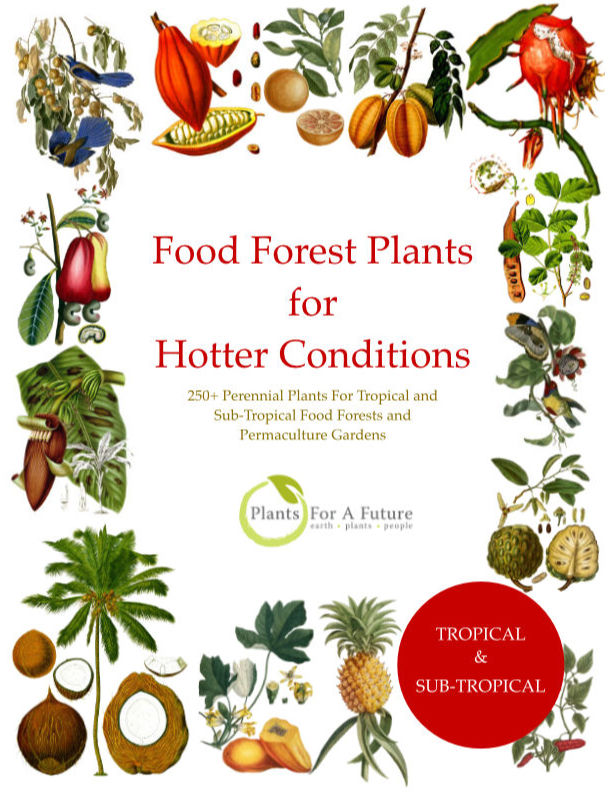
Edible Tropical Plants
Food Forest Plants for Hotter Conditions: 250+ Plants For Tropical Food Forests & Permaculture Gardens.
More
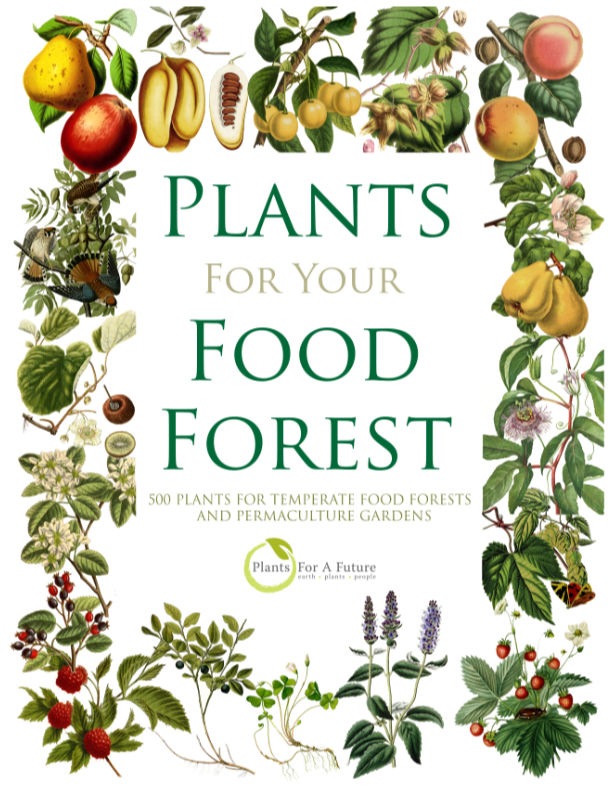
Edible Temperate Plants
Plants for Your Food Forest: 500 Plants for Temperate Food Forests & Permaculture Gardens.
More
More Books
PFAF have eight books available in paperback and digital formats. Browse the shop for more information.
Shop Now
Other Uses
A cosmopolitan edible and a workhorse of wetland function, softstem bulrush offers dependable seed and rhizome resources while delivering first-rate ecological services. In New Zealand, the culms were occasionally used by Maori along with the korari of the flax Phormium tenax to make rafts and a flooring in waka [2-6]. Widespread Indigenous use for rhizome foods, seed meal, pollen meal, and extensive material culture, including mats, thatch, and cordage. Ecology & Wildlife: A keystone emergent for waterfowl feeding and nesting, amphibian refuge, and macroinvertebrate production. Stands support red-winged blackbird nesting and provide perch/cover mosaics for marsh predators and prey.
Special Uses
References More on Other Uses
Cultivation details
Identification & Habit: This is the “soft-to-the-squeeze” round-stem bulrush: culms are circular in cross-section, smooth, bluish-green, and easily indented by thumb pressure. The inflorescence is a lateral-appearing cluster near the apex, subtended by a bract that continues the culm line. Rhizomes are thick, fibrous, and branching; cut surfaces show dull-white tissue, sometimes with pink or yellow tints. Height usually 1–2.5 m, spreading 1–3 m or more in favorable, shallow water. Growing Conditions: Performs in shallow water (5–30 cm) or saturated soils, full sun preferred. Adaptable to a range of mineral and organic sediments with pH 6–8. Tolerates moderate nutrient loads and is widely used in constructed wetlands for polishing effluent. Habitat & Range: Widespread across North America, Europe, Asia, Africa, and Australasia in lakeshores, marshes, and low-energy river margins. In the Southwest it is frequent in reservoirs, stock ponds, and natural marshes. Size & Landscape Performance: Forms tall, elegant drifts that read as vertical ribbons in designed wetlands. It traps sediment, reduces wave energy, and offers year-round cover. Dead culms persist into winter, maintaining structure for wildlife. Cultivation (Horticulture): Plant rhizome divisions into pond shelves or saturated basins. Maintain stable hydrology during establishment. Once rooted, clumps expand steadily; thinning may be needed to preserve open water. Pests & Problems: Few insect issues; lodging in high winds can occur late season. Excessive drawdown may expose rhizomes to frost heaving at high latitudes. Tall, soft, spongy stems; small, brownish spikelets. It is anemophilous (wind-pollinated), matching the rest of the bulrush group, with rare incidental insect involvement.
References Carbon Farming Information and Carbon Sequestration Information
Temperature Converter
Type a value in the Celsius field to convert the value to Fahrenheit:
Fahrenheit:
The PFAF Bookshop
Plants For A Future have a number of books available in paperback and digital form. Book titles include Edible Plants, Edible Perennials, Edible Trees,Edible Shrubs, Woodland Gardening, and Temperate Food Forest Plants. Our new book is Food Forest Plants For Hotter Conditions (Tropical and Sub-Tropical).
Shop Now
Plant Propagation
Best by rhizome division in late winter or early spring. Seed will germinate after cold stratification; sow on saturated media with light exposure.
Other Names
If available other names are mentioned here
Grey Club-rush, Softstem Bulrush, Great Bulrush
Native Range
US. USA. Afghanistan, Alabama, Alaska, Albania, Alberta, Algeria, Altay, Amur, Argentina Northeast, Argentina Northwest, Arizona, Arkansas, Austria, Bahamas, Baleares, Baltic States, Bangladesh, Belarus, Belgium, Bermuda, Brazil South, British Columbia, Bulgaria, Buryatiya, California, Cayman Is., Central European Russia, China North-Central, China South-Central, China Southeast, Chita, Colorado, Connecticut, Corse, Costa Rica, Cuba, Czechia-Slovakia, Delaware, Denmark, District of Columbia, East Aegean Is., East European Russia, Finland, Florida, France, Georgia, Germany, Great Britain, Greece, Guatemala, Hawaii, Honduras, Hungary, Idaho, Illinois, Indiana, Inner Mongolia, Iowa, Iran, Ireland, Irkutsk, Italy, Jamaica, Japan, Kamchatka, Kansas, Kazakhstan, Kentucky, Khabarovsk, Kirgizstan, Korea, Krasnoyarsk, Kriti, Krym, Kuril Is., Labrador, Lebanon-Syria, Leeward Is., Louisiana, Magadan, Maine, Manchuria, Manitoba, Maryland, Massachusetts, Mexico Central, Mexico Gulf, Mexico Northeast, Mexico Southeast, Mexico Southwest, Michigan, Minnesota, Mississippi, Missouri, Montana, Morocco, Myanmar, Nansei-shoto, Nebraska, Nepal, Netherlands, Nevada, New Brunswick, New Caledonia, New Guinea, New Hampshire, New Jersey, New Mexico, New South Wales, New York, New Zealand North, New Zealand South, Newfoundland, Nicaragua, Norfolk Is., North Carolina, North Caucasus, North Dakota, North European Russia, Northwest European Russia, Northwest Territories, Norway, Nova Scotia, NW. Balkan Pen., Ohio, Oklahoma, Ontario, Oregon, Pakistan, Palestine, Paraguay, Pennsylvania, Philippines, Poland, Portugal, Primorye, Prince Edward I., Puerto Rico, Qinghai, Queensland, Québec, Rhode I., Romania, Sakhalin, Sardegna, Saskatchewan, Sicilia, South Australia, South Carolina, South Dakota, South European Russia, Spain, Sudan-South Sudan, Sweden, Switzerland, Tadzhikistan, Taiwan, Tasmania, Tennessee, Texas, Tibet, Transcaucasus, Tunisia, Turkmenistan, Tuva, Türkiye, Türkiye-in-Europe, Ukraine, Uruguay, Utah, Uzbekistan, Vanuatu, Venezuela, Vermont, Victoria, Vietnam, Virginia, Washington, West Himalaya, West Siberia, West Virginia, Western Australia, Wisconsin, Wyoming, Xinjiang, Yakutiya, Yukon
Weed Potential
Right plant wrong place. We are currently updating this section.
Please note that a plant may be invasive in one area but may not in your area so it's worth checking.
Moderate in small ponds; can dominate where nutrient inputs are high. In restorations, its vigor is usually an asset.
Conservation Status
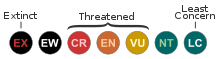
IUCN Red List of Threatened Plants Status : Schoenoplectus tabernaemontani is listed as Least Concern.
Growth: S = slow M = medium F = fast. Soil: L = light (sandy) M = medium H = heavy (clay). pH: A = acid N = neutral B = basic (alkaline). Shade: F = full shade S = semi-shade N = no shade. Moisture: D = dry M = Moist We = wet Wa = water.
Now available:
Food Forest Plants for Mediterranean Conditions
350+ Perennial Plants For Mediterranean and Drier Food Forests and Permaculture Gardens.
[Paperback and eBook]
This is the third in Plants For A Future's series of plant guides for food forests tailored to
specific climate zones. Following volumes on temperate and tropical ecosystems, this book focuses
on species suited to Mediterranean conditions—regions with hot, dry summers and cool, wet winters,
often facing the added challenge of climate change.
Read More
Expert comment
Author
(C.C.Gmel.) Palla
Botanical References
Links / References
For a list of references used on this page please go here
Readers comment
| Add a comment |
|
If you have important information about this plant that may help other users please add a comment or link below. Only comments or links that are felt to be directly relevant to a plant will be included. If you think a comment/link or information contained on this page is inaccurate or misleading we would welcome your feedback at [email protected]. If you have questions about a plant please use the Forum on this website as we do not have the resources to answer questions ourselves.
* Please note: the comments by website users are not necessarily those held by PFAF and may give misleading or inaccurate information.
|
Subject : Schoenoplectus tabernaemontani
|
|
|
|