 |
|
Robert H. Mohlenbrock @ USDA-NRCS PLANTS Database / USDA NRCS. 1992. Western wetland flora: Field office guide to plant species. West Region, Sacramento. |
 |
| USDA-NRCS PLANTS Database / Britton, N.L., and A. Brown. 1913. An illustrated flora of the northern United States, Canada and the British Possessions. 3 vols. Charles Scribner's Sons, New York. Vol. 1 |
Translate this page:
Summary
Physical Characteristics

 Sagittaria cuneata is a PERENNIAL growing to 0.8 m (2ft 7in).
See above for USDA hardiness. It is hardy to UK zone 6. It is in flower from July to August. The species is monoecious (individual flowers are either male or female, but both sexes can be found on the same plant) and is pollinated by Insects.
Suitable for: light (sandy), medium (loamy) and heavy (clay) soils. Suitable pH: mildly acid, neutral and basic (mildly alkaline) soils and can grow in very alkaline soils.
It cannot grow in the shade. It prefers wet soil and can grow in water.
UK Hardiness Map
US Hardiness Map
Synonyms
Sagittaria arifolia.
Plant Habitats
Pond; Bog Garden;
Edible Uses
Edible Parts: Root
Edible Uses:
Root - raw or cooked[257]. Slightly bitter raw[212], the roasted tubers are sweet-tasting[159, 161]. Those tubers found at the end of the rootstock are the best[159]. When broken off from the roots the tubers rise to the water surface and are then easily gathered[212].
References More on Edible Uses
Medicinal Uses
Plants For A Future can not take any responsibility for any adverse effects from the use of plants. Always seek advice from a professional before using a plant medicinally.
Analgesic Stomachic
The plant has been used to treat headaches[257]. The corms have been eaten as a treatment for indigestion[257].
References More on Medicinal Uses
Other Uses
References More on Other Uses
Cultivation details
A pond or bog garden plant, it requires a moist or wet loamy soil in a sunny position[1, 200]. Succeeds in shallow, still or slowly flowing water. Plants are usually monoecious but dioecious forms are sometimes found[43]. A very polymorphic species[43]. In mud or shallow water the leaves are broad, but in deep water the plant only produces long slender leafstalks[212]. This plant has potential for commercial cultivation as a root crop[212].
References Carbon Farming Information and Carbon Sequestration Information
Temperature Converter
Type a value in the Celsius field to convert the value to Fahrenheit:
Fahrenheit:
Plant Propagation
Seed - best sown as soon as it is ripe in a pot standing in about 5cm of water. Prick out the seedlings into individual pots when they are large enough to handle, and gradually increase the depth of water as the plants grow until it is about 5cm above the top of the pot. Plant out in late spring or early summer of the following year. Division of the tubers in spring or autumn. Easy. Runners potted up at any time in the growing season.
Other Names
If available other names are mentioned here
Native Range
NORTHERN AMERICA: Canada (Northwest Territories, Yukon, Québec, Nova Scotia, Ontario, New Brunswick, Newfoundland and Labrador, Saskatchewan, Alberta, Manitoba, British Columbia), United States (Alaska, Connecticut, Indiana, Maine, Massachusetts, Michigan, New Hampshire, New Jersey, New York, Ohio, Pennsylvania, Vermont, Illinois, Iowa, Kansas, Minnesota, Nebraska, North Dakota, Oklahoma, South Dakota, Wisconsin, Colorado, Idaho, Montana, Oregon, Washington, Wyoming, Arkansas, New Mexico, Texas, California, Nevada, Utah)
Weed Potential
Right plant wrong place. We are currently updating this section.
Please note that a plant may be invasive in one area but may not
in your area so it's worth checking.
Conservation Status
IUCN Red List of Threatened Plants Status :
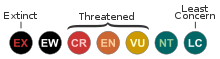
IUCN Red List
Growth: S = slow M = medium F = fast. Soil: L = light (sandy) M = medium H = heavy (clay). pH: A = acid N = neutral B = basic (alkaline). Shade: F = full shade S = semi-shade N = no shade. Moisture: D = dry M = Moist We = wet Wa = water.
Support Plants For A Future
Plants For A Future relies on regular donations to keep our free database and search facilities going, to pay for ongoing research, improvements and enhancements, and to develop and publish new books.
Read more
Choose Currency
Donate in £ GBP
Donate in $ USD
Donate in € EUR
Securely pay via PayPal or Credit/Debit Card without an account.
Expert comment
Author
Sheldon.
Botanical References
43200270
Links / References
For a list of references used on this page please go here
Readers comment