 |
|
http://commons.wikimedia.org/wiki/User:Dalgial |
 |
|
Translate this page:
Summary
Physical Characteristics

 Physalis alkekengi franchetii is a PERENNIAL growing to 0.5 m (1ft 8in) by 1 m (3ft 3in).
See above for USDA hardiness. It is hardy to UK zone 6 and is not frost tender. It is in flower in July. The species is hermaphrodite (has both male and female organs) and is pollinated by Bees.
Suitable for: light (sandy), medium (loamy) and heavy (clay) soils and prefers well-drained soil. Suitable pH: mildly acid, neutral and basic (mildly alkaline) soils. It can grow in semi-shade (light woodland) or no shade. It prefers moist soil.
UK Hardiness Map
US Hardiness Map
Synonyms
P. latifolia.
Plant Habitats
Ground Cover;
Edible Uses
Edible Parts: Fruit Leaves
Edible Uses:
Fruit - raw or cooked[1, 2, 4, 7, 105]. The plant conveniently wraps up each fruit in its own 'paper bag' (botanically, the calyx) to protect it from pests and the elements. This calyx is toxic and should not be eaten[34, 65]. Rich in vitamins[100], with twice the vitamin C of lemons[179], but not much taste[178]. We have found them to be bitter and rather unpleasant[K]. Young leaves - cooked[105, 170, 179]. Caution is advised, the leaves are almost certainly poisonous, at least when raw.
References More on Edible Uses
Medicinal Uses
Plants For A Future can not take any responsibility for any adverse effects from the use of plants. Always seek advice from a professional before using a plant medicinally.
Aperient Diuretic Expectorant Febrifuge Malaria Vitamin C
The plant has a long history of herbal use, and an interesting chemistry, but it is seldom used in modern practice[238]. The whole plant is antiphlogistic, antipyretic, antitussive and expectorant[9, 61, 147, 178, 218]. An overdose of the plant is said to easily precipitate an abortion[218]. The fruit is aperient, strongly diuretic and lithontripic[4, 7, 9, 218]. It is used internally in the treatment of gravel, suppression of urine etc and is highly recommended in fevers and in gout[4, 238]. The fruit is harvested when fully ripe and can be used fresh, juiced or dried[238]. The calyx should be removed[238]. The leaves and stems are febrifuge and slightly tonic[4]. They are used in the treatment of the malaise that follows malaria, and for weak or anaemic people[4]. The fresh leaves have been used externally in the treatment of skin inflammations[238]. The seed is used to promote early labour[218]. A homeopathic remedy is made from the fruit. It is used in the treatment of kidney and bladder disorders[9].
References More on Medicinal Uses
Other Uses
Plants spread rapidly by their roots and can be grown as a ground cover[208]. They are best spaced about 1 metre apart each way[208].
Special Uses
Ground cover
References More on Other Uses
Cultivation details
Succeeds in any well-drained soil in full sun or light shade[111, 200]. The fully dormant plant is hardy in most of Britain, though the young growth in spring can be damaged by late frosts. A very ornamental plant[1] though it can be invasive[200]. This sub-species, which is sometimes treated as a separate species, is a more vigorous form of P. alkekengi with larger fruits[200]. Slugs are very fond of the new growth in spring and can destroy even quite large clumps[K].
References Carbon Farming Information and Carbon Sequestration Information
Temperature Converter
Type a value in the Celsius field to convert the value to Fahrenheit:
Fahrenheit:
Plant Propagation
Seed - sow March/April in a greenhouse only just covering the seed. Germination usually takes place quickly and freely. Prick out the seedlings into individual pots of fairly rich soil when they are large enough to handle and plant them out in early summer. Diurnal temperature fluctuations assist germination[170]. Division in spring[111]. Very easy, larger divisions can be planted out direct into their permanent positions. We have found that it is better to pot up the smaller divisions and grow them on in light shade in a cold frame until they are well established before planting them out in late spring or early summer. Basal cuttings in early summer[111]. Harvest the shoots with plenty of underground stem when they are about 8 - 10cm above the ground. Pot them up into individual pots and keep them in light shade in a cold frame or greenhouse until they are rooting well. Plant them out in the summer.
Other Names
If available other names are mentioned here
Native Range
Coming Soon
Weed Potential
Right plant wrong place. We are currently updating this section.
Please note that a plant may be invasive in one area but may not
in your area so it's worth checking.
Conservation Status
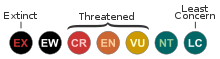
IUCN Red List of Threatened Plants Status :
IUCN Red List
| Related Plants
|
| Latin Name | Common Name | Habit | Height | Hardiness | Growth | Soil | Shade | Moisture | Edible | Medicinal | Other |
| Physalis acutifolia | Sharp-Leaf Ground Cherry | Annual | 0.0 |
0-0
| | LMH | SN | M | 2 | 0 | 0 |
| Physalis alkekengi | Winter Cherry, Strawberry groundcherry,Ground Cherry, Chinese Lantern | Perennial | 0.3 |
6-9
| F | LMH | SN | M | 2 | 2 | |
| Physalis angulata | Cutleaf Ground Cherry | Annual | 0.8 |
0-0
| | LMH | SN | M | 3 | 1 | 0 |
| Physalis angustifolia | Coastal groundcherry | Perennial | 0.0 |
0-0
| | LMH | N | M | 2 | 0 | |
| Physalis arenicola | Cypresshead groundcherry | Perennial | 0.0 |
0-0
| | LMH | N | M | 2 | 0 | |
| Physalis carpenteri | Carpenter's groundcherry | Annual | 0.0 |
0-0
| | LMH | N | M | 2 | 0 | |
| Physalis caudella | Southwestern groundcherry | Perennial | 0.0 |
0-0
| | LMH | N | M | 2 | 0 | |
| Physalis crassifolia | Yellow nightshade groundcherry | Perennial | 0.3 |
0-0
| | LMH | N | DM | 2 | 0 | |
| Physalis foetens | | Annual | 0.6 |
-
| | LMH | N | M | 2 | 0 | |
| Physalis foetens neomexicana | | Annual | 0.6 |
-
| | LMH | N | DM | 2 | 0 | |
| Physalis greenei | | Annual | 0.3 |
-
| | LMH | N | DM | 2 | 0 | |
| Physalis hederaefolia cordifolia | Ground Cherry | Perennial | 0.3 |
-
| | LMH | SN | DM | 2 | 0 | |
| Physalis heterophylla | Clammy Ground Cherry, Rowell's groundcherry | Perennial | 0.9 |
7-10
| | LMH | SN | DM | 3 | 1 | 0 |
| Physalis ixocarpa | Tomatillo | Annual | 1.2 |
7-10
| | LMH | SN | DM | 4 | 0 | 3 |
| Physalis lanceolata | Ground Cherry, Sword groundcherry | Perennial | 0.4 |
0-0
| | LMH | SN | DM | 2 | 1 | |
| Physalis latiphysa | Broadleaf groundcherry | | 0.0 |
0-0
| | LMH | N | M | 2 | 0 | |
| Physalis macrophysa | Bladder Ground Cherry, Longleaf groundcherry | Perennial | 1.5 |
0-0
| | LMH | N | M | 2 | 0 | |
| Physalis minima | Sunberry, Pygmy groundcherry | Annual | 0.5 |
0-0
| | LMH | SN | DM | 3 | 1 | |
| Physalis missouriensis | Missouri groundcherry | Annual | 1.0 |
0-0
| | LMH | N | M | 2 | 0 | |
| Physalis obscura | | Annual | 1.0 |
-
| | LMH | SN | M | 2 | 0 | |
| Physalis peruviana | Goldenberry, Peruvian groundcherry | Perennial | 1.2 |
10-12
| M | LMH | SN | M | 5 | 1 | 3 |
| Physalis philadelphica | Wild Tomatillo, Mexican groundcherry | Annual | 0.6 |
6-9
| | LMH | SN | M | 4 | 1 | 3 |
| Physalis pruinosa | Strawberry Tomato | Annual | 0.6 |
4-8
| | LMH | SN | DM | 3 | 0 | |
| Physalis pubescens | Ground Cherry, Husk tomato | Annual | 0.5 |
10-12
| | LMH | SN | DM | 4 | 1 | 0 |
| Physalis pumila | Prairie Ground Cherry, Dwarf groundcherry | Perennial | 0.3 |
0-0
| | LMH | N | M | 2 | 0 | |
| Physalis subglabrata | Longleaf groundcherry | Perennial | 1.5 |
4-8
| | LMH | SN | DM | 2 | 0 | |
| Physalis variovestita | Field groundcherry | | 0.0 |
0-0
| | LMH | N | M | 2 | 0 | |
| Physalis virginiana | Virginia Ground Cherry | Perennial | 0.6 |
6-9
| | LMH | SN | M | 2 | 1 | 0 |
| Physalis virginiana sonorae | | Perennial | 0.0 |
-
| | LMH | SN | DM | 2 | 0 | |
|
|
Growth: S = slow M = medium F = fast. Soil: L = light (sandy) M = medium H = heavy (clay). pH: A = acid N = neutral B = basic (alkaline). Shade: F = full shade S = semi-shade N = no shade. Moisture: D = dry M = Moist We = wet Wa = water.
Support Plants For A Future
Plants For A Future relies on regular donations to keep our free database and search facilities going, to pay for ongoing research, improvements and enhancements, and to develop and publish new books.
Read more
Choose Currency
Donate in £ GBP
Donate in $ USD
Donate in € EUR
Securely pay via PayPal or Credit/Debit Card without an account.
Expert comment
Author
Makino.
Botanical References
200
Links / References
For a list of references used on this page please go here
Readers comment
| Add a comment |
|
If you have important information about this plant that may help other users please add a comment or link below. Only comments or links that are felt to be directly relevant to a plant will be included. If you think a comment/link or information contained on this page is inaccurate or misleading we would welcome your feedback at [email protected]. If you have questions about a plant please use the Forum on this website as we do not have the resources to answer questions ourselves.
* Please note: the comments by website users are not necessarily those held by PFAF and may give misleading or inaccurate information.
|
Subject : Physalis alkekengi franchetii
|
|
|
|