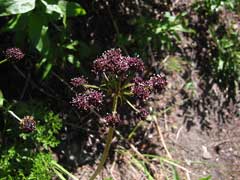
 |
|
http://commons.wikimedia.org/wiki/User:Wsiegmund |
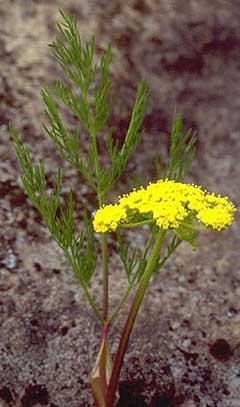 |
| http://www.blm.gov/ |
Translate this page:
Summary
Carrotleaf biscuitroot is a widespread perennial of western North America, recognised by its finely divided, fern-like leaves and large white taproot. Although the roots are sizable and highly aromatic, they are among the poorest edible species in the Lomatium genus because of their intensely resinous, acrid flavour. The attractive balsamic aroma suggests a high-quality food, but the taste proves otherwise. While technically edible, this species is generally considered unsuitable as a food plant despite its abundance.
Physical Characteristics

 Lomatium dissectum is a PERENNIAL growing to 1 m (3ft 3in) at a medium rate.
See above for USDA hardiness. It is hardy to UK zone 5. It is in flower from April to August. The species is hermaphrodite (has both male and female organs) and is pollinated by Insects. The plant is self-fertile.
It is noted for attracting wildlife.
Suitable for: light (sandy), medium (loamy) and heavy (clay) soils, prefers well-drained soil and can grow in nutritionally poor soil. Suitable pH: mildly acid, neutral and basic (mildly alkaline) soils. It cannot grow in the shade. It prefers dry or moist soil and can tolerate drought.
UK Hardiness Map
US Hardiness Map
Synonyms
Leptotaenia dissecta. Nutt. Leptotaenia multifida. Nutt.
Plant Habitats
Cultivated Beds;
Edible Uses
Edible Parts: Leaves Root Seed
Edible Uses:
Carrotleaf biscuitroot demonstrates that abundance does not always equal food quality. Despite producing impressively large roots with an inviting balsamic aroma, the intensely resinous flavor makes it one of the least desirable edible biscuitroots. Better-tasting members of the genus, such as Nevada biscuitroot, Great Basin biscuitroot, or cous, are far superior choices wherever they occur [2-3]. The roots, young stems, and leaves are technically edible, but they are not recommended because of their intensely resinous and unpleasant flavor. As with all Lomatium species, cooking or soaking helps reduce naturally occurring phototoxic compounds but does not adequately improve the taste. Careful identification is essential because members of the genus can resemble the deadly spotted hemlock [2-3]. Edibility Rating: 2 out of 5 – Edible in theory, but the strong resinous flavor makes it an impractical food despite its large roots [2-3]. Taste and Preparation: The roots are large, white inside, and covered by brown skins with a strong balsamic aroma. Unfortunately, the appealing smell is misleading. The flavor is dominated by acrid resins, making the roots unpleasant whether raw or cooked. The inner root contains numerous stringy fibres, and boiling does little to reduce the harsh taste. The leaves and other above-ground parts are equally resinous and are generally unsuitable for eating. Seasonality (Phenology): Flowers from April to August, depending on elevation. Roots are best harvested while plants are actively growing in spring and early summer [2-3]. Traditional Uses: Although several Lomatium species were important Indigenous foods, carrotleaf biscuitroot appears to have been used far less extensively than better-tasting species such as cous or Nevada biscuitroot. Its widespread abundance likely made it an emergency resource where superior species were unavailable [2-3]. Safety: Like all members of the Lomatium genus, carrotleaf biscuitroot contains furanocoumarins, compounds that can cause skin irritation and photosensitivity in susceptible individuals. It can also resemble spotted hemlock (Conium maculatum) before the fruit develops, so positive identification is essential. Although edible, the roots contain abundant resinous compounds that make them unsuitable as a food source [2-3]. Root - cooked[105, 177, 183, 257]. Resinous and balsamic[207]. The root can be dried and ground into a powder and then be mixed with cereal flours or added as a flavouring to soups etc. The roots have been boiled to make a refreshing and nutritious drink[257]. Young seed sprouts - raw[105, 177, 257]. Seed[106, 257]. No more details are given, though it is most likely used as an aromatic flavouring in cooked foods[K].
References More on Edible Uses
Medicinal Uses
Plants For A Future can not take any responsibility for any adverse effects from the use of plants. Always seek advice from a professional before using a plant medicinally.
Antidandruff Disinfectant Ophthalmic Pectoral Poultice Salve Stomachic Tonic
Fernleaf biscuitroot was widely employed medicinally by many native North American Indian tribes who considered it to be a universal panacea and used it especially in treating chest problems and skin complaints[207, 257]. It is little, if at all, used in modern herbalism, but probably warrants investigation. The whole plant, but especially the root, is disinfectant, pectoral, salve, stomachic and tonic[257]. The dried root was used in the treatment of rheumatism, stomach complaints, coughs, colds, hay fever, bronchitis, influenza, pneumonia and tuberculosis[207, 257]. The root was burnt and the smoke inhaled in the treatment of asthma and other chest complaints[257], it was also used as a herbal steam bath for treating chest complaints[257]. The root was used to make a drink that was taken as a tonic to help people in a weakened condition gain weight[257]. A poultice of the peeled and crushed roots has been applied to open cuts, sores, boils, bruises and rheumatic joints[257]. The root has been soaked in water and then used as an antidandruff wash for the hair[257]. An infusion of the leaves and stems has been used as a tonic[257]. The root oil has been applied as a salve to sores and also used as an eye wash in the treatment of trachoma[257]. Some people may experience a one-time uncomfortable detox rash (please research more on this plant before taking it).
References More on Medicinal Uses
The Bookshop: Edible Plant Books
Our Latest books on Perennial Plants For Food Forests and Permaculture Gardens in paperback or digital formats.
Edible Tropical Plants
Food Forest Plants for Hotter Conditions: 250+ Plants For Tropical Food Forests & Permaculture Gardens.
More
Edible Temperate Plants
Plants for Your Food Forest: 500 Plants for Temperate Food Forests & Permaculture Gardens.
More
More Books
PFAF have eight books available in paperback and digital formats. Browse the shop for more information.
Shop Now
Other Uses
Disinfectant Incense
The pulverized root has been burnt as an incense[257]. The early yellow flower clusters provide nectar and pollen for native bees, flies, and other pollinating insects. The foliage may also be browsed by native herbivores.
Special Uses
Food Forest
References More on Other Uses
Cultivation details
Prefers dry, open habitats including grasslands, sagebrush communities, rocky slopes, and open woodland. It tolerates drought well and thrives in well-drained soils. Habitat: Occurs throughout much of the western United States in a wide range of dry habitats, from valleys to mountain slopes. USDA Hardiness Zones: USDA Zones 4–8. Growth Rate: Moderate. Plants emerge early in spring from large perennial taproots and become dormant during the hotter months. Mature Size: Typically 30–100 cm (1–3.3 ft) tall. Cultivation: Prefers full sun and sharply drained soils. Like other biscuitroots, it develops a deep taproot and dislikes disturbance or transplanting once established. Identification: Carrotleaf biscuitroot is a perennial with finely divided, fern-like leaves and compound umbels of yellow flowers. It produces a large white taproot with brown outer skin and flattened winged fruits characteristic of the genus. The common western form is var. multifidum, while var. dissectum occurs mainly in the northwestern United States. Similar Species: It resembles numerous other biscuitroots (Lomatium spp.), particularly Wasatch springparsley and Nevada biscuitroot. Young plants may also resemble spotted hemlock, making careful identification essential before harvesting. This is a taxonomically very difficult genus; many of the species now included in it have at times been included in other genera[60]. The plant is heat tolerant in zones 9 through 7. (Plant Hardiness Zones show how well plants withstand cold winter temperatures. Plant Heat Zones show when plants would start suffering from the heat.
The Plant Heat Zone map is based on the number of "heat days" experienced in a given area where the temperature climbs to over 86 degrees F (30°C).
At this temperature, many plants begin to suffer physiological damage. Heat Zones range from 1 (no heat days) to 12 (210 or more heat days).
For example Heat Zone. 11-1 indicates that the plant is heat tolerant in zones 11 through 1.) For polyculture design as well as the above-ground architecture (form - tree, shrub etc. and size shown above) information on the habit and root pattern is also useful and given here if available. The plant growth habit is a clumper with limited spread [1-2]. The root pattern is a tap root similar to a carrot going directly down [1-2].
References Carbon Farming Information and Carbon Sequestration Information
Temperature Converter
Type a value in the Celsius field to convert the value to Fahrenheit:
Fahrenheit:
The PFAF Bookshop
Plants For A Future have a number of books available in paperback and digital form. Book titles include Edible Plants, Edible Perennials, Edible Trees,Edible Shrubs, Woodland Gardening, and Temperate Food Forest Plants. Our new book is Food Forest Plants For Hotter Conditions (Tropical and Sub-Tropical).
Shop Now
Plant Propagation
Seed - best sown as soon as it is ripe in a cold frame. Stored seed can be rather slow to germinate, when sown in the spring it usually takes at least 12 months to germinate. Giving it a period of cold stratification might reduce this time. The seedlings need to be pricked out into individual pots as soon as they are large enough to handle, and should be planted out into their permanent positions in the summer. Fresh seed can be sown immediately in situ. Division may be possible in spring or autumn.
Other Names
If available other names are mentioned here
Carrotleaf biscuitroot, fernleaf biscuitroot, giant biscuitroot
Native Range
NORTHERN AMERICA: Canada, Alberta, British Columbia, United States, Colorado, Idaho, Montana, Oregon, Washington, Wyoming, Arizona, California, Nevada, Utah, Mexico, Baja California (Norte),
Weed Potential
Right plant wrong place. We are currently updating this section.
Please note that a plant may be invasive in one area but may not in your area so it's worth checking.
Low. A native perennial with no invasive tendencies.
Conservation Status
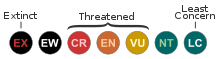
IUCN Red List of Threatened Plants Status : Not Listed.
Growth: S = slow M = medium F = fast. Soil: L = light (sandy) M = medium H = heavy (clay). pH: A = acid N = neutral B = basic (alkaline). Shade: F = full shade S = semi-shade N = no shade. Moisture: D = dry M = Moist We = wet Wa = water.
Now available:
Food Forest Plants for Mediterranean Conditions
350+ Perennial Plants For Mediterranean and Drier Food Forests and Permaculture Gardens.
[Paperback and eBook]
This is the third in Plants For A Future's series of plant guides for food forests tailored to
specific climate zones. Following volumes on temperate and tropical ecosystems, this book focuses
on species suited to Mediterranean conditions—regions with hot, dry summers and cool, wet winters,
often facing the added challenge of climate change.
Read More
Expert comment
Author
(Nutt.)Matthias.&Constance.
Botanical References
60
Links / References
For a list of references used on this page please go here
Readers comment