 |
|
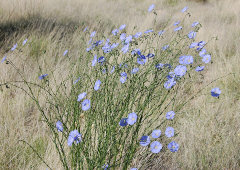
Skoch3. Creative Commons Attribution-Share Alike 3.0 |
 |
|
Translate this page:
Summary
Western blue flax is one of the finest native seed-producing wildflowers of western North America. Its attractive sky-blue flowers brighten grasslands, meadows, and open forests from spring through autumn, while its small oily seeds closely resemble those of cultivated flax. After proper cooking, the seeds provide a nutritious source of protein, healthy fats, and essential fatty acids. However, like cultivated flax, the raw seeds contain small amounts of naturally occurring cyanogenic compounds and should be cooked before consumption.
Physical Characteristics

 Linum lewisii is a PERENNIAL growing to 0.6 m (2ft) by 0.2 m (0ft 8in) at a medium rate.
See above for USDA hardiness. It is hardy to UK zone 4. The flowers are pollinated by Bees, Insects.
It is noted for attracting wildlife.
Suitable for: light (sandy), medium (loamy) and heavy (clay) soils, prefers well-drained soil and can grow in nutritionally poor soil. Suitable pH: mildly acid, neutral and basic (mildly alkaline) soils. It cannot grow in the shade. It prefers moist or wet soil.
UK Hardiness Map
US Hardiness Map
Synonyms
Adenolinum lewisii (Pursh) Á.Löve & D.Löve. Linum perenne var. lewisii (Pursh) Eaton & Wright. Linum perenne subsp. lewisii (Pursh) Hultén. Linum sibiricum var. lewisii (Pursh) Lindl.
Plant Habitats
Edible Uses
Western blue flax is one of the better native seed crops of western North America. Its nutritious, oil-rich seeds closely resemble commercial flaxseed in both flavour and food value, while the attractive perennial plants are common across many western landscapes. The only significant drawback is that the seeds should be cooked before eating and must be harvested promptly before they naturally disperse. For foragers willing to process small seeds, western blue flax is a valuable and rewarding wild food [2-3]. The seeds are edible after cooking. Raw seeds contain small quantities of cyanogenic compounds (including hydrocyanic acid) and may also contain alkaloids, so they should not be eaten in large amounts without preparation. The seeds readily fall from their capsules when mature, making timely harvesting important [2-3]. Edibility Rating: 4 out of 5 – A nutritious, easily harvested seed with excellent food value after cooking, although proper preparation is recommended and the tiny seeds require some processing [2-3]. Taste and Preparation: Western blue flax seeds are remarkably similar in flavor to cultivated flaxseed (Linum usitatissimum). The seeds have a pleasant, nutty taste that becomes richer when toasted. Toasted seeds are excellent, although the tough bran-like seed coats remain noticeable. Boiled seeds are equally nutritious but become distinctly mucilaginous, producing a slippery texture similar to cultivated flax. Grinding the seeds before cooking creates a much smoother porridge and improves digestibility. The nutritious inner kernels provide most of the food value, while the seed coats remain relatively coarse regardless of preparation. Because mature capsules release their seeds easily, harvest should occur promptly before wind disperses the crop [2-3]. Seasonality (Phenology): Western blue flax flowers from March through October, depending on elevation and local climate. Seed capsules mature during the growing season and should be collected as soon as they begin drying, before the seeds naturally disperse. Nutritional Value: Although detailed analyses for Linum lewisii are unavailable, its seeds are expected to have a nutritional composition similar to cultivated flaxseed. For comparison, 100 g of cultivated flaxseed (Linum usitatissimum) contains approximately: - 534 kcal. - 18.3 g protein. - 42.2 g fat. - 28.9 g carbohydrates. - Rich amounts of calcium, phosphorus, magnesium, potassium, iron, zinc, manganese, selenium, and omega-3 fatty acids. These values suggest western blue flax is also an energy-dense and highly nutritious wild seed [2-3]. Traditional Uses: Indigenous peoples gathered western blue flax across parts of western North America as a source of edible seeds. Like cultivated flax, it also supplied useful fiber for cordage and other practical purposes, although food was its primary value [2-3]. Safety: Raw seeds contain small amounts of cyanogenic compounds (hydrocyanic acid) and possibly alkaloids. Although concentrations are generally low, cook the seeds before eating, especially if you eat them in large quantities. Cooking greatly reduces these naturally occurring compounds. As with cultivated flaxseed, moderate consumption as part of a varied diet is considered the safest approach [2-3].
References More on Edible Uses
Medicinal Uses
Plants For A Future can not take any responsibility for any adverse effects from the use of plants. Always seek advice from a professional before using a plant medicinally.
Linum lewisii has a long history of traditional medicinal uses documented by various Indigenous North American tribes. Traditional Medicinal Uses: Eyewashes and Eye Treatments: Infusions made from steeped roots or mashed, soaked whole plants were used as an eyewash to soothe irritated or sore eyes. People also applied crushed fresh leaves as a poultice for eye problems. Wounds and Swelling: They applied poultices of crushed leaves and seeds to bruises, swellings, boils, and infected wounds to help reduce inflammation. Gastrointestinal and Respiratory Relief: They took steeped stem or whole-plant infusions internally for stomach disorders, colds, coughs, and rheumatic pain. Seed oils and plant decoctions were also utilized traditionally to soothe sore throats or treat diarrhea. Skin and Hair Care: Infusions of the whole plant served as a skin and hair wash, believed to benefit skin health and prevent hair loss. Important Safety Note: Raw seeds and parts of the plant contain cyanogenic glycosides (which produce cyanide) and can be toxic if consumed raw in large quantities. Traditional preparation often involved thorough cooking, boiling, or specific processing methods to neutralize these compounds before consumption or medicinal use.
References More on Medicinal Uses
The Bookshop: Edible Plant Books
Our Latest books on Perennial Plants For Food Forests and Permaculture Gardens in paperback or digital formats.
Edible Tropical Plants
Food Forest Plants for Hotter Conditions: 250+ Plants For Tropical Food Forests & Permaculture Gardens.
More
Edible Temperate Plants
Plants for Your Food Forest: 500 Plants for Temperate Food Forests & Permaculture Gardens.
More
More Books
PFAF have eight books available in paperback and digital formats. Browse the shop for more information.
Shop Now
Other Uses
Like cultivated flax, it also supplied useful fiber for cordage and other practical purposes. Widely cultivated as an ornamental native wildflower because of its graceful habit and abundant blue flowers. Wildlife Value: The flowers provide nectar and pollen for pollinating insects, while various birds and small mammals eat the seeds. The plants also contribute to the diversity of native grassland and meadow ecosystems.
Special Uses
References More on Other Uses
Cultivation details
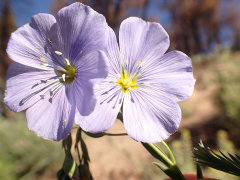
Western blue flax thrives in full sun and well-drained soils. It tolerates drought well once established and performs best in open grasslands, prairies, mountain meadows, and lightly wooded habitats. Habitat: Occurs across much of the western United States in plains, meadows, sagebrush communities, open forests, and disturbed ground. USDA Hardiness Zones: USDA Zones 3–9. Growth Rate: Moderate. Plants establish readily and return each year from perennial rootstocks. Mature Size: Typically 20–60 cm (8–24 in) tall. Cultivation: Western blue flax is widely cultivated as an ornamental native wildflower because of its graceful habit and abundant blue flowers. It prefers sunny positions with good drainage and tolerates relatively poor soils once established. Pollinators: The flowers attract numerous native bees, hoverflies, butterflies, and other nectar-collecting insects. Individual flowers last only a day, but plants produce new blooms continuously over a long flowering season. Identification: Western blue flax is a slender, upright perennial with numerous narrow, lance-shaped leaves that point upward along smooth stems. The delicate sky-blue flowers have five petals and open for only a single day before dropping. Rounded capsules follow, each containing up to ten small, flattened, oily seeds. Similar Species: The plant closely resembles cultivated flax (Linum usitatissimum), which occasionally escapes cultivation. Meadow flax (Linum pratense) also bears blue flowers but is restricted mainly to the southern Great Plains. Most other native flax species in the Southwest have yellow, white, or orange flowers, making western blue flax relatively easy to recognise.
References Carbon Farming Information and Carbon Sequestration Information
Temperature Converter
Type a value in the Celsius field to convert the value to Fahrenheit:
Fahrenheit:
The PFAF Bookshop
Plants For A Future have a number of books available in paperback and digital form. Book titles include Edible Plants, Edible Perennials, Edible Trees,Edible Shrubs, Woodland Gardening, and Temperate Food Forest Plants. Our new book is Food Forest Plants For Hotter Conditions (Tropical and Sub-Tropical).
Shop Now
Plant Propagation
Usually propagated from seed. Fresh seed germinates readily, and established plants may also self-seed under favourable conditions.
Other Names
If available other names are mentioned here
Western blue flax, linseed, Lewis's blue flax.
Native Range
US. USA. Alaska, Alberta, Arizona, Arkansas, British Columbia, California, Colorado, Idaho, Kansas, Manitoba, Mexico Northeast, Mexico Northwest, Minnesota, Montana, Nebraska, Nevada, New Mexico, North Dakota, Northwest Territories, Nunavut, Oklahoma, Ontario, Oregon, Saskatchewan, South Dakota, Texas, Utah, Washington, Wyoming, Yukon.
Weed Potential
Right plant wrong place. We are currently updating this section.
Please note that a plant may be invasive in one area but may not in your area so it's worth checking.
Very low. Western blue flax is a well-behaved native perennial that spreads slowly and is not considered invasive.
Conservation Status
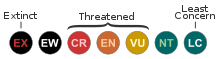
IUCN Red List of Threatened Plants Status : Not listed.
| Related Plants
|
| Latin Name | Common Name | Habit | Height | Hardiness | Growth | Soil | Shade | Moisture | Edible | Medicinal | Other |
| Allium pendulinum | | Bulb | 0.3 |
-
| | LM | S | M | 3 | 2 | 1 |
| Apium graveolens secalinum | Leaf Celery | Biennial | 0.6 |
-
| | LM | SN | M | 4 | 2 | 2 |
| Conioselinum pacificum | Pacific Hemlock-Parsley | Perennial | 0.0 |
-
| | LM | N | M | 2 | 1 | |
| Conioselinum vaginatum | | Perennial | 0.8 |
-
| | LMH | SN | M | 0 | 1 | |
| Gymnanthemum amygdalinum | Bitterleaf | Shrub | 8.0 |
10-12
| M | LMH | N | DM | 4 | 3 | 2 |
| Lilium pardalinum | Panther Lily, Leopard lily, Pitkin Marsh lily, Vollmer's lilyShasta lily, Wiggins' lily | Bulb | 2.0 |
5-9
| M | LMH | SN | MWe | 2 | 0 | 2 |
| Linum bienne | Pale Flax | Annual/Perennial | 0.6 |
6-9
| | LM | N | M | 0 | 0 | 2 |
| Linum catharticum | Purging Flax, Fairy flax | Annual | 0.3 |
0-0
| | LM | N | M | 0 | 2 | |
| Linum crepitans | | Annual | 0.6 |
-
| | LM | N | M | 0 | 0 | 1 |
| Linum humile | | Annual | 0.6 |
-
| | LM | N | M | 1 | 0 | 1 |
| Linum hybrids | Perennial Flax | Perennial | 0.8 |
7-11
| F | LMH | N | M | 4 | 4 | 4 |
| Linum marginale | Native Flax | Perennial | 0.6 |
-
| | LM | N | M | 1 | 0 | 1 |
| Linum monogynum | | Perennial | 0.6 |
7-10
| | LM | N | M | 0 | 0 | 1 |
| Linum perenne | Perennial Flax, Blue flax, Alpine flax | Perennial | 0.3 |
5-9
| M | LM | N | DM | 3 | 2 | 3 |
| Linum strictum | | Annual | 0.4 |
5-9
| | LM | N | DM | 0 | 1 | |
| Linum usitatissimum | Flax, Common flax | Annual | 0.7 |
4-8
| | LM | N | M | 4 | 3 | 4 |
| Mesembryanthemum crystallinum | Ice Plant, Common iceplant | Perennial | 0.1 |
8-11
| | LMH | N | DM | 3 | 1 | 1 |
| Pedicularis sceptrum carolinum | Lousewort | Perennial | 1.2 |
-
| | LMH | SN | M | 1 | 1 | |
| Petroselinum crispum | Parsley | Biennial | 0.6 |
4-9
| M | LMH | SN | M | 4 | 4 | 3 |
| Petroselinum crispum tuberosum | Hamburg Parsley | Biennial | 0.6 |
6-9
| | LMH | SN | M | 4 | 3 | 3 |
| Petroselinum segetum | Corn Caraway | Biennial | 1.0 |
-
| | LMH | SN | M | 1 | 0 | |
| Peucedanum oreoselinum | | Perennial | 1.0 |
4-8
| | LMH | N | M | 0 | 1 | 1 |
| Pteridium aquilinum | Bracken, Western brackenfern, Decomposition brackenfern, Hairy brackenfern | Fern | 1.2 |
4-7
| F | LMH | SN | DM | 2 | 2 | 3 |
| Pteridium aquilinum esculentum | Bracken | Fern | 1.2 |
4-8
| | LMH | SN | DM | 2 | 2 | 3 |
| Talinum aurantiacum | Orange Flameflower | Perennial | 0.4 |
-
| | LMH | SN | M | 1 | 0 | |
| Talinum fruticosum | Tahitian Spinach, Waterleaf, Ceylon Spinach | Perennial | 0.5 |
8-11
| F | LMH | SN | DM | 3 | 2 | 1 |
| Thalictrum collinum | Lesser meadow-rue | Perennial | 0.0 |
0-0
| | LMH | SN | M | 0 | 1 | 0 |
|
Growth: S = slow M = medium F = fast. Soil: L = light (sandy) M = medium H = heavy (clay). pH: A = acid N = neutral B = basic (alkaline). Shade: F = full shade S = semi-shade N = no shade. Moisture: D = dry M = Moist We = wet Wa = water.
Now available:
Food Forest Plants for Mediterranean Conditions
350+ Perennial Plants For Mediterranean and Drier Food Forests and Permaculture Gardens.
[Paperback and eBook]
This is the third in Plants For A Future's series of plant guides for food forests tailored to
specific climate zones. Following volumes on temperate and tropical ecosystems, this book focuses
on species suited to Mediterranean conditions—regions with hot, dry summers and cool, wet winters,
often facing the added challenge of climate change.
Read More
Expert comment
Author
Pursh
Botanical References
Links / References
For a list of references used on this page please go here
Readers comment
| Add a comment |
|
If you have important information about this plant that may help other users please add a comment or link below. Only comments or links that are felt to be directly relevant to a plant will be included. If you think a comment/link or information contained on this page is inaccurate or misleading we would welcome your feedback at [email protected]. If you have questions about a plant please use the Forum on this website as we do not have the resources to answer questions ourselves.
* Please note: the comments by website users are not necessarily those held by PFAF and may give misleading or inaccurate information.
|
|