Translate this page:
Summary
Virginia pepperweed is one of the finest edible pepperweeds in North America. Native to North America and now naturalised across much of the world, it is a common weed of disturbed ground, roadsides, fields, and open habitats throughout the Southwest. The leaves and seeds are both edible, with the seeds serving as an excellent substitute for black pepper or ground mustard. Unlike many members of the genus, Virginia pepperweed lacks excessive bitterness, making it one of the most useful and versatile wild mustards for foragers.
Physical Characteristics

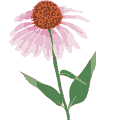 Lepidium virginicum is a ANNUAL/BIENNIAL growing to 0.8 m (2ft 7in) by 1 m (3ft 3in) at a fast rate.
See above for USDA hardiness. It is hardy to UK zone 5. It is in flower from May to October. The species is hermaphrodite (has both male and female organs) and is pollinated by Insects.
It is noted for attracting wildlife.
Suitable for: light (sandy), medium (loamy) and heavy (clay) soils and can grow in nutritionally poor soil. Suitable pH: mildly acid, neutral and basic (mildly alkaline) soils. It can grow in semi-shade (light woodland) or no shade. It prefers dry or moist soil and can tolerate drought.
UK Hardiness Map
US Hardiness Map
Synonyms
Crucifera virginica (L.) E.H.L.Krause. Dileptium virginicum (L.) Raf. Iberis virginica (L.) Fisch. & C.A.Mey. Nasturtiastrum virginicum (L.) Gillet & Magne. Nasturtium virginicum (L.) Kuntze. Thlaspi virginicum (L.) Cav.
Plant Habitats
Cultivated Beds;
Edible Uses
Edible Parts: Leaves Seedpod
Edible Uses: Condiment
Virginia pepperweed is among the finest edible species in the Lepidium genus. Its mild leaves, excellent pepper-like seeds, long growing season, and widespread distribution make it one of North America's most useful wild mustards. Whether gathered for fresh greens or harvested for its spicy seeds, it offers dependable food with relatively little effort and deserves recognition as one of the Southwest's better edible weeds [2-3]. The leaves, seeds, and young seedpods are edible[2-3]. You can eat young leaves fresh or cooked, while mature seeds can be used fresh, dried, or ground as a seasoning. Cooking softens their pungency and lets you incorporate them into soups, stews, and porridges[2-3]. Edibility Rating: 4.5 out of 5 – One of the best edible pepperweeds. The leaves are pleasantly flavored, the seeds make an excellent seasoning, and the plant is both abundant and easy to harvest. Taste and Preparation: Based on the southwestern varieties examined during the original fieldwork, Virginia pepperweed displays the best culinary qualities of the commonly encountered pepperweeds. Fresh leaves have the characteristic peppery flavor of the mustard family but lack the excessive bitterness and alkaline aftertaste found in lower-quality species. They make an excellent addition to mixed salads and can also be prepared as potherbs. Boiling greatly reduces the pungency, leaving a mild, pleasant green vegetable. The seeds are equally valuable. Fresh or dried seeds, whether used whole or ground, make an excellent substitute for black pepper. Their flavor is actually closer to freshly ground mustard seed than true black pepper, providing a warm, spicy seasoning that complements eggs, potatoes, beans, chicken, soups, and many other dishes. Only a small quantity is needed. When boiled, the spicy compounds are largely neutralized, producing a mild, nutritious grain suitable for porridges or as an ingredient in soups and stews[2-3]. Seasonality (Phenology): Virginia pepperweed flowers over an exceptionally long period, generally from March through September, with seeds maturing continuously throughout much of the growing season. Young leaves are available during spring and early summer before becoming tougher with age[2-3]. Nutritional Value: The leaves provide vitamin C, vitamin A, fiber, and minerals typical of leafy mustards. The seeds are rich in oils, protein, carbohydrates, and minerals, making them one of the genus's more nutritious products[2-3]. Traditional Uses: Virginia pepperweed has a long history of use by Indigenous peoples throughout North America. People valued the seeds as a spicy seasoning, while they ate the leaves as a cooked green or fresh vegetable. Its widespread distribution and long growing season made it a dependable food resource across many regions[2-3]. Safety: No significant toxicity is reported. Like other members of the mustard family, the leaves and seeds contain glucosinolates that produce their characteristic spicy flavour. They are considered safe when eaten in normal culinary quantities[2-3]. Young leaves - raw or cooked[55, 62, 159]. The leaves are a rich source of vitamin C[254] and have a hot cress-like flavour[144]. Chopped finely and added to salads, used as a garnish or cooked as greens[183]. Unripe seedpods have a pleasantly pungent flavour and can be eaten raw[55] or used as a condiment in soups and stews[183]. The seed is a pepper substitute[62, 159].
References More on Edible Uses
Medicinal Uses
Plants For A Future can not take any responsibility for any adverse effects from the use of plants. Always seek advice from a professional before using a plant medicinally.
Anthelmintic Antiasthmatic Antiscorbutic Antitussive Cardiotonic Diuretic Vitamin C
The leaves of wild pepper-grass are nutritious and generally detoxifying, they have been used to treat vitamin C deficiency and diabetes, and to expel intestinal worms[254]. The herb is also diuretic and of benefit in easing rheumatic pain[254]. North American Indians used the bruised fresh plant, or a tea made from the leaves to treat poison ivy rash and scurvy[222]. A poultice of the leaves was applied to the chest in the treatment of croup[222]. The seed is antiasthmatic, antitussive, cardiotonic and diuretic[176]. It is used in the treatment of coughs and asthma with excessive phlegm, oedema, oliguria and liquid accumulation in the thoraco-abdominal cavity[176].A poultice of the bruised roots has been used to draw out blisters[257]. The root is used to treat excess catarrh within the respiratory tract[254].
References More on Medicinal Uses
The Bookshop: Edible Plant Books
Our Latest books on Perennial Plants For Food Forests and Permaculture Gardens in paperback or digital formats.
Edible Tropical Plants
Food Forest Plants for Hotter Conditions: 250+ Plants For Tropical Food Forests & Permaculture Gardens.
More
Edible Temperate Plants
Plants for Your Food Forest: 500 Plants for Temperate Food Forests & Permaculture Gardens.
More
More Books
PFAF have eight books available in paperback and digital formats. Browse the shop for more information.
Shop Now
Other Uses
The flowers provide nectar and pollen for pollinating insects, while the seeds are eaten by small birds. The plant also supports various insects that specialise on members of the mustard family.
Special Uses
References More on Other Uses
Cultivation details
Virginia pepperweed grows readily in full sun or partial shade on a wide range of soils. It tolerates drought, disturbed ground, poor soils, and moderate moisture, making it highly adaptable. Habitat: Common in roadsides, fields, gardens, waste places, disturbed ground, grasslands, open woodland, washes, and agricultural areas throughout the Southwest and across much of North America. USDA Hardiness Zones: USDA Zones 4–10. Growth Rate: Fast. Plants establish quickly from seed and often complete their life cycle in a single growing season, though populations readily reseed. Mature Size: Typically 20–80 cm (8–32 in.) tall, occasionally reaching 1 meter (3 ft) under favorable conditions. Cultivation: Virginia pepperweed is easily grown from seed in almost any well-drained soil. It tolerates poor fertility and requires little maintenance once established. Pollinators: The many small white flowers attract native bees, hoverflies, flies, wasps, and numerous other beneficial insects. Identification: Virginia pepperweed is an upright annual or biennial with branching stems, alternate leaves, numerous tiny white four-petalled flowers, and flattened, rounded seedpods typical of the Lepidium genus. It produces abundant seeds that mature progressively along elongated flowering stems. Similar Species: Virginia pepperweed resembles miner's pepperweed (Lepidium densiflorum), but generally has a taller growth habit and produces larger seed clusters. It also differs from shield pepperweed (Lepidium perfoliatum), which has distinctive clasping upper leaves, and from shaggyfruit pepperweed (Lepidium lasiocarpum), whose seedpods are densely hairy. An easily grown plant, it succeeds in most soils.
References Carbon Farming Information and Carbon Sequestration Information
Temperature Converter
Type a value in the Celsius field to convert the value to Fahrenheit:
Fahrenheit:
The PFAF Bookshop
Plants For A Future have a number of books available in paperback and digital form. Book titles include Edible Plants, Edible Perennials, Edible Trees,Edible Shrubs, Woodland Gardening, and Temperate Food Forest Plants. Our new book is Food Forest Plants For Hotter Conditions (Tropical and Sub-Tropical).
Shop Now
Plant Propagation
Seed - sow spring in situ. Germination usually takes place within 2 weeks.
Other Names
If available other names are mentioned here
Wild Pepper Grass, Virginia pepperweed, Intermediate pepperweed, Menzies' pepperweed, Hairy pepperweed, Poorman's pepperweed, Peppergrass.
Native Range
NORTHERN AMERICA: Canada (Québec, Nova Scotia, Ontario, Prince Edward Island, Newfoundland and Labrador, British Columbia (southwest)), United States (Connecticut, Indiana, Maine, Massachusetts, Michigan, New Hampshire, New Jersey, New York, Ohio, Pennsylvania, Rhode Island, Vermont, West Virginia, Illinois, Iowa, Kansas, Minnesota, Missouri, Nebraska, Oklahoma, Wisconsin, Colorado, Idaho, Montana, Oregon, Washington, Wyoming, Alabama, Arkansas, Delaware, Florida, Georgia, Kentucky, Louisiana, Maryland, Mississippi, North Carolina, South Carolina, Tennessee, Virginia, District of Columbia, New Mexico, Texas, Arizona, California, Nevada, Utah), Mexico (Baja California (Norte), Baja California Sur, Chihuahua, Coahuila de Zaragoza, Durango, San Luis Potosí, Sonora, Aguascalientes, Chiapas, Guanajuato, Hidalgo, Jalisco, México, Michoacán de Ocampo, Morelos, Nayarit, Oaxaca, Puebla, Querétaro, Tlaxcala, Veracruz de Ignacio de la Llave, Yucatán) SOUTHERN AMERICA: Hispaniola, Anguilla, Netherlands Antilles, Antigua and Barbuda, Bahamas, Barbados, Cuba, Cayman Islands, Dominica, Guadeloupe, Grenada, Jamaica, St. Kitts and Nevis, St. Lucia, Montserrat, Martinique, Trinidad and Tobago, United States (Puerto Rico, Virgin Islands, U.S.), St. Vincent and Grenadines, Virgin Islands (British), Belize, Costa Rica, Guatemala, Honduras, Nicaragua, Panama, El Salvador
Weed Potential
Right plant wrong place. We are currently updating this section.
Please note that a plant may be invasive in one area but may not in your area so it's worth checking.
Moderate. Virginia pepperweed readily self-seeds and commonly appears in cultivated or disturbed ground, but it is generally far less aggressive than invasive species such as broadleaf pepperweed (Lepidium latifolium).
Conservation Status
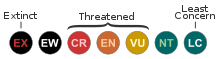
IUCN Red List of Threatened Plants Status : Not listed.
Growth: S = slow M = medium F = fast. Soil: L = light (sandy) M = medium H = heavy (clay). pH: A = acid N = neutral B = basic (alkaline). Shade: F = full shade S = semi-shade N = no shade. Moisture: D = dry M = Moist We = wet Wa = water.
Now available:
Food Forest Plants for Mediterranean Conditions
350+ Perennial Plants For Mediterranean and Drier Food Forests and Permaculture Gardens.
[Paperback and eBook]
This is the third in Plants For A Future's series of plant guides for food forests tailored to
specific climate zones. Following volumes on temperate and tropical ecosystems, this book focuses
on species suited to Mediterranean conditions—regions with hot, dry summers and cool, wet winters,
often facing the added challenge of climate change.
Read More
Expert comment
Author
L.
Botanical References
43235
Links / References
For a list of references used on this page please go here
Readers comment