 |
|
edibleplants.org |
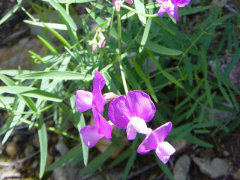 |
| NPS Photo by Michael Quinn Grand Canyon National Park Creative Commons Attribution 2.0 |
Translate this page:
Summary
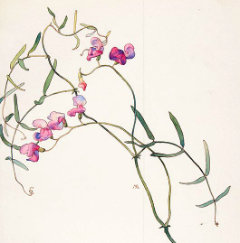
Lathyrus graminifolius is a herbaceous perennial plant with erect or clambering stems that attach themselves to surrounding vegetation by means of tendrils; the plant can grow 20 - 60cm tall. The plant is harvested from the wild for local use as food; It has as excellent potential for use in erosion control along the sides of highways and gullies[1309 ]. Grassleaf peavine produces edible leaves (fresh or cooked) of modest value; seedpods are not edible for this species. It grows from Zones 4-8, is native, and not generally weedy or invasive.
Physical Characteristics

 Lathyrus graminifolius is a PERENNIAL growing to 0.5 m (1ft 8in) by 0.4 m (1ft 4in).
See above for USDA hardiness. It is hardy to UK zone 5 and is not frost tender. The flowers are pollinated by Insects.
Suitable for: light (sandy), medium (loamy) and heavy (clay) soils and prefers well-drained soil. Suitable pH: mildly acid, neutral and basic (mildly alkaline) soils. It cannot grow in the shade. It prefers dry or moist soil and can tolerate drought.
UK Hardiness Map
US Hardiness Map
Synonyms
Homotypic Synonyms: Lathyrus palustris var. graminifolius S.Watson. Heterotypic Synonyms: Orobus dissitifolius Alef.
Plant Habitats
Edible Uses
The tender young plant is eaten as greens in the spring[257 ]. Grassleaf peavine (Lathyrus graminifolius) is a perennial species of the bean family. All species in its genus contain toxic compounds known as lathyrogens, which can cause serious health effects (neurolathyrism, osteolathyrism) if eaten in large quantities or over long periods. Boiling helps reduce these toxins, but does not completely remove them. For L. graminifolius, the seedpods are not reported edible—it is listed among the Lathyrus species whose seedpods are not edible. However, the leaves are reported edible (both fresh and cooked), though they are generally small, sparse, and of modest food value. The flavor is pea-pod-like but more bitter than commercial pea pods. Young seedpods of related Lathyrus species are tender and may be eaten like pea pods, but mature pods become dry, papery, and inedible. Flowers appear from April to September, and young pods follow soon after the blossoms, giving a long gathering season. Because of the plant’s tendency to be eaten by animals or lost to disease before pods mature, yields are often unreliable. Grassleaf peavine was also reportedly eaten by the Karok Indians in the northwest, though plant distributions suggest possible confusion of species in that record [2-3].
References More on Edible Uses
Medicinal Uses
Plants For A Future can not take any responsibility for any adverse effects from the use of plants. Always seek advice from a professional before using a plant medicinally.
None known
References More on Medicinal Uses
The Bookshop: Edible Plant Books
Our Latest books on Perennial Plants For Food Forests and Permaculture Gardens in paperback or digital formats.

Edible Tropical Plants
Food Forest Plants for Hotter Conditions: 250+ Plants For Tropical Food Forests & Permaculture Gardens.
More

Edible Temperate Plants
Plants for Your Food Forest: 500 Plants for Temperate Food Forests & Permaculture Gardens.
More

More Books
PFAF have eight books available in paperback and digital formats. Browse the shop for more information.
Shop Now
Other Uses
The plant has a horizontal, spreading root system and has excellent potential in erosion control along the sides of highways and gullies[1309 ].
Special Uses
References More on Other Uses
Cultivation details
A perennial or rhizomatous geophyte growing primarily in the temperate biome. Species in this genus generally grow well when given a position in full sun in most, moderately fertile, well-drained soils[200 ]. Established plants are drought tolerant[1309 ]. Unlike almost all the species in this genus, this species does not have a symbiotic relationship with soil bacteria and therefore does not fix atmospheric nitrogen[755 ]. USDA Hardiness Zones: Lathyrus graminifolius is hardy in approximately Zones 4-8. Sources suggest it can survive cold winters and tolerate moderate climates. Weed/Invasiveness: There’s no strong evidence that grassleaf peavine is invasive. It is a native plant in its range, not known to be aggressively weedy. It does not appear in lists of problematic weeds, though like many legumes it can persist under favorable conditions and spread locally.
References Carbon Farming Information and Carbon Sequestration Information
Temperature Converter
Type a value in the Celsius field to convert the value to Fahrenheit:
Fahrenheit:
The PFAF Bookshop
Plants For A Future have a number of books available in paperback and digital form. Book titles include Edible Plants, Edible Perennials, Edible Trees,Edible Shrubs, Woodland Gardening, and Temperate Food Forest Plants. Our new book is Food Forest Plants For Hotter Conditions (Tropical and Sub-Tropical).
Shop Now
Plant Propagation
Pre-soak the seed for 24 hours in warm water and then sow in early spring in a cold frame[200 ]. When they are large enough to handle, prick the seedlings out into individual pots and plant them out in the summer.
Other Names
If available other names are mentioned here
Grassleaf peavine (Lathyrus graminifolius)
Native Range
Native to: Arizona, Mexico Northeast, Mexico Northwest, New Mexico, Texas.
Weed Potential
Right plant wrong place. We are currently updating this section.
Please note that a plant may be invasive in one area but may not in your area so it's worth checking.
There’s no strong evidence that grassleaf peavine is invasive. It is a native plant in its range, not known to be aggressively weedy. It does not appear in lists of problematic weeds, though like many legumes it can persist under favorable conditions and spread locally.
Conservation Status
IUCN Red List of Threatened Plants Status : Not available
Growth: S = slow M = medium F = fast. Soil: L = light (sandy) M = medium H = heavy (clay). pH: A = acid N = neutral B = basic (alkaline). Shade: F = full shade S = semi-shade N = no shade. Moisture: D = dry M = Moist We = wet Wa = water.
Now available:
Food Forest Plants for Mediterranean Conditions
350+ Perennial Plants For Mediterranean and Drier Food Forests and Permaculture Gardens.
[Paperback and eBook]
This is the third in Plants For A Future's series of plant guides for food forests tailored to
specific climate zones. Following volumes on temperate and tropical ecosystems, this book focuses
on species suited to Mediterranean conditions—regions with hot, dry summers and cool, wet winters,
often facing the added challenge of climate change.
Read More
Expert comment
Author
(S.Watson) T.G.White
Botanical References
Links / References
For a list of references used on this page please go here
A special thanks to Ken Fern for some of the information used on this page.
Readers comment
| Add a comment |
|
If you have important information about this plant that may help other users please add a comment or link below. Only comments or links that are felt to be directly relevant to a plant will be included. If you think a comment/link or information contained on this page is inaccurate or misleading we would welcome your feedback at [email protected]. If you have questions about a plant please use the Forum on this website as we do not have the resources to answer questions ourselves.
* Please note: the comments by website users are not necessarily those held by PFAF and may give misleading or inaccurate information.
|
Subject : Lathyrus graminifolius
|
|
|
|