Translate this page:
Summary
Handroanthus impetiginosus or also known as Pau D?Arco, Pink Ipe, pink lapacho, or pink trumpet tree is a slow-growing, deciduous tree growing about 12 m in height with trunk diameter of up to 80 cm. It can be found in northern Mexico south to northern Argentina. It is the national tree of Paraguay and is planted in gardens and boulevards as an ornamental tree. It has a straight bole and a large, round but often sparse canopy. The leaves are opposite, and palmately compound with usually five leaflets. The bark is brownish gray in color, tough, and hard to peel. Tea which is used as a tonic can be made from the inner bark. The plant is used in the treatment of a wide range of conditions such as wounds, fevers, dysentery, chronic degenerative diseases, cancers, inflammatory diseases, fungal infections, skin conditions, etc. The wood is yellowish in color, vary tough and heavy. It is ideal for heavy construction, railway sleepers, bridges, posts and poles, etc.
Physical Characteristics

 Handroanthus impetiginosus is a deciduous Tree growing to 20 m (65ft) by 20 m (65ft) at a fast rate.
See above for USDA hardiness. It is hardy to UK zone 10.
Suitable for: light (sandy), medium (loamy) and heavy (clay) soils and prefers well-drained soil. Suitable pH: mildly acid, neutral and basic (mildly alkaline) soils. It cannot grow in the shade. It prefers moist soil.
UK Hardiness Map
US Hardiness Map
Synonyms
Plant Habitats
Edible Uses
Edible Parts: Inner bark
Edible Uses: Tea
A tea made from the inner bark is widely used as a tonic[301 ].
References More on Edible Uses
Medicinal Uses
Plants For A Future can not take any responsibility for any adverse effects from the use of plants. Always seek advice from a professional before using a plant medicinally.
Dysentery Eczema Febrifuge Antiinflammatory Antitumor Antibiotic Cancer Antifungal
Antirheumatic Skin Tonic
The wood and inner bark are a bitter, cooling, pungent herb that lowers fever and reduces inflammation[238 ]. The heartwood contains a naphthaquinone called lapachol - this has been shown to have antibiotic and antitumor effects[238 ]. Many native S. American peoples have prized pau d'arco as a cure-all, using it to treat a wide range of conditions including wounds, fevers, dysentery, intestinal inflammation and snake bites[254 ]. In modern herbalism the bark is used internally in the treatment of inflammatory diseases, chronic degenerative diseases, cancers, tumours, cysts, fungal infections (especially candidiasis), venereal diseases, rheumatic diseases, skin problems (especially eczema, herpes and scabies)[238 ]. It is also used, in combination with other herbs, to clear toxins, resolve congestion and strengthen the immune system[238 ]. The wood is harvested as required and dried for later use[238 ].
References More on Medicinal Uses
Other Uses
Wood
Other Uses: The heartwood is greenish to yellowish-brown; the sapwood is yellowish. The texture is medium; the grain interlocked; lustre is medium. The wood is very heavy, durable, especially when not in contact with the soil. It can be very hard to cut, but works well and gives a good finish. The timber, known as lapacho, is highly valued for cabinet making. It is also used for railway ties, telegraph poles, interior finishes, parquet flooring, sports items such as wooded balls, musical instruments etc[238 , 363 , 419 ]. Most species of Handroanthus, almost certainly including this one, produce a very hard, heavy and durable timber known as Ipe. The general description of Ipe wood is as follows:- The heartwood is yellowish brown to dark olive brown, sometimes with thin veins; it is clearly demarcated from the 3 - 9cm wide band of sapwood. The texture is usually fine, though it is medium in some species; the grain is interlocked; there are canals in the wood containing a greenish-yellow deposit of lapachol. The wood is very heavy; very hard; elastic; it is very durable, even in contact with the soil, resisting fungi, dry wood borers and termites. It seasons slowly, but with only a low risk of checking or distortion; once dry it is moderately stable in service. The wood has a fairly high blunting effect - stellite-tipped and tungsten carbide tools are recommended; there can be some difficulties due to the interlocked grain; filling is recommended in order to get a good finish; nailing and screwing are good , but require pre-boring; gluing is correct for internal use only, and needs to be done with care because the wood is so dense. A very durable and strong wood, it has a very wide range of uses, especially for outdoor applications. It is used for making high class furniture, cabinet work, heavy construction, railway sleepers, bridges, hydraulic works, industrial flooring, posts and poles, turnery, musical instruments, tool handles, veneer etc[848 ].
Special Uses
References More on Other Uses
Cultivation details
A species of higher elevations in the tropics, it is well-suited to subtropical areas[307 ]. Prefers a well-drained fertile soil and a position in full sun[238 ]. Young plants establish well, achieving heights of around 3.5 metres within 2 years[419 ]. Flowering Time: Late Winter/Early Spring Mid Spring Late Spring/Early Summer. Bloom Color: Pink. Spacing: 20-30 ft. (6-9 m).
References Carbon Farming Information and Carbon Sequestration Information
Temperature Converter
Type a value in the Celsius field to convert the value to Fahrenheit:
Fahrenheit:
Plant Propagation
Seed - best sown as soon as ripe in a nursery seedbed or individual containers[200 , 419 ]. The germination rate is usually high, occurring in 10 - 12 days. Seedlings grow away quickly and are usually ready to plant out in less than 4 months[419 ]. Air layering. Cuttings of half ripe wood, herbaceous stem cuttings, softwood cuttings, semi-hardwood cuttings. Seed Collecting: Allow pods to dry on plant; break open to collect seeds.
Other Names
If available other names are mentioned here
Pau D'Arco, Pink Trumpet Tree, Purple Trumpet Tree, Pau d'arco, Taheebo, Ipe Roxo
Native Range
NORTHERN AMERICA: Mexico (Sinaloa, Sonora, Chiapas, Guerrero, Jalisco, México, Michoacán de Ocampo, Morelos, Nayarit, Oaxaca, Puebla) SOUTHERN AMERICA: Costa Rica, Guatemala, Honduras, Nicaragua, Panama, El Salvador, French Guiana, Suriname, Venezuela, Brazil, Bolivia (east), Colombia, Peru, Argentina (northwest), Paraguay
Weed Potential
Right plant wrong place. We are currently updating this section.
Please note that a plant may be invasive in one area but may not
in your area so it's worth checking.
Conservation Status
IUCN Red List of Threatened Plants Status : This taxon has not yet been assessed
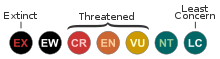
IUCN Red List
Growth: S = slow M = medium F = fast. Soil: L = light (sandy) M = medium H = heavy (clay). pH: A = acid N = neutral B = basic (alkaline). Shade: F = full shade S = semi-shade N = no shade. Moisture: D = dry M = Moist We = wet Wa = water.
Support Plants For A Future
Plants For A Future relies on regular donations to keep our free database and search facilities going, to pay for ongoing research, improvements and enhancements, and to develop and publish new books.
Read more
Choose Currency
Donate in £ GBP
Donate in $ USD
Donate in € EUR
Securely pay via PayPal or Credit/Debit Card without an account.
Expert comment
Author
(Mart. ex DC.) Mattos
Botanical References
1
Links / References
For a list of references used on this page please go here
A special thanks to Ken Fern for some of the information used on this page.
Readers comment
| Add a comment |
|
If you have important information about this plant that may help other users please add a comment or link below. Only comments or links that are felt to be directly relevant to a plant will be included. If you think a comment/link or information contained on this page is inaccurate or misleading we would welcome your feedback at [email protected]. If you have questions about a plant please use the Forum on this website as we do not have the resources to answer questions ourselves.
* Please note: the comments by website users are not necessarily those held by PFAF and may give misleading or inaccurate information.
|
Subject : Handroanthus impetiginosus
|
|
|
|