 |
|
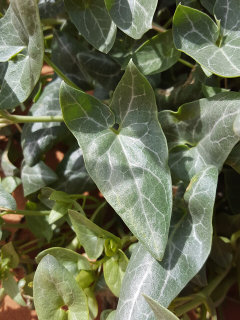
Alex Abair. Creative Commons Attribution 4.0 |
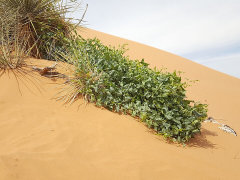 |
| Alex Abair. Creative Commons Attribution 4.0 |
Translate this page:
Summary
Snapdragon vine is a distinctive desert climber with attractive snapdragon-like flowers and unusual netted, cup-like calyces that expand around the fruits. It is primarily a botanical curiosity and ornamental wild plant rather than a meaningful food source. Although technically edible in part, its poor flavor and low productivity make it of very limited foraging value.
Physical Characteristics

 Epixiphium wislizeni is a PERENNIAL CLIMBER growing to 3 m (9ft) by 0.3 m (1ft in) at a fast rate.
See above for USDA hardiness. It is hardy to UK zone 9. The flowers are pollinated by Bees, Insects.
It is noted for attracting wildlife.
Suitable for: light (sandy) and medium (loamy) soils, prefers well-drained soil and can grow in nutritionally poor soil. Suitable pH: neutral and basic (mildly alkaline) soils. It can grow in semi-shade (light woodland) or no shade. It prefers dry soil and can tolerate drought.
UK Hardiness Map
US Hardiness Map
Synonyms
Antirrhinum wislizeni (Engelm. ex A.Gray) Tidestr. Asarina wislizeni (Engelm. ex A.Gray) Pennell. Maurandya wislizeni Engelm. ex A.Gray.
Plant Habitats
Edible Uses
Young fruits are edible but unsuitable for regular consumption and potentially unhealthful in larger quantities. The plant should be regarded as a marginal, curiosity-level food rather than a useful resource [2-3]. Edible Uses & Rating: This species ranks very low as a food plant. At best, the fruits are a minor trail nibble. They are not suitable for staple use, and even moderate consumption is not advised [2-3]. Taste, Processing & Kitchen Notes: Young fruits are small, soft, and green, typically only a few millimeters across. They contain numerous seeds and have a distinctly unpleasant flavor that is difficult to compare with common foods. The taste is woody, slightly bitter, and generally unappealing. There is no meaningful preparation method that improves them. As fruits mature, they dry, harden, and lose all value as food [2-3]. Seasonality (Phenology): Flowering occurs from late spring through summer, typically May to September. Fruits develop during this period, with the edible stage limited to very young, green fruits. Once the capsules mature and dry, they are no longer usable [2-3]. Safety & Cautions (Food Use): Consumption should be minimal. While young fruits are technically edible, they are not suitable for meal-sized quantities and may be unhealthful if eaten in excess. This is not a plant to rely on for nutrition. Harvest & Processing Workflow: If sampled, only young, green fruits should be taken directly from the vine. No processing is required, though there is little reason to collect more than a few for curiosity. Mature fruits should be avoided [2-3]. Cultivar/Selection Notes: There are no cultivated forms for food use. Any selection would be purely ornamental, based on flower color or vigor rather than edibility. Look-Alikes & Confusion Risks: It resembles other snapdragon-like desert vines, particularly species formerly placed in Maurandya or related genera. These plants share similar flowers and growth habits. Confusion within this group is unlikely to pose a significant risk, as none are notable food plants. Traditional/Indigenous Use Summary: There is little evidence of significant use of traditional foods. The plant appears to have been largely ignored as a food source, likely due to its poor flavor and limited yield.
References More on Edible Uses
Medicinal Uses
Plants For A Future can not take any responsibility for any adverse effects from the use of plants. Always seek advice from a professional before using a plant medicinally.
Primarily utilized as an ornamental plant rather than for recognized medical purposes.
References More on Medicinal Uses
The Bookshop: Edible Plant Books
Our Latest books on Perennial Plants For Food Forests and Permaculture Gardens in paperback or digital formats.
Edible Tropical Plants
Food Forest Plants for Hotter Conditions: 250+ Plants For Tropical Food Forests & Permaculture Gardens.
More
Edible Temperate Plants
Plants for Your Food Forest: 500 Plants for Temperate Food Forests & Permaculture Gardens.
More
More Books
PFAF have eight books available in paperback and digital formats. Browse the shop for more information.
Shop Now
Other Uses
Grown as an ornamental in xeric gardens, known for its showy, snapdragon-like flowers. A light, climbing or trailing vine that adds a delicate texture to desert landscapes. It performs best when allowed to scramble over shrubs or rocks. Ecology & Wildlife: It contributes to desert plant diversity and provides nectar resources for pollinating insects. Its vine-like habit allows it to occupy niches among shrubs and rocky outcrops where few other climbers persist.
Special Uses
References More on Other Uses
Cultivation details
Snapdragon vine is an attractive and interesting desert plant with negligible food value. It is best appreciated for its flowers and unique structure rather than as a foraging resource. Growing Conditions: This species prefers full sun to partial shade and well-drained soils typical of desert uplands. It often grows among rocks or shrubs where it can climb or sprawl. Habitat & Range: It is native to desert uplands from Arizona to Texas, typically occurring in rocky or gravelly soils in warm, dry environments. Size & Landscape Performance: It is a light, climbing or trailing vine that adds a delicate texture to desert landscapes. It performs best when allowed to scramble over shrubs or rocks. Cultivation (Horticulture): It can be grown as an ornamental in xeric gardens with good drainage. Minimal watering is required once established. It benefits from nearby structures or plants for support. Pests & Problems: Generally trouble-free in its native range. Overwatering and poor drainage are the main risks in cultivation. Identification & Habit: A slender, vine-like perennial with tendril-like stems, triangular leaves, and distinctive snapdragon-like flowers. The enlarging, netted calyx surrounding the fruit is a key identifying feature. Pollinators: The tubular, two-lipped flowers suggest pollination by bees and possibly other insects adapted to snapdragon-type blooms. Snapdragon vine, now best referred to as Epixiphium wislizeni, belongs to the plantain family (Plantaginaceae) and the genus Epixiphium. Common names include netcup snapdragon vine and balloonbush. It is a native perennial vine of the southwestern United States, generally suited to warm arid and semi-arid regions in USDA Zones 8–10. Plants are delicate, climbing or sprawling vines that can extend 1–3 meters or more depending on available support, though individual stems are fine and not heavy.
References Carbon Farming Information and Carbon Sequestration Information
Temperature Converter
Type a value in the Celsius field to convert the value to Fahrenheit:
Fahrenheit:
The PFAF Bookshop
Plants For A Future have a number of books available in paperback and digital form. Book titles include Edible Plants, Edible Perennials, Edible Trees,Edible Shrubs, Woodland Gardening, and Temperate Food Forest Plants. Our new book is Food Forest Plants For Hotter Conditions (Tropical and Sub-Tropical).
Shop Now
Plant Propagation
Propagation is typically by seed. Germination is best in warm conditions with well-drained soil.
Other Names
If available other names are mentioned here
Balloonbush. Netcup snapdragon vine.
Native Range
US. USA. Arizona, California, Mexico Northeast, New Mexico, Texas.
Weed Potential
Right plant wrong place. We are currently updating this section.
Please note that a plant may be invasive in one area but may not in your area so it's worth checking.
Low. It is not aggressive and does not tend to spread beyond suitable habitats.
Conservation Status
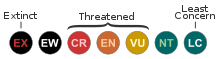
IUCN Red List of Threatened Plants Status : Not listed.
Growth: S = slow M = medium F = fast. Soil: L = light (sandy) M = medium H = heavy (clay). pH: A = acid N = neutral B = basic (alkaline). Shade: F = full shade S = semi-shade N = no shade. Moisture: D = dry M = Moist We = wet Wa = water.
Now available:
Food Forest Plants for Mediterranean Conditions
350+ Perennial Plants For Mediterranean and Drier Food Forests and Permaculture Gardens.
[Paperback and eBook]
This is the third in Plants For A Future's series of plant guides for food forests tailored to
specific climate zones. Following volumes on temperate and tropical ecosystems, this book focuses
on species suited to Mediterranean conditions—regions with hot, dry summers and cool, wet winters,
often facing the added challenge of climate change.
Read More
Expert comment
Author
(Engelm. ex A.Gray) Munz
Botanical References
Links / References
For a list of references used on this page please go here
Readers comment
| Add a comment |
|
If you have important information about this plant that may help other users please add a comment or link below. Only comments or links that are felt to be directly relevant to a plant will be included. If you think a comment/link or information contained on this page is inaccurate or misleading we would welcome your feedback at [email protected]. If you have questions about a plant please use the Forum on this website as we do not have the resources to answer questions ourselves.
* Please note: the comments by website users are not necessarily those held by PFAF and may give misleading or inaccurate information.
|
Subject : Epixiphium wislizeni
|
|
|
|