 |
|
http://commons.wikimedia.org/wiki/User:Stan_Shebs |
 |
| http://www.flickr.com/people/38213125@N00 |
Translate this page:
Summary
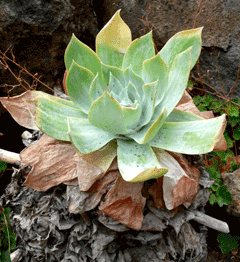
Chalk dudleya is one of the showiest and most recognizable members of the genus, with broad leaves often covered in a pale chalky coating and dramatic red flower stalks. As a food plant it is of much less practical value than mission lettuce or the more utilitarian rock lettuces because it is geographically limited, often protected, and prized horticulturally. Still, your source material includes it among the edible-leaved Dudleya, which means it belongs within the broader liveforever/rock lettuce food tradition.
Physical Characteristics

 Dudleya pulverulenta is an evergreen Perennial growing to 0.4 m (1ft 4in) by 0.5 m (1ft 8in) at a slow rate.
See above for USDA hardiness. It is hardy to UK zone 8. The species is hermaphrodite (has both male and female organs) and is pollinated by Bees, insects.
It is noted for attracting wildlife.
Suitable for: light (sandy) and medium (loamy) soils, prefers well-drained soil and can grow in nutritionally poor soil. Suitable pH: mildly acid, neutral and basic (mildly alkaline) soils. It can grow in semi-shade (light woodland) or no shade. It prefers dry or moist soil and can tolerate drought.
UK Hardiness Map
US Hardiness Map
Synonyms
Cotyledon pulverulenta. (Nutt.)Brewer.&Wats. Echeveria pulverulenta
Plant Habitats
Cultivated Beds;
Edible Uses
The edible part is the leaf. In practical terms, it should be treated as a minor emergency or supplementary succulent leaf rather than a regular foraging plant [2-3]. Edible Uses & Rating: Chalk dudleya ranks low as a modern food plant because conservation and rarity concerns strongly outweigh any casual edible use. It has more importance as a water-rich succulent leaf than as a source of calories [2-3]. Taste, Processing & Kitchen Notes: The safest interpretation is that the leaves are likely mild to somewhat astringent, broadly in line with related rock lettuces. The chalky farina on the leaf surface may slightly affect mouthfeel but should not itself be treated as a reason to avoid the plant. The leaves would most sensibly be used fresh in small amounts or tested cautiously in a lawful emergency context [2-3]. Seasonality (Phenology): Chalk dudleya blooms from about May to July, producing striking red flower displays. The leaves persist outside the bloom period as long-lived succulent storage organs. Safety & Cautions (Food Use): This species is precisely the sort of Dudleya for which conservation caution matters. Collection pressure on Californian dudleyas is well known, and many species are protected or vulnerable. Even if technically edible, chalk dudleya should not be treated as a casual food plant outside a true emergency or a clearly lawful, managed situation. Harvest & Processing Workflow: If used at all, only a few mature outer leaves should be removed from a plant, never the whole rosette. Leaves should be rinsed and used fresh or tested in tiny quantities first. In most realistic situations, observation rather than harvest is the appropriate choice [2-3]. Cultivar/Selection Notes: This species is highly valued ornamentally, and horticultural interest focuses on leaf chalkiness, rosette form, and flower display. Food selection has not occurred. Look-Alikes & Confusion Risks: Chalk dudleya is distinctive because of its broad rosette and pale powdery coating, but it can still be confused with other California Dudleya species by inexperienced observers. Its red flowers and chalky leaves are among the best field clues. Traditional/Indigenous Use Summary: We include chalk Dudleya among the edible-leaved species but have limited species-specific historical use details. This suggests that, if it was used, it was probably part of a broader liveforever/rock lettuce succulent-leaf tradition rather than a major staple. Leaves - raw[46, 61, 161].
References More on Edible Uses
Medicinal Uses
Plants For A Future can not take any responsibility for any adverse effects from the use of plants. Always seek advice from a professional before using a plant medicinally.
Dudleya pulverulenta (chalk dudleya/chalk lettuce) has historical, traditional medicinal uses among indigenous groups. Its fleshy leaves have been used to remove corns and calluses, while a decoction of the roots was used to treat asthma. The leaves were also consumed by children. Traditional and Historical Uses: Dermatological: The thick, fleshy leaves were applied to remove calluses and corns. Respiratory: A decoction (boiled extract) of the roots was taken as a remedy for asthma. Dietary: The leaves have been used as a food source, often chewed by children. Modern Perspective: While historical uses exist, modern scientific research on Dudleya pulverulenta is limited. Some Dudleya species are suggested in traditional medicine to have potential, but these are generally not validated by rigorous clinical trials. Note: Dudleya species are susceptible to poaching, and many are protected plants. It is important to avoid harvesting them in the wild. Disclaimer: This information is for historical and educational purposes only and does not constitute medical advice.
References More on Medicinal Uses
The Bookshop: Edible Plant Books
Our Latest books on Perennial Plants For Food Forests and Permaculture Gardens in paperback or digital formats.

Edible Tropical Plants
Food Forest Plants for Hotter Conditions: 250+ Plants For Tropical Food Forests & Permaculture Gardens.
More

Edible Temperate Plants
Plants for Your Food Forest: 500 Plants for Temperate Food Forests & Permaculture Gardens.
More

More Books
PFAF have eight books available in paperback and digital formats. Browse the shop for more information.
Shop Now
Other Uses
Chalk dudleya is a highly attractive native succulent whose ecological and horticultural value generally outweighs its practical food use. It is one of the best ornamental dudleyas, with large, pale rosettes and dramatic red-flowering spikes. In rock gardens and dry native plantings, it is a high-impact specimen. This species is highly valued ornamentally, and horticultural interest focuses on leaf chalkiness, rosette form, and flower display. This species occupies exposed rocky niches and provides seasonal floral resources to pollinators while stabilizing shallow-soil microsites on cliffs and slopes.
Special Uses
References More on Other Uses
Cultivation details
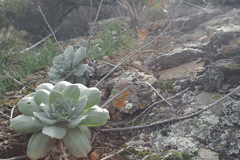
Chalk dudleya is a highly attractive native succulent whose ecological and horticultural value generally outweighs its practical food use. It belongs in an edible-plant guide mostly for completeness, emergency knowledge, and ethnobotanical context. Growing Conditions. It prefers rocky slopes, excellent drainage, full sun near the coast or partial shade inland, and sparse summer watering. It is adapted to rock faces and well-drained drought-prone habitats. ? Habitat & Range. Chalk dudleya occurs from southern Monterey County south through southern California into Baja California, mainly on rocky slopes and cliffs. ? Size & Landscape Performance. It is one of the best ornamental dudleyas, with large, pale rosettes and dramatic red-flowering spikes. In rock gardens and dry native plantings, it is a high-impact specimen. Cultivation (Horticulture): Chalk dudleya should be planted in sharply drained soil, often on a slope or in a crevice, and watered sparingly. It is especially well-suited to rock walls and angled planting, where water drains quickly from the crown. Pests & Problems: Poor drainage and crown rot are the main threats. In moister gardens, snails, slugs, and fungal problems may also occur. Identification & Habit: Chalk dudleya is a perennial, hairless succulent with a broad chalky rosette and red flowering stems carrying clusters of showy flowers. Pollinators: The conspicuous red flowers likely attract a range of insect pollinators and possibly hummingbirds, depending on flower presentation and local ecology. Chalk dudleya, accepted as Dudleya pulverulenta, belongs to the stonecrop family (Crassulaceae) and the genus Dudleya. Common names include chalk dudleya and chalk liveforever. It is a perennial succulent native from southern Monterey County south through southern California into Baja California. In cultivation it is generally best in USDA Zones about 9–11, particularly where drainage is excellent. Mature rosettes often reach 20–50 cm across and 15–40 cm tall, with striking flowering stalks much taller. This species is not very hardy in Britain and requires protection from frosts[200]. This contradicts slightly with the plants hardiness rating in the same book of 8, which suggests it should tolerate temperatures down to about -5°c[200, K].
References Carbon Farming Information and Carbon Sequestration Information
Temperature Converter
Type a value in the Celsius field to convert the value to Fahrenheit:
Fahrenheit:
The PFAF Bookshop
Plants For A Future have a number of books available in paperback and digital form. Book titles include Edible Plants, Edible Perennials, Edible Trees,Edible Shrubs, Woodland Gardening, and Temperate Food Forest Plants. Our new book is Food Forest Plants For Hotter Conditions (Tropical and Sub-Tropical).
Shop Now
Plant Propagation
Propagation is typically by seed. Division is less straightforward than in some clustering species and should be attempted carefully.
Other Names
If available other names are mentioned here
Chalk dudleya.
Native Range
NORTHERN AMERICA: United States (New Mexico, Arizona, California, Nevada), Mexico (Baja)
Weed Potential
Right plant wrong place. We are currently updating this section.
Please note that a plant may be invasive in one area but may not in your area so it's worth checking.
Very low. It is slow-growing and not invasive.
Conservation Status
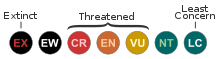
IUCN Red List of Threatened Plants Status : Not listed.
Growth: S = slow M = medium F = fast. Soil: L = light (sandy) M = medium H = heavy (clay). pH: A = acid N = neutral B = basic (alkaline). Shade: F = full shade S = semi-shade N = no shade. Moisture: D = dry M = Moist We = wet Wa = water.
Now available:
Food Forest Plants for Mediterranean Conditions
350+ Perennial Plants For Mediterranean and Drier Food Forests and Permaculture Gardens.
[Paperback and eBook]
This is the third in Plants For A Future's series of plant guides for food forests tailored to
specific climate zones. Following volumes on temperate and tropical ecosystems, this book focuses
on species suited to Mediterranean conditions—regions with hot, dry summers and cool, wet winters,
often facing the added challenge of climate change.
Read More
Expert comment
Author
(Nutt.)Britton.&Rose.
Botanical References
200
Links / References
For a list of references used on this page please go here
Readers comment
| Add a comment |
|
If you have important information about this plant that may help other users please add a comment or link below. Only comments or links that are felt to be directly relevant to a plant will be included. If you think a comment/link or information contained on this page is inaccurate or misleading we would welcome your feedback at [email protected]. If you have questions about a plant please use the Forum on this website as we do not have the resources to answer questions ourselves.
* Please note: the comments by website users are not necessarily those held by PFAF and may give misleading or inaccurate information.
|
Subject : Dudleya pulverulenta
|
|
|
|