Translate this page:
Summary
Annual hairgrass is a delicate, short-lived grass adapted to moist mountain meadows and seasonal environments. Unlike its perennial relative, it completes its life cycle quickly, taking advantage of favorable moisture conditions. Its value as a food plant is limited by its rarity in many regions and its small size, but where present it can contribute edible grains similar to other wild grasses.
Physical Characteristics

 Deschampsia danthonioides is a ANNUAL growing to 0.3 m (1ft) by 0.2 m (0ft 8in) at a fast rate.
See above for USDA hardiness. It is hardy to UK zone 6. The flowers are pollinated by Wind.
It is noted for attracting wildlife.
Suitable for: light (sandy), medium (loamy) and heavy (clay) soils, prefers well-drained soil and can grow in nutritionally poor soil. Suitable pH: mildly acid, neutral and basic (mildly alkaline) soils. It cannot grow in the shade. It prefers moist soil and can tolerate drought.
UK Hardiness Map
US Hardiness Map
Synonyms
Aira danthonioides Trin.
Plant Habitats
Edible Uses
The edible portion is the grain. Like many annual grasses, it produces small seeds that can be collected and processed into porridge or meal [2-3]. Edible Uses & Rating: Annual hairgrass ranks as a low to moderate-value wild grain. Its small stature and limited abundance reduce its overall usefulness, especially in regions where it is uncommon. However, in areas where it forms local populations, it can provide a supplementary food source [2-3]. Taste, Processing & Kitchen Notes: The grains are mild and comparable to other small wild cereals. When toasted and cooked, they develop a slightly nutty flavor. Because of their small size, efficient harvesting and processing are essential. The grains are best used in porridge or combined with other flours [2-3]. Seasonality (Phenology): This species flowers from late spring to early summer, typically May through July. Seeds mature from midsummer into early autumn, depending on elevation and moisture conditions. Safety & Cautions (Food Use): No significant toxicity concerns are associated with this species when properly identified. As with all grasses, care should be taken to ensure seeds are clean and free from mold or contamination. Harvest & Processing Workflow. Harvest seed heads when mature and dry. Strip or cut the heads, dry them thoroughly, and thresh to release the seeds. Winnow to remove chaff. The cleaned grains can then be cooked whole or ground into flour [2-3]. Cultivar/Selection Notes: There are no cultivated forms for food use. Selection is based on locating healthy populations in suitable habitats. Look-Alikes & Confusion Risks. Annual hairgrass resembles many small annual grasses. However, confusion is not a major safety concern, as grasses are broadly edible. Identification is more relevant to understanding yield and habitat than to avoiding toxicity [2-3]. Traditional/Indigenous Use Summary: The grains were traditionally used by Indigenous peoples in parts of the western United States, often prepared as porridge. This reflects a broader tradition of utilizing small wild grass seeds as seasonal foods [2-3].
References More on Edible Uses
Medicinal Uses
Plants For A Future can not take any responsibility for any adverse effects from the use of plants. Always seek advice from a professional before using a plant medicinally.
None known.
References More on Medicinal Uses
The Bookshop: Edible Plant Books
Our Latest books on Perennial Plants For Food Forests and Permaculture Gardens in paperback or digital formats.
Edible Tropical Plants
Food Forest Plants for Hotter Conditions: 250+ Plants For Tropical Food Forests & Permaculture Gardens.
More
Edible Temperate Plants
Plants for Your Food Forest: 500 Plants for Temperate Food Forests & Permaculture Gardens.
More
More Books
PFAF have eight books available in paperback and digital formats. Browse the shop for more information.
Shop Now
Other Uses
A small, delicate grass with limited ornamental value. Provides minor forage and seed resources for wildlife. Plays a role in seasonal meadow ecosystems, especially in years with adequate moisture.
Special Uses
References More on Other Uses
Cultivation details
Annual hairgrass is a minor yet valid wild-grain resource. Its usefulness depends heavily on local abundance. While not a staple, it contributes to the diversity of edible grasses available to foragers in moist, seasonal environments. Growing Conditions: Prefers moist soils in mountain meadows and similar habitats. It grows best where seasonal water is available, often in cool climates. Habitat & Range: Found primarily in the western United States, especially in mountainous regions. It is relatively rare in the Southwest. Size & Landscape Performance: A small, delicate grass with limited ornamental value. It blends into meadow communities rather than standing out. Cultivation (Horticulture): Rarely cultivated. It can be grown from seed in moist soils, but is generally not used in horticulture. Pests & Problems: Few significant pest issues. As an annual, it is more affected by environmental conditions than by pests. Identification & Habit: A small annual grass with fine leaves and delicate flowering structures. It produces airy panicles of small seeds and completes its life cycle quickly. Pollinators: Wind-pollinated, typical of grasses. Annual hairgrass, now best referred to as Deschampsia danthonioides, belongs to the grass family (Poaceae) and the genus Deschampsia. It is commonly known as annual hairgrass. This is a small, native annual grass found primarily in the western United States. It is best suited to USDA Zones 5–10 depending on seasonal moisture. Plants are typically much smaller than tufted hairgrass, usually 10–50 cm tall with a modest spread.
References Carbon Farming Information and Carbon Sequestration Information
Temperature Converter
Type a value in the Celsius field to convert the value to Fahrenheit:
Fahrenheit:
The PFAF Bookshop
Plants For A Future have a number of books available in paperback and digital form. Book titles include Edible Plants, Edible Perennials, Edible Trees,Edible Shrubs, Woodland Gardening, and Temperate Food Forest Plants. Our new book is Food Forest Plants For Hotter Conditions (Tropical and Sub-Tropical).
Shop Now
Plant Propagation
By seed. Germination occurs under suitable moisture and temperature conditions.
Other Names
If available other names are mentioned here
Hairgrass
Native Range
US. USA. Alaska, Arizona, British Columbia, California, Idaho, Maine, Mexico Northeast, Mexico Northwest, Montana, Nevada, New Mexico, New York, Ohio, Oregon, Utah, Washington, Wyoming, Yukon.
Weed Potential
Right plant wrong place. We are currently updating this section.
Please note that a plant may be invasive in one area but may not in your area so it's worth checking.
Low weed potential. It is not aggressive and depends on specific habitat conditions.
Conservation Status
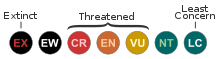
IUCN Red List of Threatened Plants Status : Not listed.
Growth: S = slow M = medium F = fast. Soil: L = light (sandy) M = medium H = heavy (clay). pH: A = acid N = neutral B = basic (alkaline). Shade: F = full shade S = semi-shade N = no shade. Moisture: D = dry M = Moist We = wet Wa = water.
Now available:
Food Forest Plants for Mediterranean Conditions
350+ Perennial Plants For Mediterranean and Drier Food Forests and Permaculture Gardens.
[Paperback and eBook]
This is the third in Plants For A Future's series of plant guides for food forests tailored to
specific climate zones. Following volumes on temperate and tropical ecosystems, this book focuses
on species suited to Mediterranean conditions—regions with hot, dry summers and cool, wet winters,
often facing the added challenge of climate change.
Read More
Expert comment
Author
(Trin.) Benth.
Botanical References
Links / References
For a list of references used on this page please go here
Readers comment
| Add a comment |
|
If you have important information about this plant that may help other users please add a comment or link below. Only comments or links that are felt to be directly relevant to a plant will be included. If you think a comment/link or information contained on this page is inaccurate or misleading we would welcome your feedback at [email protected]. If you have questions about a plant please use the Forum on this website as we do not have the resources to answer questions ourselves.
* Please note: the comments by website users are not necessarily those held by PFAF and may give misleading or inaccurate information.
|
Subject : Deschampsia danthonioides
|
|
|
|