Translate this page:
Summary
Dalea foliolosa is a prairie and open woodland legume characterized by finely divided leaves and dense clusters of small pea-like flowers. Like many prairie-clovers, it contributes to ecosystem health through nitrogen fixation and supports a wide range of pollinating insects. Although not widely known as a food plant, the genus Dalea contains several species with edible roots, and D. foliolosa likely shares similar characteristics with these relatives. The plant’s deep root system allows it to survive seasonal drought and poor soils typical of prairie landscapes. Its ecological importance often exceeds its value as a food plant, but its roots can offer modest edible potential under the right conditions.
Physical Characteristics

 Dalea foliolosa is a PERENNIAL growing to 0.8 m (2ft 7in) by 0.6 m (2ft) at a fast rate.
See above for USDA hardiness. It is hardy to UK zone 7. The flowers are pollinated by Bees, Insects.
It can fix Nitrogen.
It is noted for attracting wildlife.
Suitable for: light (sandy) and medium (loamy) soils, prefers well-drained soil and can grow in nutritionally poor soil. Suitable pH: mildly acid, neutral and basic (mildly alkaline) soils. It cannot grow in the shade. It prefers dry or moist soil and can tolerate drought.
UK Hardiness Map
US Hardiness Map
Synonyms
Psoralea foliolosa Aiton. D. foliolosa var. citrina (Rydb.) Barneby
Plant Habitats
Edible Uses
The roots are considered the potentially edible portion, following patterns seen in related prairie-clover species. Root flavor and texture can vary greatly, ranging from mildly sweet to fibrous or acrid depending on soil conditions and plant maturity. Edible Uses & Rating. Roots may be used as a minor sweet root food or boiled to produce a flavored broth. However, the fibrous texture of the roots generally limits their culinary value. The plant therefore ranks as a low to moderate wild food resource compared with other edible prairie roots. Taste, Processing & Kitchen Notes. Roots of prairie-clover species are often aromatic with mild sweetness or fruity notes. The edible portion usually lies in the outer layers of the root, while the core tends to be woody and fibrous. Boiling the roots can extract sweetness into the cooking water, creating a lightly sweet herbal drink. This approach often provides better results than attempting to chew the fibrous root tissue. Seasonality (Phenology). Leafy prairie-clover typically blooms during late spring through midsummer depending on climate. Flowering is often observed from May through July, followed by seed production later in the summer. Safety & Cautions (Food Use). Individual plants may vary significantly in flavor and root quality. Some roots may taste bitter or soapy. Sampling a small portion before harvesting larger quantities is recommended. Additionally, prairie ecosystems can be sensitive to disturbance, so responsible harvesting practices are important. Harvest & Processing Workflow. Roots are dug carefully to expose the taproot while minimizing damage to surrounding vegetation. After washing away soil, a small piece may be tasted to evaluate quality. Roots may be chewed fresh for their sweetness or chopped and simmered to produce a flavored broth. Cultivar/Selection Notes. This species is not typically cultivated for food. In horticulture it may occasionally appear in native plant gardens or prairie restoration projects, though it is less commonly planted than purple prairie-clover. Look-Alikes & Confusion Risks. Leafy prairie-clover resembles other species of Dalea and may be confused with them when not in flower. Identification generally relies on subtle differences in leaf structure and flower arrangement. Fortunately, most prairie-clovers share similar ecological roles and edible root characteristics. Traditional/Indigenous Use Summary. While specific ethnobotanical references for Dalea foliolosa are limited, several related prairie-clover species were used by Native American groups for their sweet roots. These were occasionally eaten fresh or used to flavor beverages.
References More on Edible Uses
Medicinal Uses
Plants For A Future can not take any responsibility for any adverse effects from the use of plants. Always seek advice from a professional before using a plant medicinally.
The plant (especially the essential oil) is antiinflammatory and hypoglycaemic[1360 ]. An infusion of the plant is used in the treatment of type 2 diabetes[1360 ]. Applied topically, the plant is used to treat contusions and abrasions[1360 ]. The plant yields 2.5 - 3.2% essential oil, characterized by a dominance of monoterpenes over sesquiterpenes and aliphatic hydrocarbons. The principal compounds were cryptone (22 - 30%); linalool (10 - 17%); caryophyllene oxide (4 - 15%); ascaridole (4 - 8%) and beta-citronellol (3 - 7%)[1360 ]. The essential oil has shown significant antioxidant, hypoglycaemic and antibacterial activities[1360 ].
References More on Medicinal Uses
The Bookshop: Edible Plant Books
Our Latest books on Perennial Plants For Food Forests and Permaculture Gardens in paperback or digital formats.
Edible Tropical Plants
Food Forest Plants for Hotter Conditions: 250+ Plants For Tropical Food Forests & Permaculture Gardens.
More
Edible Temperate Plants
Plants for Your Food Forest: 500 Plants for Temperate Food Forests & Permaculture Gardens.
More
More Books
PFAF have eight books available in paperback and digital formats. Browse the shop for more information.
Shop Now
Other Uses
This species is not typically cultivated for food. In horticulture it may occasionally appear in native plant gardens or prairie restoration projects, though it is less commonly planted than purple prairie-clover. As a nitrogen-fixing legume, leafy prairie-clover improves soil fertility and contributes to prairie ecosystem stability. The flowers provide nectar for pollinators, while the seeds may serve as food for small wildlife.
Special Uses
References More on Other Uses
Cultivation details
Leafy prairie-clover is primarily valued as a prairie ecosystem plant rather than a major wild food. Its nitrogen-fixing roots enrich soils, while its flowers support pollinators. Although its roots may be edible, their fibrous nature means the plant is usually more valuable ecologically than culinarily. Growing Conditions. The plant thrives in full sun and well-drained soils, particularly sandy or gravelly soils typical of prairie environments. It tolerates drought and nutrient-poor soils well. Habitat & Range. Leafy prairie-clover occurs mainly in grasslands, prairies, and open woodland margins of the south-central United States. It often grows in dry soils and open sunny habitats. Size & Landscape Performance. Plants form upright clumps with multiple stems and fine-textured foliage. When flowering, the dense spikes add visual interest and attract pollinators, making the plant suitable for naturalistic landscapes. Cultivation (Horticulture). This species can be grown in native plant gardens, prairie restorations, and pollinator habitats. It prefers minimal irrigation and performs best in well-drained soils. Pests & Problems. Leafy prairie-clover is generally hardy and resistant to pests and diseases. Poor drainage can cause root issues in cultivation. Identification & Habit. The plant is a perennial herb with compound leaves consisting of multiple small leaflets. The stems bear clusters of small flowers typical of the bean family, arranged in dense spikes. Pollinators. Flowers attract numerous pollinating insects including native bees, butterflies, and other nectar-feeding insects that depend on prairie legumes. Leafy prairie-clover (Dalea foliolosa) belongs to the bean family (Fabaceae) and the genus Dalea. Common names include leafy prairie-clover and sometimes leafy dalea. It is a perennial legume native primarily to the south-central United States. Plants generally grow successfully in USDA Hardiness Zones approximately 6–9, depending on soil drainage and winter conditions. Mature plants typically reach about 30–80 cm in height and spread roughly 30–60 cm across, forming upright clumps with multiple stems arising from a persistent rootstock. Dalea foliolosa is found wild from the temperate highlands of northern Mexico to the tropical regions at lower elevations from Mexico to Guatemala and Honduras[1359 ]. The crushed foliage has a strong smell of lemon balm (Melissa officinalis)[1359 ]. This species has a symbiotic relationship with certain soil bacteria; these bacteria form nodules on the roots and fix atmospheric nitrogen. Some of this nitrogen is utilized by the growing plant but some can also be used by other plants growing nearby[1309 ].
References Carbon Farming Information and Carbon Sequestration Information
Temperature Converter
Type a value in the Celsius field to convert the value to Fahrenheit:
Fahrenheit:
The PFAF Bookshop
Plants For A Future have a number of books available in paperback and digital form. Book titles include Edible Plants, Edible Perennials, Edible Trees,Edible Shrubs, Woodland Gardening, and Temperate Food Forest Plants. Our new book is Food Forest Plants For Hotter Conditions (Tropical and Sub-Tropical).
Shop Now
Plant Propagation
Propagation is usually by seed. Seeds may benefit from scarification or natural winter stratification to improve germination.
Other Names
If available other names are mentioned here
Leafy prairie-clover, leafy dalea.
Native Range
Colombia, Guatemala, Honduras, Mexico Central, Mexico Gulf, Mexico Northeast, Mexico Southeast, Mexico Southwest, Venezuela.
Weed Potential
Right plant wrong place. We are currently updating this section.
Please note that a plant may be invasive in one area but may not in your area so it's worth checking.
Low. The plant spreads slowly and generally integrates well into native plant communities.
Conservation Status
IUCN Red List of Threatened Plants Status : Not listed.
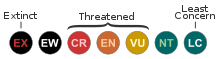
Growth: S = slow M = medium F = fast. Soil: L = light (sandy) M = medium H = heavy (clay). pH: A = acid N = neutral B = basic (alkaline). Shade: F = full shade S = semi-shade N = no shade. Moisture: D = dry M = Moist We = wet Wa = water.
Now available:
Food Forest Plants for Mediterranean Conditions
350+ Perennial Plants For Mediterranean and Drier Food Forests and Permaculture Gardens.
[Paperback and eBook]
This is the third in Plants For A Future's series of plant guides for food forests tailored to
specific climate zones. Following volumes on temperate and tropical ecosystems, this book focuses
on species suited to Mediterranean conditions—regions with hot, dry summers and cool, wet winters,
often facing the added challenge of climate change.
Read More
Expert comment
Author
(Aiton) Barneby
Botanical References
Links / References
For a list of references used on this page please go here
Readers comment
| Add a comment |
|
If you have important information about this plant that may help other users please add a comment or link below. Only comments or links that are felt to be directly relevant to a plant will be included. If you think a comment/link or information contained on this page is inaccurate or misleading we would welcome your feedback at [email protected]. If you have questions about a plant please use the Forum on this website as we do not have the resources to answer questions ourselves.
* Please note: the comments by website users are not necessarily those held by PFAF and may give misleading or inaccurate information.
|
Subject : Dalea foliolosa
|
|
|
|